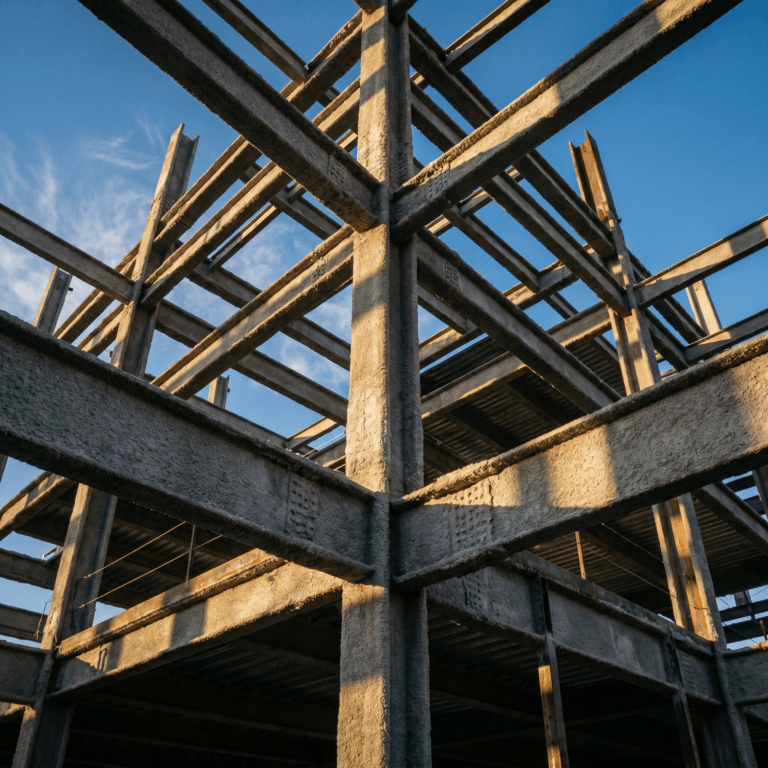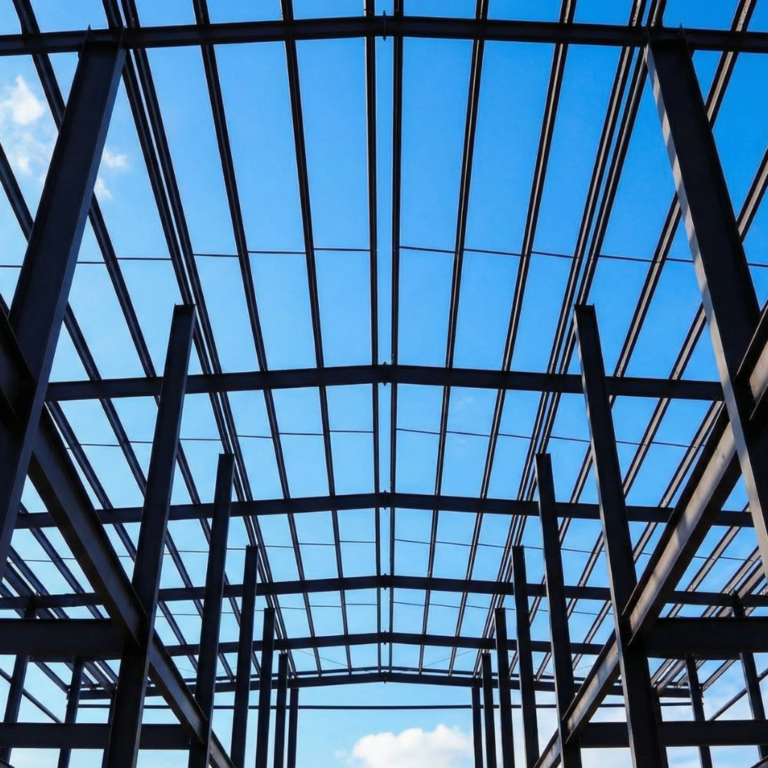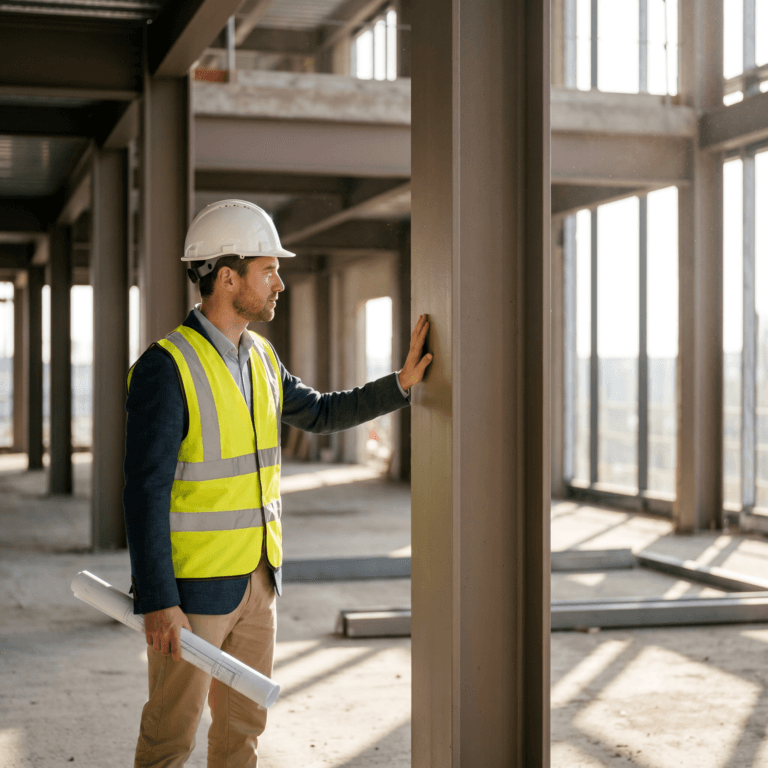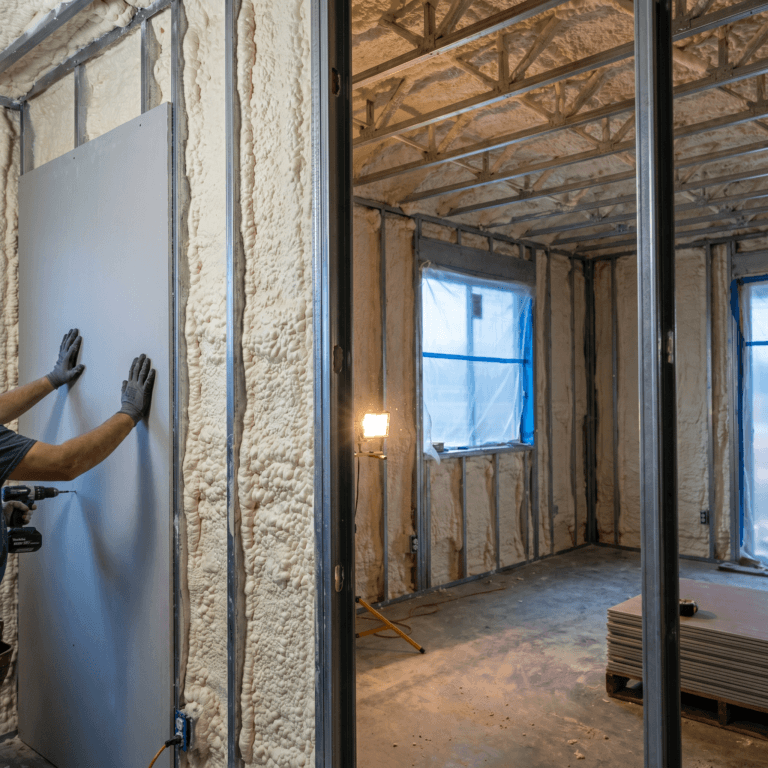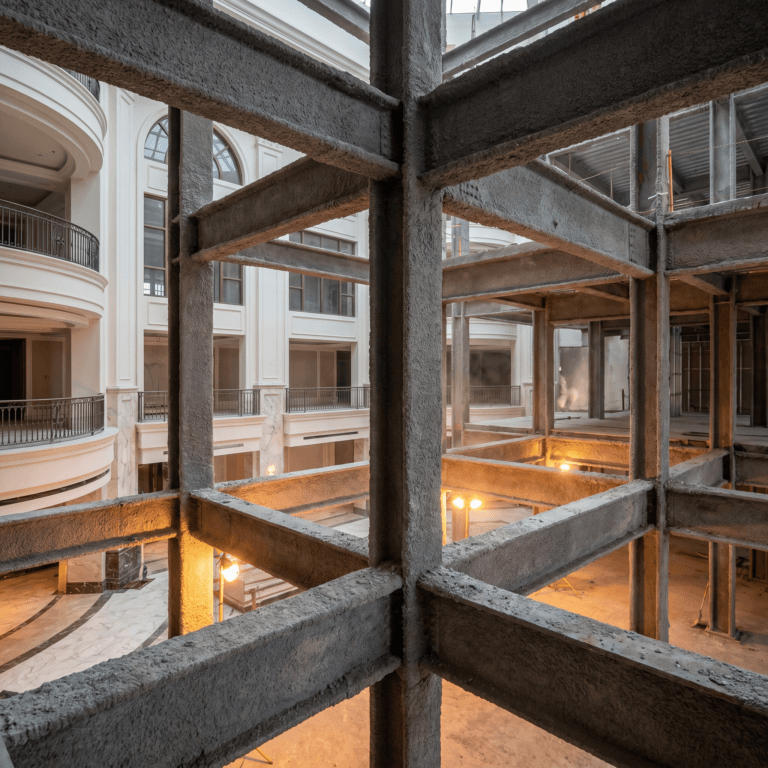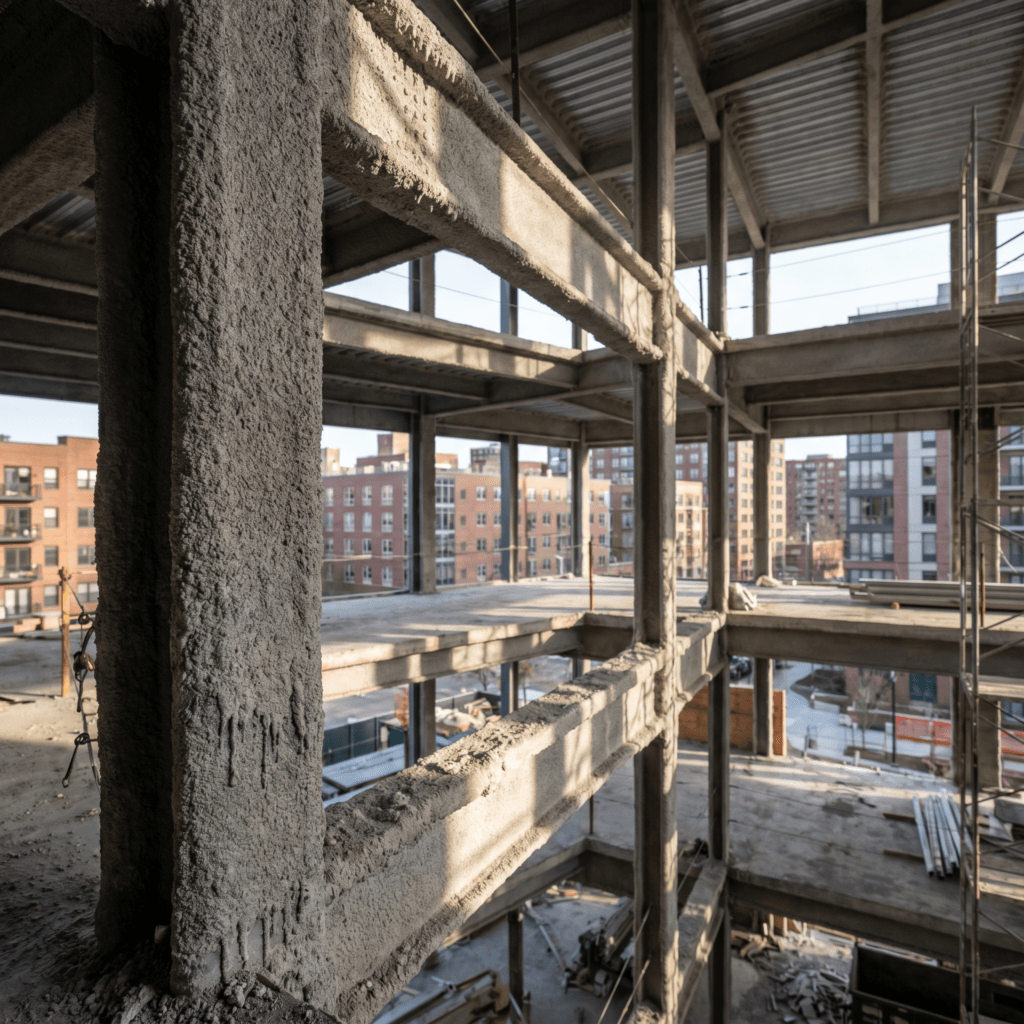
In a multi-family building, fireproofing is not about the apartments, it is about the steel. Wood-frame residential gets its fire rating from assemblies, and a concrete podium is inherently rated, so neither gets sprayed. The steel is what gets fireproofed: a steel podium, the transfer members carrying apartments over parking, the parking structure, and the frame of a steel or high-rise building. This guide covers where structural fireproofing actually applies in multi-family and how to scope it.
TLDR: Multi-family fireproofing follows the steel, not the name on the project. Wood-frame apartments get their rating from gypsum assemblies and code-required separations, and a concrete podium is inherently fire-resistant, so neither needs spray fireproofing. What gets fireproofed is the steel: steel podium framing, the transfer beams and columns carrying residential over parking, the parking structure, and steel or high-rise apartment frames. The decision is identifying which elements of your building are that steel.
Here is how it goes wrong. A team calls a project a “wood-frame apartment building” and budgets the fire protection accordingly, but the transfer beams and columns carrying five stories of apartments over the parking deck are steel that needs fire protection to the podium’s rating. That scope nearly falls off the project because the building is not thought of as a steel building. Getting multi-family fireproofing right starts with seeing past the label to where the steel actually is.
Where Does Fireproofing Apply in a Multi-Family Building?
In a multi-family building, structural fireproofing applies to the steel, not to the wood-frame apartments or a concrete podium. Wood-frame residential gets its fire-resistance rating from gypsum-membrane assemblies and the code-required separations between units, and a concrete podium is inherently fire-resistant, so neither is spray-fireproofed. Steel elements, a steel podium, transfer members, parking structure steel, or a steel building frame, are what require fireproofing to their rating.
That single distinction drives all of multi-family fireproofing. Once you know fireproofing follows the steel, the question stops being “does this apartment building need fireproofing” and becomes “which parts of this building are steel,” which is answerable from the structural drawings. The rest of this guide walks through where that steel typically lives in multi-family and how the fireproofing on it is handled.
Podium Construction: Where the Steel Hides
The dominant multi-family type is podium, or five-over-one, construction: up to five stories of wood-frame residential built over a Type I-A concrete or steel podium, separated by a 3-hour fire-rated horizontal assembly under IBC (2021) Section 510.2. The code treats the two parts as separate buildings, and the podium usually holds structured parking, retail, or shared amenities. It is the standard form because it stacks cheap wood framing on a fire-resistant base.
Code note: unless otherwise stated, code references on this page are to the 2021 International Building Code. Code adoption is state and local. Across the states we serve, adopted IBC editions currently range from the 2012 edition to the 2024 edition, some states have no statewide commercial building code, and several enforce NFPA 1 or NFPA 101 rather than the International Fire Code. Minnesota and Wisconsin publish state-amended code books whose numbering and requirements differ from the model code. This is general technical information, not a code determination for your project. Confirm the adopted edition and any local amendments with your authority having jurisdiction.
The fireproofing question turns on what the podium is made of. A concrete podium is inherently fire-resistant and is not sprayed, which is part of its appeal. But a steel podium, and the steel transfer members that collect the wood-frame loads from above and carry them down, are a different story: that steel needs fire protection to the required rating just like any other structural steel. The parking and amenity steel often connects to this, which the parking-garage guide linked below covers in more depth.
Transfer Members and Parking Steel: The Easy-to-Miss Scope
Even when the podium is concrete, the steel that matters is the transfer structure, the beams and columns that gather loads from the wood frame above and route them to the foundation, plus any steel in the parking level. Those members carry the entire building above them, so they are fireproofed to the rating their role demands. Parking-level steel is frequently semi-exposed to weather and traffic, which changes the material from a standard interior product to one rated for that exposure.
Over the past 20 years fireproofing multi-family across Texas, Kansas, and Oklahoma, the pattern I see is people deciding whether a project needs fireproofing based on what they call the building. “It is a wood-frame apartment building, so no fireproofing.” That skips the steel. A five-over-one podium has steel transfer members and often a parking structure underneath, and that steel needs protection to the rating even though the apartments above never get sprayed. The fireproofing follows the steel, not the label on the project, and on a new build that steel fireproofing is verified by special inspection under IBC Section 1705.15.
High-Rise Apartments: Steel Frame and Bond Strength
A high-rise apartment building, generally one taller than 75 feet, is a steel or concrete frame, and where it is steel, that frame gets spray-applied fireproofing on concealed members or intumescent coating where steel is exposed. The fire-resistance ratings are established by testing assemblies to ASTM E119, and the heights involved push the structural protection beyond the baseline.
High-rise construction also triggers enhanced bond strength requirements for the fireproofing. Under IBC (2021) Section 403.2.3, the required bond strength rises from the 150 psf standard to 430 psf for buildings up to 420 feet, and to 1,000 psf above 420 feet. Those tiers exist because the consequences of fireproofing failure scale with building height, and they affect which product and density a high-rise apartment frame requires. The structural-steel fire-ratings guide linked below explains how the ratings themselves are set.
Wood-Frame Residential: Why It Is Not Sprayed
The wood-frame portion above the podium is not spray-fireproofed, because wood is not a substrate for spray-applied fire-resistive material. Its fire-resistance comes from a different system: the rated gypsum-membrane wall and floor-ceiling assemblies, the fire-rated separations between dwelling units, and the firestopping that seals penetrations through those assemblies. All of that is real, code-required fire protection, but it is a separate scope from structural fireproofing and is built by different trades.
This is the distinction that most often causes confusion on multi-family projects, so it is worth stating plainly. When someone asks whether the apartment levels need fireproofing, the accurate answer is that they need their rated assemblies and separations, not spray fireproofing, and that the spray fireproofing question belongs to the steel. Keeping those two ideas separate is what prevents both over-scoping the wood frame and under-scoping the steel.
Exposed and Semi-Exposed Steel in Amenities and Parking
Where multi-family steel is exposed to view or to weather, the material changes. Steel left exposed in lobbies, fitness rooms, or other amenity spaces is usually protected with intumescent coating, which provides a thin, paintable fire rating that reads as a finish. Steel in open or partially open parking, exposed to outdoor conditions, calls for an exterior-grade product rated for that environment rather than a standard interior spray.
The common thread is matching the product to the exposure, not just to the required rating. A member that needs a two-hour rating in a dry, concealed location and the same rating on an exposed parking frame are two different specifications, because the second has to survive weather, moisture, and physical contact. Identifying which steel is concealed, which is exposed indoors, and which is exposed to the elements is part of scoping the job correctly.
Scoping Multi-Family Fireproofing in Texas, Kansas, and Oklahoma
Across our Texas, Oklahoma, Kansas, Nebraska, Minnesota, and Wisconsin service area, multi-family construction is heavy, especially the podium-style apartment and mixed-use projects going up around DFW, Austin, and the region’s growing metros. The same multi-family fireproofing discipline applies on all of them: read the structural drawings, identify the steel, the podium frame, the transfer members, the parking steel, and any high-rise frame, and scope the fireproofing to that steel while leaving the wood-frame assemblies and firestopping to their own trades. Handling the structural steel fireproofing and scoping it correctly is the work our team does for multi-family projects throughout our service area.
Frequently Asked Questions
Where does fireproofing apply in a multi-family building? Multi-family fireproofing applies to the steel: a steel podium, the transfer beams and columns carrying loads from above, parking structure steel, and steel or high-rise building frames. The wood-frame apartments and a concrete podium are not sprayed, because their fire-resistance comes from assemblies and inherent material properties.
Do wood-frame apartments need spray fireproofing? No. Wood is not a substrate for spray-applied fireproofing. The wood-frame portion gets its fire-resistance rating from gypsum-membrane wall and floor-ceiling assemblies, fire-rated separations between units, and firestopping at penetrations, which is a separate scope from structural fireproofing.
What is podium construction and does it need fireproofing? Podium, or five-over-one, construction places wood-frame residential over a Type I-A concrete or steel podium, separated by a 3-hour fire-rated horizontal assembly under IBC (2021) Section 510.2. A concrete podium is inherently rated and is not sprayed, but a steel podium and the steel transfer members carrying the loads above do get fireproofed.
What are transfer members and why do they need fireproofing? Transfer members are the steel beams and columns that collect loads from the structure above, such as a wood frame on a podium, and carry them down to the foundation. Because they support the entire building above them, they are fireproofed to the required fire-resistance rating like any critical structural steel.
Do high-rise apartments need more fireproofing? Yes, in the sense that a high-rise steel frame is fireproofed and the requirements are stricter. Under IBC (2021) Section 403.2.3, bond strength rises from 150 psf standard to 430 psf up to 420 feet and 1,000 psf above that, so a high-rise apartment frame requires a product and density that meet those tiers, with that bond strength verified in the field per ASTM E736.
Why is the concrete podium not fireproofed? Concrete is inherently fire-resistant and does not require spray-applied fireproofing, which is one reason concrete podiums are popular. Spray-applied fire-resistive material is designed to protect structural steel, which heats and loses strength in a fire far faster than concrete does.
What about the parking under the apartments? Steel in the parking level is fireproofed to its required rating, and because parking is often semi-exposed to weather and traffic, it typically calls for an exterior-grade product rather than a standard interior spray. The specific material depends on how exposed that steel is.
Key Takeaways
- Fireproofing follows the steel. In multi-family, the steel gets fireproofed, not the wood-frame apartments or a concrete podium.
- Podium steel is the scope. A steel podium and the steel transfer members carrying loads over parking need protection to their rating, even when the building reads as wood-frame.
- Transfer members carry everything. The steel collecting loads from the structure above is fireproofed because it supports the entire building.
- High-rise raises the bar. A steel high-rise frame is fireproofed, with bond strength rising to 430 psf up to 420 feet and 1,000 psf above, per IBC (2021) Section 403.2.3.
- Wood frame is a different system. Its rating comes from gypsum assemblies, unit separations, and firestopping, not from spray fireproofing.
- Concrete is inherently rated. A concrete podium is not sprayed, because fireproofing is for steel.
- Match material to exposure. Concealed, indoor-exposed, and weather-exposed steel each call for a different product at the same rating.
Related Reading
- Need the rating basics? Read fire ratings for structural steel explained.
- Have parking under the residential? See parking garage fireproofing.
- Sorting out the systems? Review active versus passive fire protection.
If you are developing or building multi-family and want the fireproofing scoped to the right elements, the work is reading the structural drawings, finding the steel, and protecting it to its rating while the wood-frame assemblies stay with their own trades. That is work our crew handles throughout Texas, Oklahoma, Kansas, Nebraska, Minnesota, and Wisconsin. Reach me directly at 512-387-2111 or ross@bahlfireproofing.com, or Contact Bahl Fireproofing to scope your project’s structural fire protection.
This article provides general educational information about fireproofing for multi-family and apartment buildings. It is not engineering advice and does not replace project-specific direction from a licensed architect or engineer. Structural fireproofing applies to structural steel; the fire-resistance of wood-frame assemblies, dwelling-unit separations, and firestopping are separate scopes installed by other trades. Construction type classification, fire-resistance ratings, podium provisions, and bond strength requirements vary by jurisdiction and project. Always confirm the applicable requirements with the authority having jurisdiction and a licensed architect or engineer before specifying or installing any system.