
K-13
Insulation
Thermal, acoustic and a finished exposed surface in one pass. Licensed K-13 applicator for warehouses, gyms, schools, parking structures and cold storage.
One application.
Thermal control, sound absorption, energy efficiency.
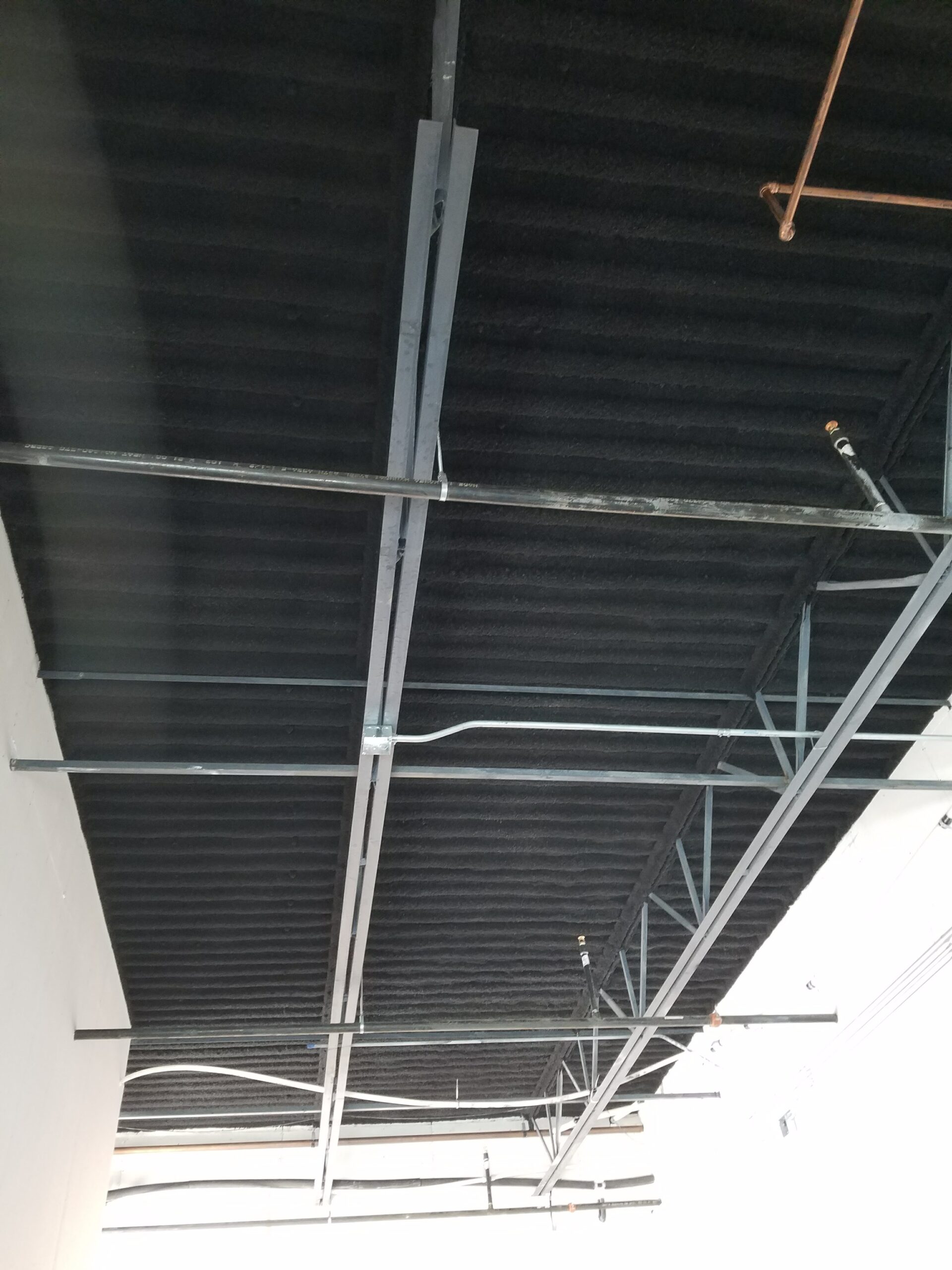
At Bahl Fireproofing, our K-13 sprayed fiber insulation offers a high-performance solution for thermal control, sound absorption, and energy efficiency, all in a single application. Designed for commercial and industrial spaces, K-13 insulation adheres directly to virtually any surface, filling irregular gaps and creating a seamless thermal and acoustic barrier.
Whether you're managing a warehouse, office building, gymnasium, or parking structure, K-13 helps reduce energy loss, dampen noise, and control condensation, all while contributing to sustainability goals and the project's energy code path.
With proven durability and low maintenance, K-13 is the go-to choice for clients seeking reliable insulation performance with long-term value.
Is K-13 fireproofing?
No. K-13 carries a Class A surface burning classification under ASTM E84 (UL 723). That is not a fire-resistance rating under ASTM E119 (UL 263). When an assembly needs a rating, that is a fireproofing scope, and we self-perform both, including K-13 over SFRM as a combined system.
K-13 is a spray-applied cellulose fiber insulation manufactured by International Cellulose Corporation. It bonds directly to deck, concrete, steel and masonry, and it is left exposed as the finished surface. It insulates, it absorbs sound, and it controls condensation. It does not add a fire-resistance rating to the assembly.
The numbers that matter, stated the way the TDS states them
| Property | Value | How to read it |
|---|---|---|
| Thermal resistance | R-3.7 per inch | Current ICC spec; the old R-3.75 figure is wrong |
| Bond strength | Greater than 150 psf | ASTM E736 |
| Surface burning | FSI 5, SDI 5 | ASTM E84 tested score. Class A threshold is FSI 0 to 25, SDI 0 to 450 |
| Sound absorption | Stated with thickness and substrate | For example NRC 1.00 at 2 inches over solid backing; a bare NRC number is meaningless |
| Colors | Five standard plus custom | Current product page |
| Service life reference | 75 years | An EPD reference figure, not a warranty |
Where K-13 goes
- Exposed roof deck and structure in warehouses and distribution centers.
- Gymnasiums, natatoriums and auditoriums where reverberation is the problem.
- Parking structures and cold storage where condensation control matters.
- Over SFRM as a combined system where the assembly needs a rating and the space needs acoustics.
Pricing a scope?
Send the drawings and the spec section. We return a number, not a range.
Thermal, acoustic, finished.
One pass, one trade.
K-13 is the answer when the ceiling has to insulate, quiet the room and look done without a second trade. It is not the answer when the code calls for a fire-resistance rating; that is SFRM, and we install that too.
How we apply K-13
Submittals
Thickness schedule by area, color, substrate compatibility, licensed-applicator letter from International Cellulose Corporation.
Substrate prep
Surface cleaned; adhesive primer where the TDS requires it.
Application
Sprayed to the scheduled thickness in the passes the manufacturer calls for.
Thickness and finish
Depth checked across the area; surface texture consistent.
Documentation
Batch records and thickness map handed over.
Contact Us
Call, email, or send the drawings through the form. All three land in the same place, and Ross reads them.
Request a K-13 bid
K-13 insulation by state
Austin, Dallas-Fort Worth, Houston, San Antonio, Lubbock
K-13 insulation in Texas →Oklahoma City, Tulsa
K-13 insulation in Oklahoma →Wichita, Kansas City metro, Hays
K-13 insulation in Kansas →Phoenix, Tucson
K-13 insulation in Arizona →Minneapolis, St. Paul, Rochester, Duluth, Brainerd, Walker, Bemidji
K-13 insulation in Minnesota →Milwaukee, Madison, Green Bay, Superior
K-13 insulation in Wisconsin →K-13 FAQ
Is K-13 fireproofing?
No. It carries a Class A surface burning classification under ASTM E84, which is a different test and a different property from a fire-resistance rating under ASTM E119.
What does licensed applicator mean?
International Cellulose Corporation licenses applicators for K-13. Bahl holds that license. It is a manufacturer license, not a code-body certification.
What R-value do I get?
R-3.7 per inch. The assembly value and the code path depend on the adopted energy code, the climate zone and the assembly; we do not quote a bare number.
Can K-13 go over fireproofing?
Yes. K-13 over SFRM is a combined system we install where the assembly needs a rating and the room needs acoustics.
What kinds of spaces use K-13?
Rooms that are loud, hard-surfaced and exposed overhead. Gyms, natatoriums, cafeterias and commons, arenas and field houses, worship spaces, transit and parking structures, warehouses and manufacturing floors, and any deck-and-joist ceiling that is staying visible.
What does it look like when it is finished?
A seamless sprayed texture that follows the deck, the joists and the duct penetrations instead of boxing them out. Five standard colors plus custom match. It reads as an intentional finished ceiling, which is the point.
Can it go over an existing ceiling?
Over most sound, clean substrates, including metal deck, concrete, masonry and gypsum. The substrate gets checked for adhesion and contamination first, and anything failing gets prepped or excluded before we spray.
Does it help with condensation on a metal deck?
It puts insulation on the warm side of a cold surface, which raises the surface temperature and reduces the condensation risk. Whether that solves a particular building depends on the assembly, the interior humidity and the dew point, so we look at the conditions rather than promising a result.
From the Bahl library
K-13: the complete contractor guide
Read the guide →
K-13 acoustic performance and NRC ratings
Read the guide →
K-13 over spray fireproofing: the combined system
Read the guide →
K-13 installation cost: complete budget guide
Read the guide →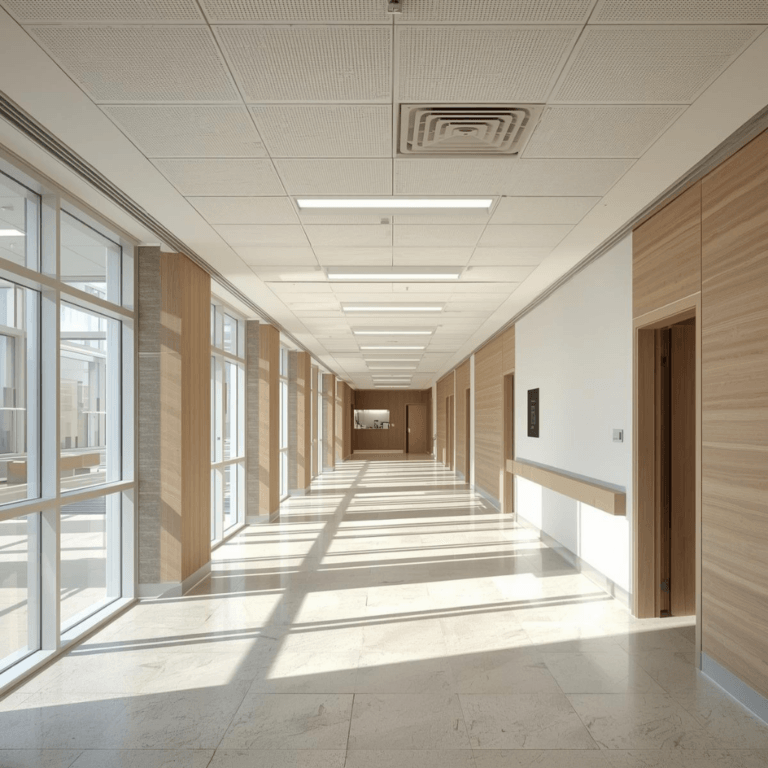
Hospital acoustic insulation with spray-applied K-13
Read the guide →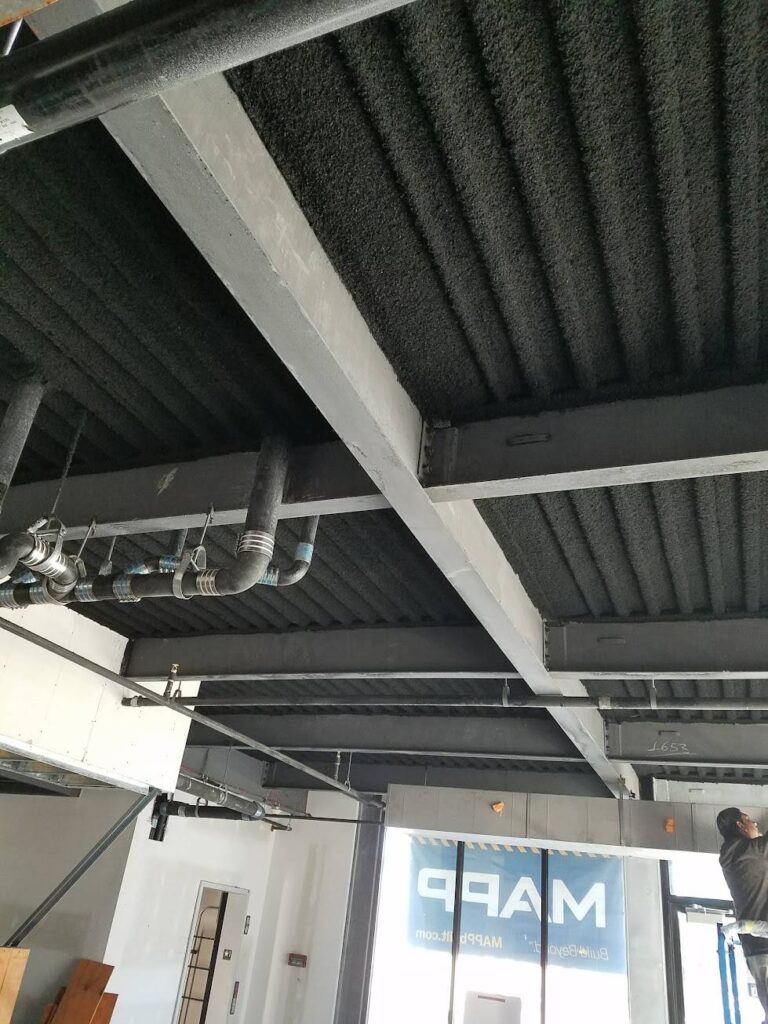
K-13 insulation cost guide for commercial projects
Read the guide →This page describes Bahl Fireproofing's scope of work and general code context. Requirements, adopted code editions and inspection procedures vary by jurisdiction and project; confirm them with your licensed architect or engineer and the authority having jurisdiction. Nothing here is a warranty of a building's compliance or a substitute for the approved construction documents.