When an open-ceiling warehouse, gymnasium, or distribution center needs both a code-required fire rating and real thermal and acoustic performance, one product cannot do both jobs. Spray-applied fireproofing handles the fire rating. K-13 handles thermal and acoustic performance. This guide explains how the two systems work together, what the UL design assemblies actually permit, and how to sequence the work so the combined system performs as designed.
TLDR: K-13 spray-applied cellulose insulation is UL listed for application over spray-applied fire-resistive material (SFRM) in 16 UL BXUV Guide Design Assemblies. It adds thermal value (R-3.7 per inch) and acoustic absorption (NRC up to 1.05) without changing the structural fire rating, which comes from the SFRM alone. Getting the sequence right matters: the SFRM must cure and pass inspection, and any trade damage must be repaired, before K-13 goes on.
I have spent more than 20 years applying both fireproofing and spray insulation on commercial projects across Texas, Kansas, and Oklahoma. The combined system is one of the most misunderstood assemblies in the trade. Owners hear “K-13 over fireproofing” and assume they are doubling their fire protection. That is not what is happening. What follows is the straight version: what the system is, when you actually need it, what the code and UL listings require, and how to keep the installation from turning into a scheduling fight between two trades.
Can K-13 Be Applied Over Spray Fireproofing?
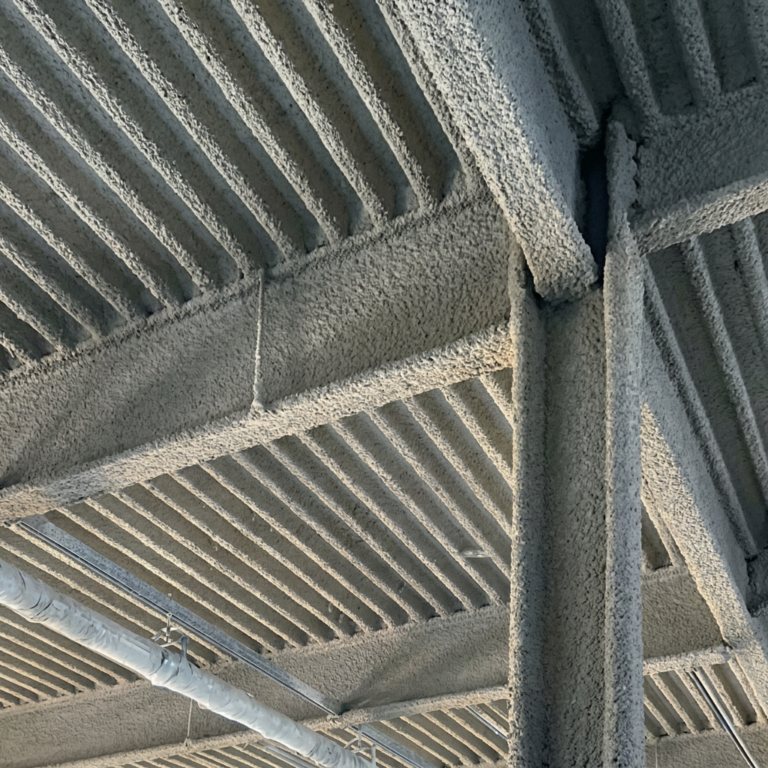
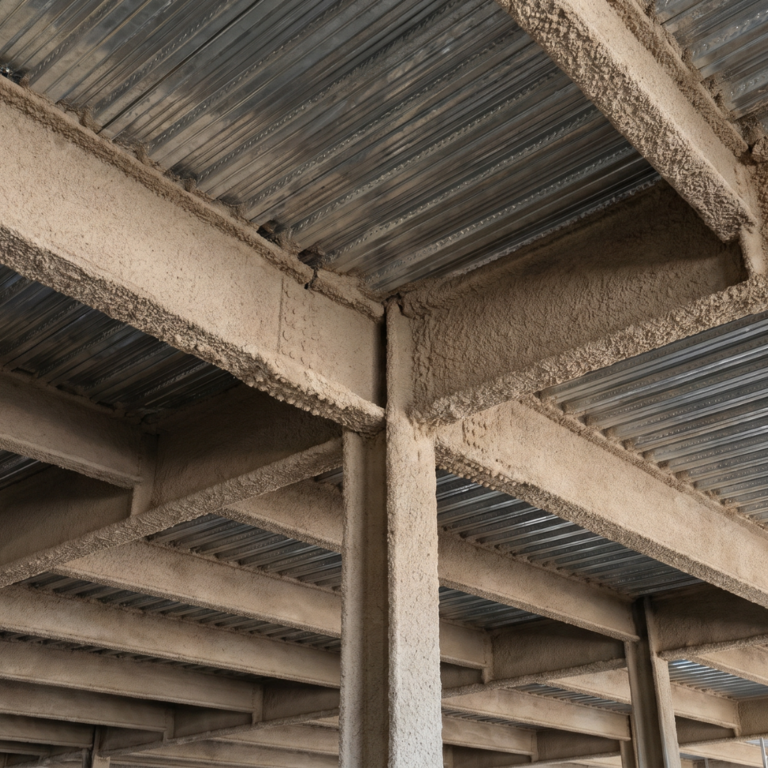
Yes. K-13 spray-applied insulation is UL listed and approved for application over spray-applied fire-resistive materials (SFRM) in 16 UL BXUV Guide Design Assemblies, as documented by the manufacturer. The K-13 layer adds thermal insulation (R-3.7 per inch) and acoustic performance (NRC up to 1.05) without reducing the structural fire resistance rating established by the SFRM beneath it.
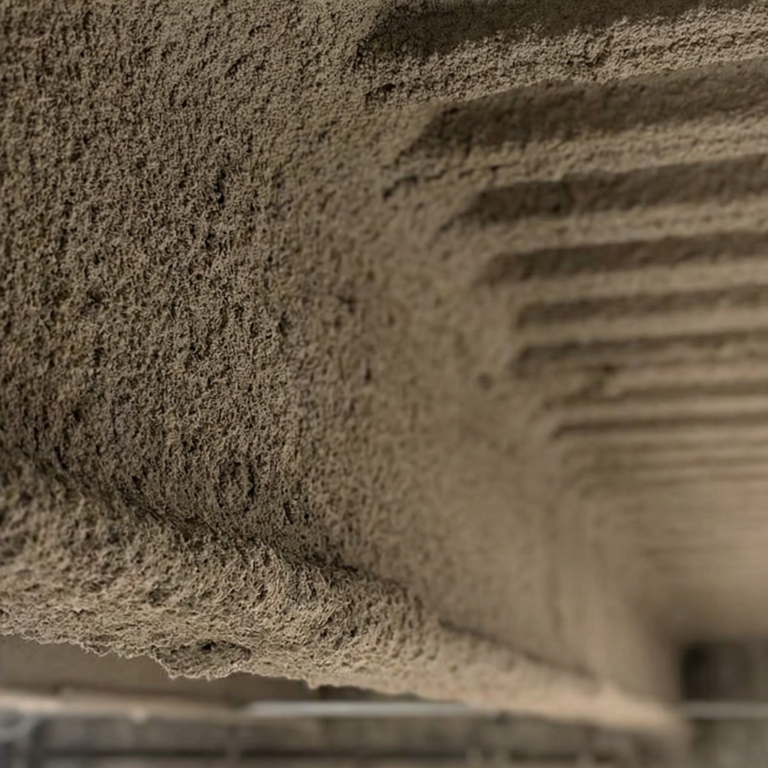
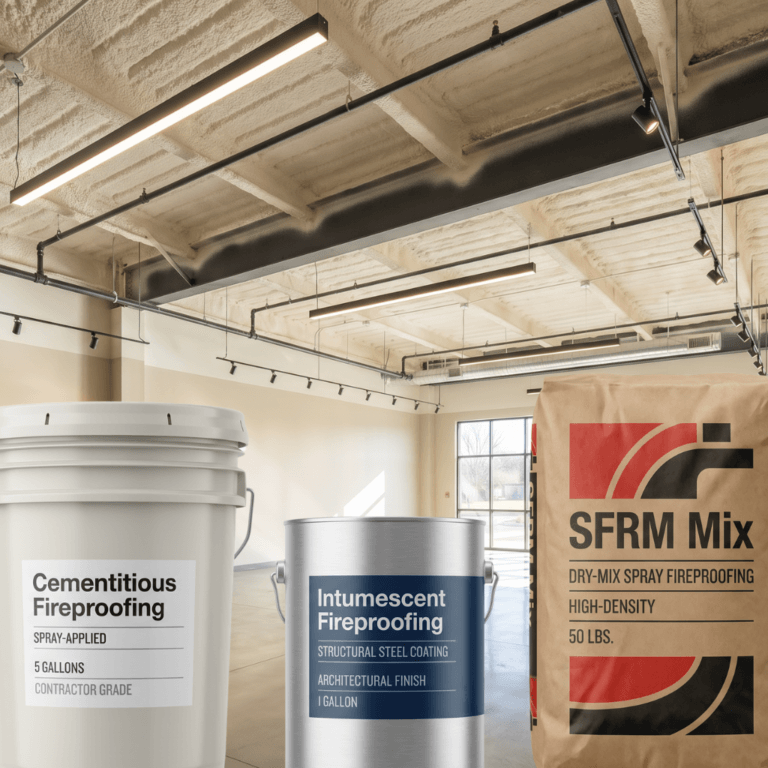
That last point is the one that gets lost. SFRM, such as Monokote from GCP Applied Technologies or CAFCO Blaze-Shield from Isolatek International, is the fire-resistive component. It is what the building code requires for structural steel. K-13 is a finish-and-performance layer that sits on top. Both K-13 and its finer-texture sister product, SonaSpray “fc,” are made by International Cellulose Corporation (ICC) in Houston, Texas.
Inside the UL assemblies, K-13 is listed as an “optional, not shown” item. That phrasing is the technical heart of this whole topic. It means UL tested the assembly with the sprayed fiber present and confirmed it does not compromise the fire rating. It does not mean the fiber adds to the rating. More on that distinction below, because most competing pages get it wrong.
Why Buildings Need Both: The Scenarios That Drive Combined Systems
Most projects do not specify a combined system by accident. Three distinct situations push a design toward SFRM plus K-13 in the same assembly.
Open-Ceiling Commercial Interiors
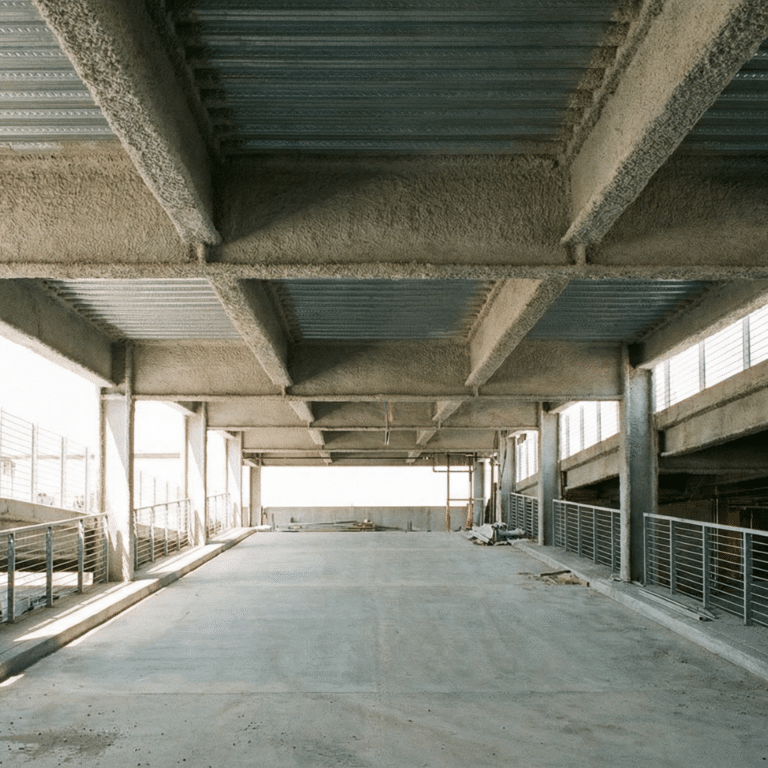
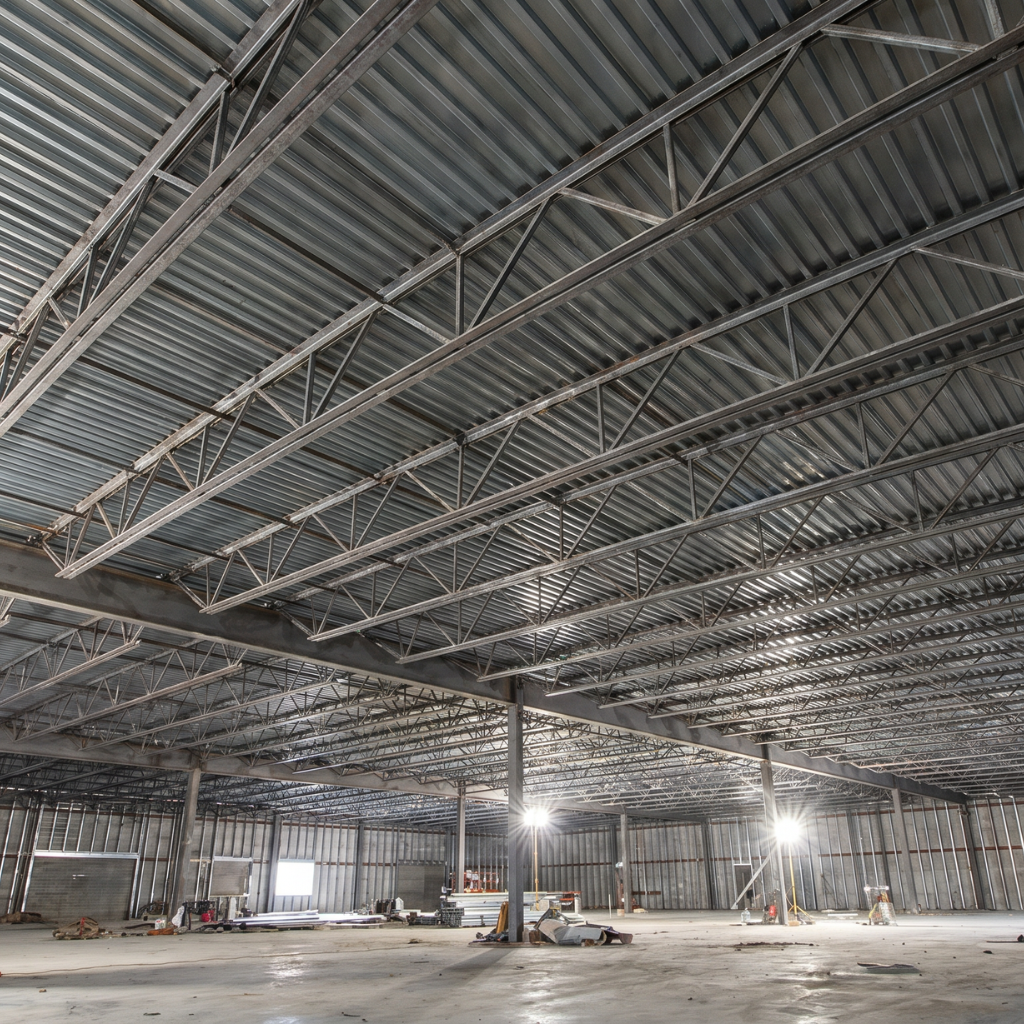
This is the most common driver. Warehouses, gymnasiums, schools, event centers, and airport concourses are often designed with exposed structural steel and deck, no dropped ceiling. The construction type under IBC (2021) Table 601 drives a fire-resistance requirement on that steel, so SFRM is required. But an exposed steel ceiling also reflects sound and offers almost no thermal value on its own. SFRM alone gives you fire protection and a hard, acoustically reflective surface. K-13 over the SFRM solves the acoustic and thermal side in the same exposed assembly, which is why you see it specified for K-13 acoustic performance and NRC ratings in spaces where reverberation and energy loss both matter.
Code note: unless otherwise stated, code references on this page are to the 2021 International Building Code. Code adoption is state and local. Across the states we serve, adopted IBC editions currently range from the 2012 edition to the 2024 edition, some states have no statewide commercial building code, and several enforce NFPA 1 or NFPA 101 rather than the International Fire Code. Minnesota and Wisconsin publish state-amended code books whose numbering and requirements differ from the model code. This is general technical information, not a code determination for your project. Confirm the adopted edition and any local amendments with your authority having jurisdiction.
Single-Trade Efficiency
When one qualified contractor applies both the SFRM and the K-13, the project gains scheduling control and single-source accountability. When two separate subcontractors handle the two scopes, the seams between them cause problems. The fireproofing sub finishes, the mechanical trades run their work and nick the SFRM, somebody has to patch it, and the K-13 sub waits on a cure that nobody is tracking. I have watched that exact sequence stall jobs. At Bahl Fireproofing we handle both scopes with one crew, which removes the coordination gap and the finger-pointing that comes with it.
Thermal Bridging at Building Envelope Penetrations
Structural steel that crosses the building envelope, such as a perimeter column or a canopy beam, conducts heat. Steel’s thermal conductivity is more than 1,000 times that of typical insulation, so a bare fireproofed member acts as a thermal bridge between conditioned and unconditioned space. K-13 applied over the fireproofed steel where it penetrates the envelope reduces that heat transfer. United Spray’s technical documentation calls out this same application.
The UL Design Assemblies: What “UL Listed Over Fireproofing” Actually Means
K-13 is UL approved and listed in 16 UL BXUV Guide Design Assemblies as allowable sprayed fiber over SFRM. BXUV is UL’s category for fire-resistance-rated assemblies certified to ANSI/UL 263 in the United States. The 16 assemblies cover both roof designs (the P-series) and floor designs (the D, G, and L series), grouped by the SFRM manufacturer they were tested with.
| SFRM Manufacturer | Roof Assemblies (P-series) | Floor Assemblies (D/G/L-series) |
|---|---|---|
| GCP Applied Technologies (Monokote) | P725, P732, P753 | D779, D798, D925, D985, L702 |
| Isolatek International (CAFCO Blaze-Shield) | P719, P723, P819 | D759, D858, D902, G705, G801 |
The value of these listings is not just the assembly numbers. It is what each assembly’s tables tell a contractor about how thick the K-13 can go.
How the Thickness Tables Work
Take UL Design D798, a GCP/Monokote floor assembly updated August 2024. K-13 appears in it as Item 6A: “Sprayed Fiber (Optional, Not Shown),” classified for surface burning characteristics, at a maximum applied density of 3.5 pcf, applied over the SFRM on both the steel deck and the supporting members, per the published UL assembly. The assembly carries Restrained and Unrestrained Assembly Ratings of 1, 1-1/2, 2, 3, and 4 hours.
The allowable K-13 thickness is not a single number. It depends on two things: how thick the SFRM is, and what density the SFRM is. Here is the deck table from D798 for K-13 at the 3.5 pcf maximum density.
| Installed SFRM Thickness on Deck | SFRM at 15 pcf | SFRM at 22 pcf | SFRM at 40 pcf | SFRM at 50 pcf |
|---|---|---|---|---|
| 5/16 in. | 5-3/8 in. | 7-7/8 in. | 8 in. | 8 in. |
| 3/8 in. | 5-1/16 in. | 7-7/16 in. | 8 in. | 8 in. |
| 11/16 in. | 3-3/4 in. | 5-1/2 in. | 8 in. | 8 in. |
| 1-7/16 in. | 9/16 in. | 13/16 in. | 8 in. | 8 in. |
| 1-1/2 in. | 1/4 in. | 3/8 in. | 8 in. | 8 in. |
Read across one row and the pattern is clear. Thin, low-density SFRM sharply limits how much K-13 you can put over the deck. At 1-1/2 inches of 15 pcf SFRM, you are allowed only 1/4 inch of K-13. Move to higher-density SFRM, the kind used where bond strength or impact resistance matters, and the allowable K-13 jumps to the full 8 inches. This is why a contractor has to know the SFRM density on the project before promising a K-13 thickness. The listed sprayed fiber for D798 Item 6A is specifically International Cellulose Corp Types K13, URE-K, or SonaSpray FC. The same logic applies to the SFRM density categories that affect how thick K-13 can be applied over them across the other 15 assemblies.
How K-13 and SFRM Perform Together
The two materials do different jobs, and their published specifications reflect that. SFRM is rated for fire endurance. K-13 is rated for heat flow and sound. The combined system gives a building both, layered.
K-13’s verified specifications come from International Cellulose Corporation’s current technical data sheet.
| Property | K-13 Value | Test Standard |
|---|---|---|
| R-value | 3.7 per inch | ASTM C518 |
| Flame spread | 5 | ASTM E84 |
| Smoke developed | 5 | ASTM E84 |
| Fire classification | Class 1, Class A | ASTM E84 / UL 723 |
| Bond strength | Greater than 150 psf | ASTM E736 |
| NRC at 1.5 in. on 1.5 in. metal deck | 1.05 | ASTM C423 |
| NRC at 2 in. on solid backing | 1.00 | ASTM C423 |
| Max thickness without mechanical support | 5 in. | ICC |
| Max thickness with High-R mechanical support | 10 in. (up to R-37) | ICC |
A note on the acoustic numbers, because context is mandatory with NRC. K-13 does not have a single NRC. It reaches NRC 1.05 at 1.5 inches over a 1.5-inch ribbed metal deck, and NRC 1.00 at 2 inches over solid backing. Quoting “NRC 1.05” with no thickness or substrate is meaningless.
For context, a commercial-density SFRM such as CAFCO Blaze-Shield II carries its own modest acoustic value (around NRC 0.90 at 1 inch on a solid base) and minimal thermal value. So in a combined assembly, the K-13 is doing essentially all of the acoustic and thermal work, while the SFRM is doing all of the fire-rating work. If you put 2 inches of K-13 over your SFRM, you are adding roughly R-7.4 of thermal resistance and bringing the deck up to strong sound absorption, without touching the fire rating.
Does K-13 Add to the Fire Rating?
No. This is the single most important technical point in the combined system, and it is where most sources are sloppy. The UL assembly tables show the K-13 thickness that is allowable without reducing the rating. They do not show the rating going up because K-13 was added. The fire resistance rating, whether 1 hour or 4 hours, is established by the SFRM and the assembly geometry. K-13 is verified as a compatible addition inside that already-rated assembly.
Framing it as “double fire protection” is wrong and, on a commercial project, it is the kind of claim that gets a specification challenged. The correct framing: K-13 delivers thermal and acoustic performance without compromising the fire resistance rating the SFRM already provides.
Application Sequence: Getting the Order Right
The combined system fails when the sequence is wrong. SFRM and K-13 are both spray-applied, but they go on at very different points in the schedule, and the gap between them is where coordination breaks down. Here is the order that works.
- Concrete and structural work first. SFRM cannot go on a steel floor deck until the concrete pour on that deck is complete. Spraying too early risks delamination when the deck deflects under the pour.
- Roofing complete, roof traffic stopped. Before SFRM goes on the underside of a roof deck, the roof must be on, mechanical units set, and construction traffic across the roof finished. Foot and equipment traffic above fresh SFRM compromises adhesion.
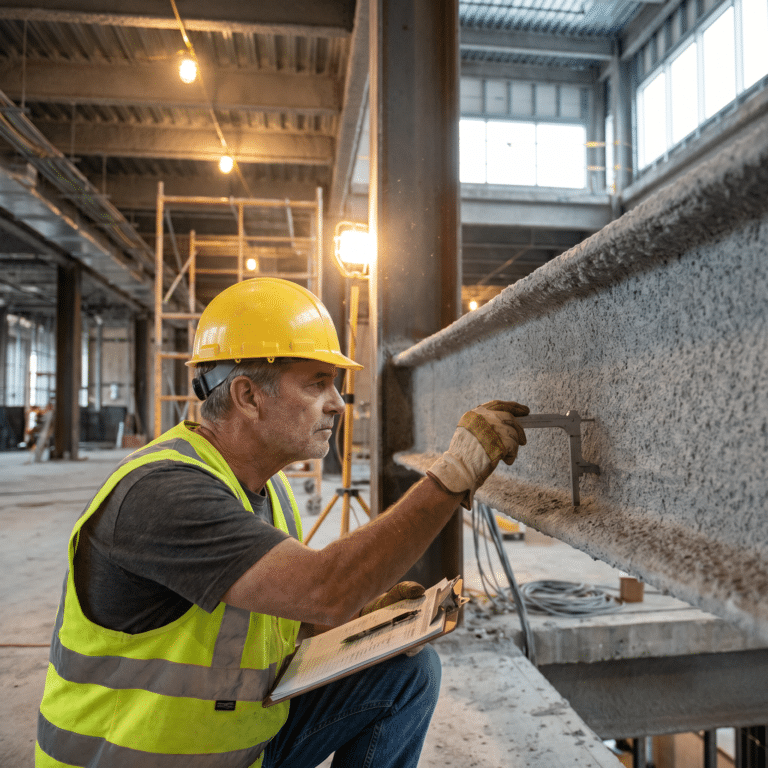
- MEP pre-work done. All clips, hangers, sleeves, and attachments from the mechanical, electrical, and plumbing trades go in before SFRM. Running duct, pipe, or conduit after the SFRM is on means cutting into it and patching it.
- SFRM application and special inspection. SFRM is applied per the UL-listed assembly and inspected per IBC special-inspection requirements for sprayed fire-resistant materials, covering thickness, density, bond strength, and surface conditions.
- SFRM cure. Initial cure runs roughly 24 to 48 hours, with full strength developing over several days to weeks depending on thickness, temperature, and ventilation.
- Damage inspection and repair. Before any K-13 goes on, every spot of SFRM damaged by the trades has to be repaired back to the rated design. No code or UL standard allows a percentage of missing fireproofing. If it is gone, it gets restored.
- K-13 application. Applied by a manufacturer-licensed contractor over the cured, inspected, repaired SFRM, which must be clean, dry, and free of oil, grease, and loose debris.
The Texas and Oklahoma Cure-Time Problem
Climate changes step 5 more than people expect. In a hot, dry Texas summer with temperatures above 100 degrees, the surface of fresh SFRM can skin over fast while moisture is still trapped underneath. That crust looks cured but is not, and K-13 applied over it can fail to bond properly. On humid Gulf Coast jobs around Houston, the opposite problem shows up: high ambient moisture slows the cure and stretches the wait before K-13 can follow. Managing that window across the temperature and humidity swings in Texas, Kansas, and Oklahoma is field judgment, not a number off a data sheet. Rushing it to hold a schedule is how adhesion failures happen.
This is also where the single-scope advantage pays off in practice. When one contractor owns both the SFRM and the K-13, that contractor controls the cure window and the damage-repair step directly, instead of two subs negotiating over whose schedule slips.
Code and Inspection Requirements
The combined system lives under several code and standards requirements. None of them are optional, and the K-13 layer does not remove any of them from the SFRM beneath it.
IBC (2021) Table 601 sets the fire-resistance rating by construction type. That is what determines whether SFRM is required and at what hourly rating, which in turn drives the whole assembly.
IBC special inspections for sprayed fire-resistant materials apply to every SFRM installation. Under the current IBC edition, this is IBC (2021) Section 1705.15 (Section 1705.14 in the 2018 and earlier editions), which covers physical and visual tests, surface conditions, application, thickness, density, and bond strength. (Older 2015-edition references list this as 1705.14; confirm the section against the edition your authority having jurisdiction has adopted.) Applying K-13 on top does not eliminate or modify any of these inspections.
IBC high-rise bond strength requirements scale with building height. SFRM minimum bond strength is 150 psf for buildings other than high-rises, 430 psf for high-rise buildings up to 420 feet above fire department access, and 1,000 psf above 420 feet, per IBC (2021) Section 403.2.3, which was Section 403.2.4 in the 2018 and earlier editions, as detailed in Isolatek’s bond-strength testing guide. These changes followed NIST’s recommendations after the World Trade Center investigation. K-13’s own bond strength, greater than 150 psf per ASTM E736, is independent of and does not affect the SFRM’s required bond strength. We apply these systems on commercial projects throughout our Texas, Kansas, and Oklahoma service areas, where adopted code editions and local amendments vary.
ASTM E119 and ANSI/UL 263 are the fire-endurance test standards behind the rated assemblies. Because K-13 was present in the tested assembly, its inclusion is already accounted for in the rating.
NFCA 100, the National Fireproofing Contractors Association standard practice for SFRM application, is the industry reference for application, scheduling, and quality assurance, and is cited in most SFRM specifications.
What to Ask a Contractor About a Combined System
If you are a general contractor or building owner specifying or buying this work, a handful of questions separate a contractor who understands the assembly from one who does not.
- Is the K-13 applicator licensed by International Cellulose Corporation, the manufacturer?
- Is the K-13 going over an SFRM product that is actually included in the relevant UL assembly?
- Are you self-performing both the SFRM and the K-13, or coordinating two separate subs?
- What is the SFRM density on this project, and what K-13 thickness does that allow per the UL table?
- How are you handling inspection and repair of MEP-damaged SFRM before the K-13 goes on?
A contractor who can answer the density question without looking it up is a contractor who has read the assembly. That is the one you want.
Related Reading
- New to the material itself? Start with K-13 application methods for commercial projects, which covers standalone K-13 installation technique.
- Warehouses are a primary combined-system use case. See K-13 warehouse insulation for acoustic control and energy savings.
- For the fire-rating layer underneath, read our complete guide to spray-applied fireproofing.
Frequently Asked Questions
Q: Can K-13 be applied over any spray fireproofing product? A: No. K-13 is UL listed over specific SFRM products in 16 named BXUV assemblies, tied to particular GCP/Monokote and Isolatek/CAFCO products. The SFRM on your project has to be one that appears in the relevant UL assembly. Always reference the specific UL Design number in the project specification.
Q: Does K-13 over SFRM increase the fire rating? A: No. The rating comes from the SFRM and the tested assembly. K-13 is verified as a compatible “optional, not shown” component that does not reduce the rating. It adds thermal and acoustic performance, not fire resistance.
Q: What is the R-value of K-13 over spray fireproofing? A: K-13 contributes R-3.7 per inch (ASTM C518). The SFRM beneath it adds little thermal value, so the K-13 thickness drives the combined system’s added R-value. Two inches of K-13 adds roughly R-7.4.
Q: How long after SFRM application can K-13 be installed? A: After the SFRM has reached adequate cure and passed special inspection, and after any trade damage is repaired. Initial SFRM cure is roughly 24 to 48 hours, but full strength takes longer and is affected by thickness, temperature, and humidity. In hot or humid conditions the window shifts, so the call is based on field conditions, not a fixed clock.
Q: Do I need special inspection for K-13 over fireproofing? A: The SFRM requires special inspection regardless of whether K-13 goes over it. Adding K-13 does not remove that requirement. K-13 itself is verified for bond strength per ASTM E736. Confirm the inspection scope with your authority having jurisdiction.
Q: What UL designs cover K-13 over CAFCO Blaze-Shield? A: The Isolatek/CAFCO assemblies that include K-13 are P719, P723, P819, D759, D858, D902, G705, and G801.
Q: What UL designs cover K-13 over Monokote? A: The GCP/Monokote assemblies that include K-13 are P725, P732, P753, D779, D798, D925, D985, and L702.
Q: Can the K-13 High-R System be applied over fireproofing? A: The High-R System uses StructaLath mechanical support and allows K-13 up to 10 inches thick for an R-value of up to R-37. It can be used where the structural design and the governing UL assembly parameters allow it. Verify the specific assembly and support detail for your project.
Key Takeaways
The system, in one line
- SFRM provides the fire rating. K-13 provides thermal and acoustic performance. They layer; they do not substitute for each other.
What “UL listed over fireproofing” means
- K-13 is listed in 16 BXUV assemblies as an optional component that does not reduce the rating.
- Allowable K-13 thickness depends on the SFRM thickness and density, per each assembly’s tables.
The accuracy point that matters
- K-13 does not add to the fire rating. Avoid “double protection” framing.
Sequence is everything
- SFRM goes on after concrete, roofing, and MEP pre-work, then cures and is inspected.
- All SFRM damage is repaired before K-13 is applied. No missing fireproofing is acceptable.
Regional reality
- Texas heat can skin SFRM before it cures; Gulf Coast humidity slows the cure. Both move the window for applying K-13.
Why single-scope helps
- One contractor handling both scopes controls the cure window and the repair step and removes the trade-coordination gap.
Contact Bahl Fireproofing
If your next project pairs a code-required fire rating with real thermal or acoustic demands, the combined system only works when one team understands both halves of it. We apply SFRM and K-13 across Texas, Oklahoma, Kansas, Nebraska, Minnesota, and Wisconsin, on one scope, with the sequencing and inspection handled in-house. Call 512-387-2111 or email ross@bahlfireproofing.com to talk through your assembly, or contact Bahl Fireproofing to request a bid.
This article provides general educational information about fireproofing and insulation systems. It is not a substitute for project-specific engineering, code analysis, or the listed UL design for your assembly. Fire-resistance requirements, bond strength thresholds, and special-inspection provisions vary by adopted code edition and local authority having jurisdiction. Always verify requirements with a licensed architect or engineer and your authority having jurisdiction before specifying or installing a combined system.