Spray foam is an excellent insulator, but the building code does not treat it as just insulation. Because it is a foam plastic, the IBC requires it to be separated from the building interior by a thermal barrier in most cases. This guide explains when spray foam needs a thermal barrier, what qualifies as one, the narrow exceptions, and how to avoid the inspection failure that comes from leaving foam exposed.
TLDR: Spray foam is a foam plastic, and under IBC (2021) Section 2603 it almost always needs a spray foam thermal barrier, typically half-inch gypsum board or a material tested to NFPA 275, between the foam and the building interior. The exceptions are narrow and specific: attics and crawlspaces with utility-only access can use a lighter ignition barrier, and a few assemblies like masonry-covered foam are exempt. Leaving foam exposed in an occupied space is a code violation that fails inspection. Whether you need a thermal barrier, an ignition barrier, or a tested coating depends on where the foam goes.
Code note: unless otherwise stated, code references on this page are to the 2021 International Building Code. Code adoption is state and local. Across the states we serve, adopted IBC editions currently range from the 2012 edition to the 2024 edition, some states have no statewide commercial building code, and several enforce NFPA 1 or NFPA 101 rather than the International Fire Code. Minnesota and Wisconsin publish state-amended code books whose numbering and requirements differ from the model code. This is general technical information, not a code determination for your project. Confirm the adopted edition and any local amendments with your authority having jurisdiction.
Here is the mistake. A contractor installs spray foam in a commercial space, leaves it exposed because the insulation is in, and then fails inspection because the IBC requires a thermal barrier between the foam and the interior. Now gypsum board or a tested coating goes on after the fact, on a schedule that did not budget for it. The same thing happens when a crew uses an ignition barrier in an occupied space that needed the full thermal barrier, or assumes an attic exception applies when the access does not qualify. The foam insulates fine. The fire-protection covering is where the project gets caught, and it is entirely avoidable with the code read up front.
Does Spray Foam Need a Thermal Barrier?
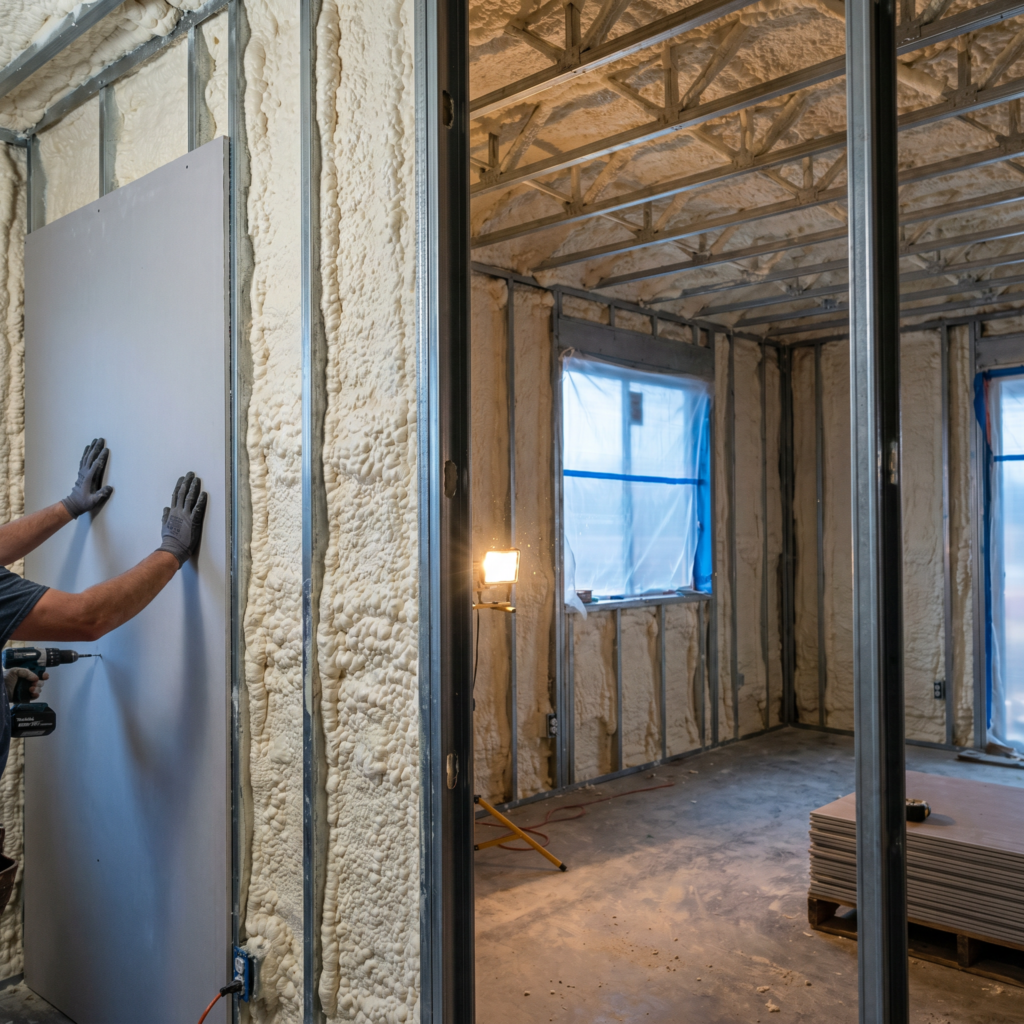
Yes, in most cases. Under IBC (2021) Section 2603.4, spray polyurethane foam is a foam plastic that must be separated from the building interior by an approved thermal barrier, typically half-inch gypsum board or a material tested to NFPA 275. Exposed foam is permitted only under specific exceptions, such as attics and crawlspaces with limited access, where a lighter ignition barrier is allowed instead.
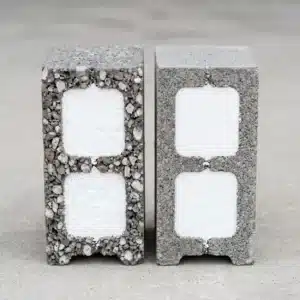
The requirement applies to the material, not the brand or the cell structure. Both closed-cell and open-cell spray foam insulation are foam plastics under IBC Chapter 26, and both need the thermal barrier unless a listed exception applies. That is the part that surprises people: the better the foam performs as insulation, the easy assumption is that the job is done once it is sprayed, but the code sees a foam plastic that still has to be covered. Getting that covering right is part of every job our commercial spray foam insulation services plan for from the start.
Why the Code Requires a Thermal Barrier Over Foam Plastic
Foam plastic ignites and can spread fire and smoke, so the code’s approach is to keep it separated from the occupied space, so that in a fire the foam is not the first thing to burn and the barrier buys time to evacuate. There are two distinct fire requirements in IBC (2021) Section 2603, and they are often confused. The first is surface burning under IBC (2021) Section 2603.3: foam plastic must have a flame spread index of 75 or less and a smoke-developed index of 450 or less when tested under ASTM E84. The second is the thermal barrier under IBC (2021) Section 2603.4.
It is worth pinning down that 75 number, because it gets miscited. The general foam-plastic threshold is a flame spread index of 75 or less, not the 25 figure that applies to Class A interior finishes, and the smoke-developed index limit is 450. The one place the code drops to a flame spread index of 25 or less is the cooler-and-freezer-wall exception, which is a specific case with its own conditions. Mixing those numbers up is a common way to misread what a foam product has to meet.
Over the past 20 years on commercial insulation work across Texas, Kansas, and Oklahoma, the spray foam that fails inspection almost never fails because the foam was bad. It fails because it was left exposed where the code requires a thermal barrier, or because someone used an ignition barrier in an occupied space that needed the full thermal barrier, or assumed an attic exception applied when the access did not qualify. The foam insulates fine. The fire-protection covering is where projects get caught.
What Qualifies as a Thermal Barrier?
A thermal barrier is a specific, tested level of protection, not just any covering. Under IBC Section 2603.4, foam plastic must be separated from the interior by half-inch gypsum wallboard, heavy timber per Section 602.4, or a material that is tested to and meets the acceptance criteria of both the Temperature Transmission Fire Test and the Integrity Fire Test of NFPA 275. The performance idea behind it is that the barrier limits the average temperature rise of the unexposed surface to no more than 250 degrees Fahrenheit after 15 minutes of fire exposure and stays in place for those 15 minutes.
Half-inch gypsum board is the prescriptive default, the option that needs no further testing. Where gypsum is not practical, certain tested intumescent or mastic coatings can serve as a thermal barrier if they meet the NFPA 275 criteria, and they are evaluated for that use through an ICC Evaluation Service report. Those coatings are the main alternative to gypsum for spray foam that has to stay exposed, but the coating and thickness have to be the ones in the evaluation report, not a generic paint.
Thermal Barrier vs Ignition Barrier vs Special Approval
This is where projects go wrong, because three different things get treated as interchangeable when they are not. The table lays out the distinction.
| Protection level | Where it applies | Typical material | Test basis |
|---|---|---|---|
| Thermal barrier (2603.4) | Occupied and conditioned interior spaces | Half-inch gypsum, or a tested coating | NFPA 275, or prescriptive gypsum |
| Ignition barrier (attic/crawlspace exception) | Attics and crawlspaces entered only to service utilities | 1.5-inch mineral fiber, 3/8-inch gypsum, listed coatings | Listed materials, or ICC-ES evaluation |
| Special approval (2603.9) | Specific tested foam-and-covering assemblies | Foam plus coating at tested thickness | Room corner test (NFPA 286 and others) |
The ignition barrier is a lighter level of protection allowed only where entry into an attic or crawlspace is limited to servicing utilities, not for storage or living space. The special-approval path under IBC (2021) Section 2603.9 lets a specific foam-and-coating system be used without a prescribed barrier if it passes a room corner test. The trap is assuming a room corner test result means the system is a thermal barrier. It does not. Passing a room corner test and meeting the temperature-transmission criterion of a thermal barrier certify two different things, and a special-approval assembly is approved in lieu of the thermal barrier, not as one.
When Is a Thermal Barrier Not Required?
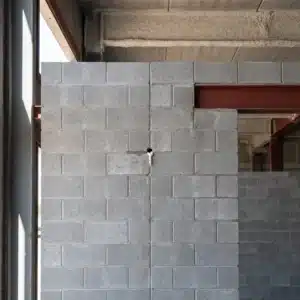
The code lists narrow exceptions in IBC (2021) Section 2603.4.1, and they are specific. A thermal barrier is not required for foam plastic in a masonry or concrete wall, floor, or roof where the foam is covered on each face by at least 1 inch of masonry or concrete. Cooler and freezer walls have their own exception, allowing foam up to 10 inches thick with a flame spread index of 25 or less, a metal facing, and sprinkler protection. Attics and crawlspaces with utility-only access can use an ignition barrier instead of a thermal barrier. And foam plastic that is part of a Class A, B, or C roof-covering assembly can be used without a thermal barrier where the assembly passes FM 4450 or UL 1256.
One caution: the exception numbering and details change between code editions, with the list running through subsections like 2603.4.1.1 to 2603.4.1.14 depending on the edition. Because Texas and the surrounding states adopt different editions by jurisdiction, the exact exception that applies has to be checked against the adopted edition rather than assumed from memory.
How This Plays Out on Commercial Spray Foam Jobs
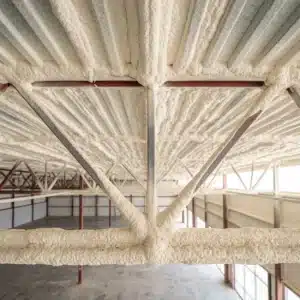
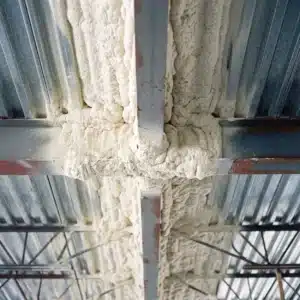
On a real project, the rule of thumb is simple: if the foam faces an occupied or conditioned interior space, plan on a thermal barrier. In commercial walls and ceilings, that means half-inch gypsum or a tested coating over the foam. Exposed spray foam on a warehouse or metal-building ceiling is the case people most often get wrong, assuming that an industrial space is exempt. It generally is not, unless a specific assembly or exception applies, so the foam still needs a thermal barrier or a tested coating rated for that use.
The practical consequence is that the spray foam thermal barrier is a separate scope and a separate cost from the foam itself. A bid that prices the insulation but forgets the gypsum or the tested coating is short, and the building official will catch the gap at inspection. Planning the barrier alongside the foam, and confirming that any coating is backed by the right evaluation report, is what keeps the job from stalling.
Specifying Spray Foam and Its Barrier in Texas, Kansas, and Oklahoma
Because code adoption in this region happens locally, the edition of the IBC in force, and therefore the precise exception numbering and any amendments, varies by jurisdiction. A foam-and-barrier approach that satisfies one city’s adopted edition should still be checked against the adopted edition where the project actually sits. That is the same discipline we bring to insulation work throughout our Texas, Kansas, and Oklahoma service area: confirm the adopted code, then build the spray foam thermal barrier into the scope rather than discovering it at inspection.
Two Different Requirements: IBC (2021) Section 2603.4 and IBC (2021) Section 2603.5.5
Everything above concerns IBC (2021) Section 2603.4, which protects the building interior from the foam. The same chapter carries a second requirement aimed at fire spreading up the outside of the building, and the two are conflated constantly. Satisfying either one has no bearing on the other.
To restate the first precisely: IBC (2021) Section 2603.4 asks for an approved thermal barrier between foam plastic and the interior of the building, satisfied by 1/2-inch gypsum wallboard, heavy timber complying with IBC (2021) Section 602.4, or a material meeting the acceptance criteria of both the Temperature Transmission Fire Test and the Integrity Fire Test of NFPA 275. The code text does not call this a 15-minute barrier. That phrase is industry shorthand for the NFPA 275 acceptance criteria, not language you will find in the section.
The second reaches only outward. IBC (2021) Section 2603.5 governs exterior walls containing foam plastic insulation in buildings of Type I, II, III or IV construction, of any height, and multi-story cold storage buildings required to be of noncombustible construction. For those walls, IBC (2021) Section 2603.5.5 requires that the exterior wall assembly be tested in accordance with and comply with the acceptance criteria of NFPA 285. Exterior walls of Type V buildings are exempt from the whole of 2603.5 and comply with IBC (2021) Sections 2603.2, 2603.3 and 2603.4 alone.
Why the Confusion Gets Expensive
A thermal barrier is a material requirement you can satisfy in the field with a sheet of gypsum. NFPA 285 is a laboratory result you either hold or do not, obtained before the wall is built. NFPA 285 is the Standard Fire Test Method for Evaluation of Fire Propagation Characteristics of Exterior Wall Assemblies Containing Combustible Components, current edition 2025. It evaluates a whole wall rather than any single material in it, and that is why it functions as an assembly test instead of a product test: no single foam carries NFPA 285 compliance alone, and substituting a cladding, a barrier or a window detail can void the assembly listing.
A wall can therefore have its gypsum installed perfectly and still be non-compliant, because 2603.4 was answered and 2603.5.5 never was. Finding that out after the facade is closed up is the version nobody budgets for.
The Exceptions Belong to Different Sections
- The two exceptions to 2603.5.5. First, one-story buildings complying with IBC (2021) Section 2603.4.1.4. Second, foam plastic covered on each face by not less than 1 inch of masonry or concrete, with either no airspace, or a flame spread index of 25 or less and an airspace not more than 1 inch.
- Ignition barriers are elsewhere. The attic and crawl space provisions that come up in barrier discussions sit under 2603.4 and do not touch the exterior wall requirement.
- Surface burning is a third thing. IBC (2021) Section 2603.3 is a flame spread index of 75 or less with a smoke-developed index of 450 or less, while IBC (2021) Section 2603.5.4 tightens flame spread to 25 or less on Type I through IV exterior walls, tested at the intended thickness up to 4 inches per ASTM E84 or UL 723.
Ask which section is being answered every time somebody says the foam is code compliant. That determination is made by your licensed architect or engineer and the authority having jurisdiction.
Frequently Asked Questions
Does spray foam need a thermal barrier? In most cases, yes. Under IBC (2021) Section 2603.4, spray foam is a foam plastic that must be separated from the building interior by an approved thermal barrier, usually half-inch gypsum board or a material tested to NFPA 275. Exposed foam is allowed only under specific exceptions like attics and crawlspaces with limited access.
What qualifies as a thermal barrier for spray foam? Half-inch gypsum wallboard, heavy timber per IBC (2021) Section 602.4, or a material tested to and meeting the NFPA 275 criteria. The barrier must limit the unexposed surface temperature rise to no more than 250 degrees Fahrenheit after 15 minutes and stay in place for that time. Certain tested coatings can also qualify.
What is the difference between a thermal barrier and an ignition barrier? A thermal barrier is the full level of protection required in occupied and conditioned spaces. An ignition barrier is a lighter protection allowed only in attics and crawlspaces entered solely to service utilities. The two are not interchangeable, and using an ignition barrier where a thermal barrier is required fails inspection.
Can you leave spray foam exposed? Only under specific code exceptions, such as attics and crawlspaces with limited access using an ignition barrier, masonry-covered foam, or qualifying roof assemblies. In a normal occupied commercial space, exposed foam is not permitted and must be covered by a thermal barrier or a tested coating.
Do closed-cell and open-cell spray foam both need a thermal barrier? Yes. Both are foam plastics under IBC Chapter 26, and the thermal barrier requirement applies to both regardless of cell structure or R-value. The requirement is about the material being a foam plastic, not about how well it insulates.
Can an intumescent coating be a thermal barrier over spray foam? It can, if the specific coating at the specified thickness is tested to and meets the NFPA 275 thermal barrier criteria, documented in an ICC Evaluation Service report. Some coatings instead qualify as ignition barriers for attic and crawlspace use. Always verify the coating against its evaluation report.
What is the 15-minute requirement for a thermal barrier? The barrier must limit the average temperature rise of the surface away from the fire to no more than 250 degrees Fahrenheit after 15 minutes of fire exposure and remain in place for those 15 minutes. The 15 minutes represents time for occupants to evacuate before the foam behind the barrier becomes involved.
When is a thermal barrier not required? Under narrow exceptions: masonry or concrete covering the foam by at least 1 inch each face, cooler and freezer walls meeting their specific conditions, attics and crawlspaces with utility-only access using an ignition barrier, and qualifying Class A, B, or C roof assemblies. The exact exceptions vary by code edition, so confirm the adopted edition.
Key Takeaways
- Spray foam is a foam plastic, and it almost always needs a thermal barrier. Under IBC (2021) Section 2603.4, foam must be separated from the building interior by half-inch gypsum board or an NFPA 275-tested equivalent.
- Both cell types are covered. Closed-cell and open-cell foam are both foam plastics, and the requirement applies regardless of R-value or product.
- Know the 75 number. Foam plastic must meet a flame spread index of 75 or less and a smoke-developed index of 450 or less under ASTM E84, not the 25 figure used for Class A interior finishes.
- Thermal, ignition, and special approval are different. A thermal barrier protects occupied spaces, an ignition barrier is only for limited-access attics and crawlspaces, and a special-approval assembly is approved in lieu of a thermal barrier, not as one.
- The exceptions are narrow and edition-specific. Masonry-covered foam, cooler and freezer walls, limited-access attics and crawlspaces, and certain roof assemblies, with numbering that changes by code edition.
- The spray foam thermal barrier is a separate scope. Price and schedule the gypsum or tested coating alongside the foam, because a bid that forgets it is short and will fail inspection.
- Confirm the adopted edition. In this region, the IBC edition and its exception numbering vary by jurisdiction, so check the local adoption before assuming an exception applies.
Related Reading
- New to commercial foam? Start with our commercial spray foam insulation guide for the full overview.
- Choosing a foam type? See closed-cell vs open-cell spray foam for how the two compare on a commercial project.
- Insulating a cold space? Our guide to spray foam insulation for cold storage covers the freezer-wall case where the barrier rules differ.
If your next project uses spray foam and you want the thermal barrier handled right the first time, the work is confirming whether the foam faces an occupied space, choosing gypsum or a tested coating backed by the right evaluation report, and checking the exceptions against the adopted code edition. That is how our crew approaches spray foam throughout Texas, Oklahoma, Kansas, Nebraska, Minnesota, and Wisconsin. Reach me directly at 512-387-2111 or ross@bahlfireproofing.com, or Contact Bahl Fireproofing to make sure the foam and its barrier both pass inspection.
This article provides general educational information about commercial spray foam insulation and the foam plastic provisions of the International Building Code. It is not engineering, legal, or code-compliance advice and does not replace project-specific direction from a licensed architect or engineer. Code citations reference specific IBC editions, and the adopted edition, exception numbering, and amendments vary by the authority having jurisdiction. Thermal barrier and ignition barrier products, tested coatings, and their evaluation reports vary by manufacturer and are periodically revised, so confirm the current requirements and any product’s evaluation report against the manufacturer’s published data. Always confirm code requirements, product suitability, and barrier selection with the manufacturer, the building official, and a licensed architect or engineer before specifying or installing any system.