If you own or manage a commercial building, you are responsible for two different fire protection systems that work in completely different ways. One waits silently in the structure and never switches on. The other detects, alerts, and fights the fire. Confusing the two, or assuming one covers for the other, is how owners end up with code violations, failed inspections, and gaps in protection they did not know existed. This guide explains the difference in plain terms and shows where your responsibilities sit.
TLDR: Active fire protection needs a trigger to work, including sprinklers, alarms, and suppression systems that detect or respond to a fire. Passive fire protection works continuously without activation, including fire-rated construction, structural fireproofing, compartmentation, and firestopping. The building codes require both, because neither one is reliable enough on its own. As the owner, you carry maintenance obligations for both, and letting either lapse can put your building out of compliance.
What Is the Difference Between Active and Passive Fire Protection?
Active fire protection requires a trigger, either automatic or manual, to function. It detects a fire, alerts occupants or the fire department, controls smoke, and controls or extinguishes the fire. Passive fire protection works continuously without any activation, mechanical input, or energy supply. It resists, contains, and slows the spread of fire and smoke regardless of whether any system responds.
The simplest way to hold the distinction in your head: active systems suppress fire, and passive systems contain it and buy time. A sprinkler head has to sense heat and open. A fire-rated wall is already doing its job the moment it is built, and it keeps doing it whether or not anyone notices the fire.
Both belong to the same overall strategy, and the model codes treat them as partners. In the International Building Code, passive fire protection lives mainly in Chapter 7 (fire and smoke protection features), while active fire protection systems are governed by Chapter 9. NFPA standards fill in the detail: NFPA 13 for sprinkler installation, NFPA 72 for alarm and detection, and NFPA 25 for the ongoing inspection and maintenance of water-based systems. Verify any section number against the edition adopted in your jurisdiction.
Passive Fire Protection: What It Is and What It Includes
Passive fire protection consists of built-in features, materials, and assemblies that work without activation to resist, contain, and slow fire and smoke. It is always on. It requires no trigger. Its job is to maintain compartment integrity, preserve structural load-bearing capacity for the rated duration, protect egress paths, and give occupants time to evacuate and first responders time to work.
Passive fire protection covers more building elements than most owners expect:
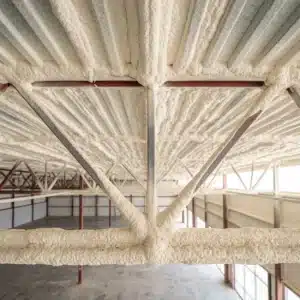
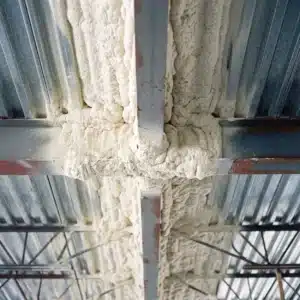
- Spray-applied fire-resistive materials (SFRM) on structural steel, metal deck, and assemblies
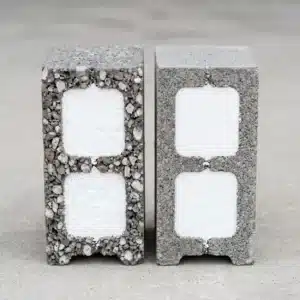
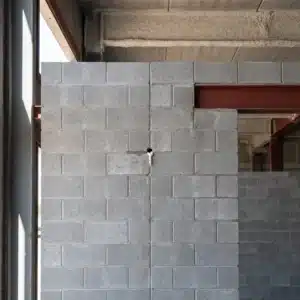
- Fire-resistance-rated walls, floors, and ceiling or roof assemblies
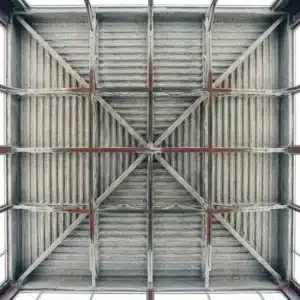
- Fire-resistant structural members such as columns, beams, and trusses
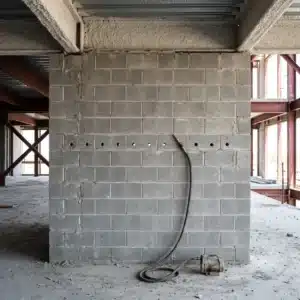
- Fire barriers, firewalls, fire partitions, and smoke barriers, which together create compartmentation
- Fire doors and fire windows, which are rated opening protectives
- Penetration firestop systems that seal pipe, conduit, and duct penetrations through rated assemblies
- Fire-resistant joint systems, including perimeter barriers and expansion joints
- Fire and smoke dampers in ductwork
There is one point of confusion worth clearing up. Fire doors and dampers physically move to close, which makes them feel “active.” They are still classified as passive fire protection, because they act to contain fire and smoke rather than to suppress the fire or notify occupants.
The Society of Fire Protection Engineers groups passive fire protection into four areas. Structural fire protection shields steel and concrete members from fire-induced failure, and that is where SFRM, intumescent coatings, gypsum plasters, mineral wool, and concrete encasement belong. Compartmentation divides a building into fire-rated compartments using rated walls and floors, where horizontal assemblies contain fire to the floor of origin and vertical assemblies subdivide each floor. Opening protection keeps the rating intact at doors, windows, and shutters. Penetration firestopping restores the rating wherever a pipe, cable, or duct passes through a rated assembly.
Active Fire Protection: What It Is and What It Includes
Active fire protection systems require a trigger to function, and they perform one or more jobs: detect a fire, alert occupants or the fire department, control smoke, and control or extinguish the fire. They are most effective while a fire is still in its early, incipient stage.
The common active systems in commercial buildings include:
- Automatic fire sprinkler systems, which provide water-based suppression under NFPA 13
- Standpipe systems for firefighter hose connections
- Fire alarm and detection systems, including smoke detectors, heat detectors, and pull stations
- Notification systems such as horns, strobes, and voice evacuation under NFPA 72
- Commercial kitchen hood suppression systems
- Clean agent and gaseous suppression systems
- Active smoke control systems, including exhaust and pressurization fans
- Portable fire extinguishers, which are a manual form of active protection
The defining trait across all of these is that something has to happen, automatically or by hand, before they protect anyone. That dependence on a trigger is exactly why they are not allowed to stand alone.
Why Both Are Required, and Why Neither Alone Is Enough
No single fire protection system is 100 percent reliable, so the model codes require a balanced combination of active and passive protection to build in redundancy. As Consulting-Specifying Engineer put it, “Because neither active nor passive fire protection aspects are 100% effective, we need both to provide the level of protection society demands.”
The two systems cover each other’s weak points. Active systems work best on a small, early fire. Once a fire grows beyond the size the active system was designed for, that system can be overwhelmed, and passive fire protection becomes the last line that confines the fire to a manageable area. Working the other direction, passive compartmentation keeps a fire contained to a space small enough for the sprinklers to handle, while active detection alerts occupants and triggers the response. The same passive compartmentation protects the egress paths those occupants use to get out.
That is the core reason an owner cannot treat one system as a substitute for the other. They are designed to fail safe only as a pair.
How SFRM Fits Into Your Building’s Passive Fire Protection System
Spray-applied fire-resistive material is a cementitious or mineral-fiber coating applied to structural steel, metal deck, and assemblies, and it is explicitly classified as passive fire protection. In the IBC, SFRM is addressed in IBC (2021) Section 704.13, though you should verify that section number against your adopted edition.
Code note: unless otherwise stated, code references on this page are to the 2021 International Building Code. Code adoption is state and local. Across the states we serve, adopted IBC editions currently range from the 2012 edition to the 2024 edition, some states have no statewide commercial building code, and several enforce NFPA 1 or NFPA 101 rather than the International Fire Code. Minnesota and Wisconsin publish state-amended code books whose numbering and requirements differ from the model code. This is general technical information, not a code determination for your project. Confirm the adopted edition and any local amendments with your authority having jurisdiction.
SFRM works by thermally insulating structural members, primarily steel, so they stay below their critical temperature for the rated duration and keep their load-bearing capacity. The reason this matters comes down to how steel behaves in a fire. According to AISC’s guidance on steel exposed to fire, structural steel retains about 50 percent of its yield strength at approximately 1,100 degrees Fahrenheit, and above that point its load-carrying capacity drops rapidly. SFRM keeps the steel below that threshold long enough for people to get out and for responders to act.
Fire-resistance ratings for SFRM assemblies are established through testing under ASTM E119 or UL 263, which use the same furnace conditions. The ASTM E119 standard time-temperature curve climbs fast: it reaches roughly 1,000 degrees Fahrenheit at five minutes, about 1,700 degrees at 60 minutes, and around 2,000 degrees at four hours. In that test, a structural steel member is considered to fail when it reaches about 1,100 degrees Fahrenheit, the point where its load-carrying capacity is critically reduced. SFRM can deliver ratings of 1 to 4 hours depending on the product, the size of the member, and the specific UL design.
If you want the deeper technical picture of the material itself, see our complete spray-applied fireproofing guide, and for how density affects performance, our SFRM density categories explained breakdown covers it.
IBC Construction Types and Why Your Building’s Design Matters
The IBC classifies buildings into five construction types, I through V, based on the materials used and the fire-resistance ratings required for structural elements. IBC (2021) Table 601 sets the required rating, in hours, for building elements such as the structural frame, bearing walls, floor construction, and roof construction, organized by construction type.
A few examples from IBC (2021) Table 601 show how much the requirements move with type:
| Construction type | Primary structural frame rating |
|---|---|
| Type IA | 3-hour |
| Type IB | 2-hour |
| Type IIA | 1-hour |
| Type IIB | 0-hour (unprotected noncombustible) |
Where an approved automatic sprinkler system is installed, certain ratings in IBC (2021) Table 601 may be permitted to be reduced by an hour or eliminated, but this is specific to the construction type and occupancy. Do not assume your building qualifies for any reduction based on a table alone. Your licensed architect or engineer determines the construction type and the required ratings for your specific building, and that determination drives everything else.
What Building Owners Are Responsible For
Owning the building means owning the upkeep of both systems for the life of the structure, and the obligations are spelled out in code and standards.
On the passive side, the International Fire Code requires the building owner or a designee to maintain a list of the building’s installed passive fire protection systems. SFRM in particular has to be maintained, and it gets damaged more often than owners realize, usually by MEP work, renovations, equipment installation, and ordinary construction activity that nicks or knocks off the coating. Any breach in SFRM has to be repaired to keep the fire rating intact, because no code or standard allows relaxing the integrity of fireproofing. Installed firestop systems carry their own requirement: industry inspection guidance, consistent with the IFC requirement to maintain assembly ratings, calls for the fire-resistance rating of installed firestop systems to be visually inspected by the owner or the owner’s inspection agency annually. Verify the controlling section against your adopted edition and jurisdiction.
On the active side, NFPA 25 is direct about who is responsible: “The property owner or designated representative shall be responsible for properly maintaining a water-based fire protection system.” That maintenance runs on a schedule. Weekly and monthly checks cover control valve positions, gauge readings, and fire pump status. Quarterly checks cover alarm devices, supervisory signals, and valve supervisory systems. An annual inspection covers the full system, including sprinkler heads, piping, fittings, and fire pumps. Under NFPA 72, the owner is likewise responsible for inspecting, testing, and maintaining the fire alarm system.
These responsibilities vary by jurisdiction, adopted code edition, occupancy type, and even lease agreements, so confirm your specific obligations with your local authority having jurisdiction and a licensed fire protection engineer.
The Balance Question: Trade-Offs, Reductions, and What You Can and Cannot Change
Because automatic sprinklers are well documented as effective, the IBC allows some passive fire protection requirements to be reduced in certain occupancies when a full NFPA 13 system is installed throughout a building. The kinds of trade-offs that appear in the code include reductions in corridor wall ratings, opening protection, exit travel distances, certain fire-resistance-rated separations, fire and smoke damper requirements, and interior finish requirements.
Here is the part owners need to hear clearly. These trade-offs vary significantly by the edition of the IBC adopted, by occupancy classification, and by local amendments. They are specific to construction type, occupancy, and code edition, so they always have to be verified with your design team and local AHJ. And the IBC does not allow sprinklers to eliminate all passive fire protection. Anyone who tells you a sprinkler system means you can skip structural fireproofing or firestopping is wrong.
There is a real history behind this tension. Over the past 10 to 15 years, codes have leaned more on automatic sprinklers and somewhat less on passive fire-resistance-rated construction, partly to incentivize sprinkler installation through construction cost savings. Fire protection engineers have raised a concern about that drift: because suppression systems are not 100 percent reliable, leaning too hard on a single system type creates risk if that system fails. The foundation of modern fire-safe construction has always been a balanced approach, where thermally massive materials provided containment while sprinklers controlled fires early. Today’s buildings use lighter materials like SFRM and gypsum board to hit the same ratings at lower weight and cost, but the balanced strategy behind them is the same.
Frequently Asked Questions
Q: What is the difference between active and passive fire protection?
A: Active fire protection requires a trigger to work, such as sprinklers, alarms, and suppression systems that detect or respond to a fire. Passive fire protection works continuously without activation, including fire-rated construction, structural fireproofing, compartmentation, and firestopping. Active systems suppress fire; passive systems contain it and buy time for evacuation.
Q: Is spray-applied fireproofing active or passive fire protection?
A: SFRM is passive fire protection. It is a coating applied to structural steel and assemblies that works continuously, with no trigger or activation, by insulating the steel so it stays below its critical temperature during a fire and keeps its load-bearing capacity for the rated duration.
Q: Do I need both active and passive fire protection in my building?
A: In nearly all commercial buildings, yes. The model codes require a balanced combination of both, because neither system is 100 percent reliable on its own. Your specific requirements depend on construction type, occupancy, and the code edition adopted in your jurisdiction, so confirm them with your licensed architect or engineer.
Q: Can sprinklers replace passive fire protection?
A: No. Sprinklers can allow certain passive requirements to be reduced in specific situations, but the IBC never permits sprinklers to eliminate passive fire protection entirely. Any trade-offs are specific to construction type, occupancy, and code edition, and must be verified with your design team and local AHJ.
Q: Who is responsible for maintaining passive fire protection in a commercial building?
A: The building owner. The International Fire Code requires the owner or a designee to maintain the building’s passive fire protection systems and keep a list of them, and installed firestop systems are subject to annual visual inspection. Damaged SFRM must be repaired to maintain the fire rating.
Q: What happens if SFRM is damaged after construction?
A: It has to be repaired. Breaches in SFRM, commonly caused by MEP work, renovations, or equipment installation, compromise the fire rating, and no code or standard allows leaving fireproofing in a relaxed or breached condition. A qualified fireproofing contractor patches the damage back to the original design thickness.
Related Reading
- For the technical detail on the material itself, see our fireproofing inspection process guide.
- Coordinating SFRM on an active job site? Read how spray-applied fireproofing is applied.
- Wondering why bond and adhesion start at the steel? See why surface preparation matters.
Key Takeaways
Active and passive fire protection do fundamentally different jobs.
- Active systems need a trigger to detect, alert, or suppress; passive systems work continuously to contain fire and protect structure.
- The shorthand: active suppresses, passive contains and buys time.
The codes require both, by design.
- IBC Chapter 7 governs passive features; Chapter 9 governs active systems; NFPA 13, 72, and 25 fill in installation and maintenance.
- Neither system is 100 percent reliable, so they are built to back each other up.
SFRM is passive protection that keeps your steel standing.
- It insulates structural steel, which loses about half its yield strength near 1,100 degrees Fahrenheit per AISC.
- It delivers 1 to 4 hour ratings depending on product, member size, and UL design.
Your building’s construction type drives the requirements.
- IBC (2021) Table 601 sets structural ratings by construction type, from 3-hour frames in Type IA down to unprotected Type IIB.
- Sprinkler-based reductions exist but are construction-type and occupancy specific, so verify with your licensed architect or engineer.
Owners carry ongoing maintenance duties for both systems.
- The IFC requires you to maintain passive systems and a list of them; damaged SFRM must be repaired to keep its rating.
- NFPA 25 makes you responsible for water-based system maintenance on a weekly-to-annual schedule.
Sprinklers do not cancel passive protection.
- The IBC never allows active suppression to eliminate passive fire protection entirely.
- Treat any claimed trade-off as construction-type and code-edition specific, and verify it with your AHJ.
If you need help assessing the passive fire protection in your commercial building, from structural fireproofing to repairs after construction damage, we can help. We have been applying and maintaining spray-applied fireproofing on commercial structures across Texas, Kansas, and Oklahoma for more than 20 years. Contact Bahl Fireproofing at 512-387-2111 or email ross@bahlfireproofing.com to schedule a consultation or request a bid throughout Texas, Kansas, and Oklahoma. For structural fireproofing specifically, see our commercial fireproofing services.
This article provides general educational information about fire protection systems and building code requirements. It is not a substitute for project-specific engineering, code analysis, or professional consultation. Building codes, fire codes, and material requirements vary by jurisdiction, occupancy, and project conditions. Always consult with a licensed fire protection engineer and your local authority having jurisdiction before making design, specification, or purchasing decisions. Bahl Fireproofing is not responsible for decisions made based on general information provided in this article.