Fireproofing does not apply and cure the same way on a humid Gulf Coast morning as it does in a dry, climate-controlled lab. In much of Texas, heat, humidity, and dew point are not background details. They decide whether spray-applied fireproofing and intumescent coatings go on, cure, and bond the way the listing assumes. This guide covers what fireproofing in hot and humid climates actually demands, why Texas conditions stretch cure times and tighten application windows, and how to plan a schedule around it.
TLDR: In a hot, humid climate, the weather is a controlling variable in fireproofing, not a footnote. Cementitious SFRM already needs 14 to 28 days and proper ventilation to cure, and humidity and poor air movement stretch that further. Water-based intumescent will not cure in high humidity or when the steel is near the dew point. And the cure delay pushes back the thickness and bond testing that gates inspection. A Texas fireproofing schedule has to plan around heat, humidity, dew point, and ventilation, and the product has to suit the exposure. The mistake is running a humid-climate job off a dry-climate data sheet.
Picture a crew spraying water-based intumescent on a steel frame on a humid August morning, with the steel sitting below the dew point. It will not cure right. It can blush, stay soft, or trap moisture against the steel. Or picture cementitious SFRM going up in a building closed in tight with no ventilation, where it cannot dry in the window the schedule assumed, pushing the thickness inspection and everything behind it. Or a schedule built on dry-climate cure and recoat times that simply do not hold on the Gulf Coast. In each case the material is fine. The conditions were ignored. That is the failure mode this article is about.
How Do Heat and Humidity Affect Fireproofing?
Heat and humidity affect fireproofing by changing how it cures and bonds. High humidity slows the cure of cementitious SFRM and can prevent water-based intumescent from curing at all. A substrate near the dew point invites condensation that ruins adhesion, and high heat can flash-dry a surface before the material underneath has set. None of these change the product. They change whether the product performs.
That is why a fireproofing schedule in a humid climate has to treat application conditions as part of the design, not as something the crew sorts out on the day. The fireproofing itself is the same material specified anywhere, and our commercial fireproofing services install it to the same listings. What changes in Texas is the window in which it can be applied and the time it needs to cure.
Cementitious SFRM: Cure Time and Ventilation Are the Pressure Points
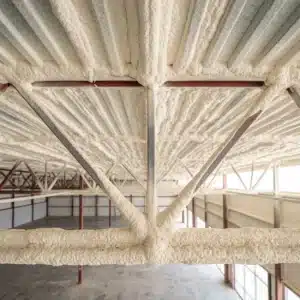
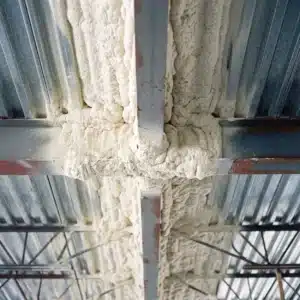
For spray-applied fire-resistive material, the humidity problem is mostly about drying. Depending on thickness and environmental conditions like temperature, air-flow, and moisture, cementitious SFRM needs roughly 14 to 28 days or more to fully cure, and that figure assumes ventilation is properly provided. In a humid climate, both halves of that statement get harder. Moist air slows the drying, and the buildings where SFRM goes, often closed in by the time the trade arrives, do not move air on their own.
That is why the specifications require ventilation during and after application, by natural means or forced-air circulation, until the material dries. In enclosed spaces like basements, stairwells, shafts, and small rooms, that ventilation is not optional, and on the Gulf Coast it often means bringing in air movement the building does not provide. Skip it, and gypsum-based SFRM sprayed into a humid, closed space can sit soft well past the schedule, which delays the thickness and density testing and everything downstream.
Over the past 20 years applying fireproofing across Texas, from the humid Gulf Coast to the hotter, drier stretches inland, the jobs that go sideways on weather almost never fail because the product was wrong. They fail because someone sprayed when the steel was below the dew point, or closed the building up with no ventilation and expected cementitious SFRM to cure, or planned cure and recoat times off a dry-climate data sheet. The material performs when the conditions let it. Texas humidity does not always cooperate, and the schedule has to plan for that.
Intumescent Coatings: Dew Point and Humidity Set the Window
Intumescent coatings are more sensitive to conditions than SFRM, because they behave like paint and live by paint rules. Standard coating practice, set out by SSPC, calls for the substrate to be at least 5 degrees Fahrenheit above the dew point during application and cure, so the surface does not collect condensation. On a humid Texas morning, steel can sit at or below the dew point for hours, which shuts the application window until conditions rise.
Product type matters here. Water-based intumescent coatings typically need a minimum application temperature around 50 degrees Fahrenheit and will not cure properly in high humidity or near the dew point, so the manufacturer’s published temperature and humidity limits have to be checked against the forecast. Solvent-based and epoxy intumescent products tolerate a wider range and cure in conditions that stall a water-based product, which is one reason product selection on an exposed-steel Texas job is partly a climate decision. The specific limits live in each product’s technical data sheet, and they are not interchangeable between products.
Moisture, Corrosion, and the Vapor-Barrier Misconception
A point that gets missed: SFRM is not a vapor barrier. It does not seal steel against moisture, and in a humid climate, water vapor moving through or condensing under fireproofing is a corrosion concern on the steel below. This is why the substrate condition before application matters as much as the spray itself, and it carries extra weight in a humid climate. Steel that goes into a humid building with mill scale, moisture, or an incompatible primer sets up both a bond problem and, over time, a corrosion problem. For exterior and high-abrasion exposures common in Texas industrial work, parking structures, canopies, and process areas, a high-density product designed for exterior service is the right call rather than a standard concealed-density SFRM.
What This Does to the Inspection Schedule
The climate problem becomes a schedule problem at inspection. Thickness and density are verified to ASTM E605, and bond strength to ASTM E736, but those tests run on cured material. If humidity stretches the SFRM cure past two weeks, the special inspection cannot close out on the original date, and the field inspection of the fireproofing waits with it. On a humid-climate job, the realistic move is to build the longer cure into the schedule from the start, sequence ventilation so the material can dry, and coordinate the inspection around the actual cure rather than an optimistic one. Treating cure time as fixed regardless of weather is how the certificate of occupancy slips.
Planning Fireproofing Across Texas Climate Zones
Texas is not one climate, and the fireproofing concern shifts across the state. The table summarizes the practical differences.
| Region | Climate | Primary fireproofing concern |
|---|---|---|
| Gulf Coast (Houston, Beaumont, Corpus Christi) | Hot and humid | Dew point shutting the window, slow cure, corrosion under fireproofing, exterior product selection |
| North and Central (Dallas, Austin, San Antonio) | Hot, variable humidity | Fast surface drying in heat, humid spells slowing cure, occasional winter cold snaps |
| West (El Paso, Lubbock) | Hot and dry | Faster cure, but wind and dust contaminating fresh surfaces |
| Panhandle | Hot summers, cold shoulder seasons | Freeze risk on early and late-season pours when temperatures drop below minimums |
The takeaway is that a single statewide approach does not fit. A Gulf Coast schedule plans around cure and dew point, an inland summer schedule plans around heat and the occasional humid stretch, and a shoulder-season Panhandle job watches the low temperatures. The discipline that carries across all of them is matching the product and the schedule to the conditions, which is how we approach fireproofing projects across Texas and into Kansas and Oklahoma.
Practical Steps for Hot, Humid Fireproofing Jobs
A few habits prevent most weather problems on these projects.
- Check the dew point and the forecast against the product’s published limits before each application day, not just the air temperature.
- Provide ventilation during and after SFRM application, with forced air in enclosed spaces, and keep it running until the material dries.
- Confirm the substrate is clean, dry, and above the dew point before spraying, especially on intumescent work.
- Select the product for the exposure and the climate, including a wider-tolerance intumescent or an exterior-grade SFRM where conditions call for it.
- Build the realistic cure time, longer in humidity, into the schedule, and coordinate the special inspection around the actual cure.
- Protect freshly applied fireproofing from rain, wind-driven moisture, and contamination until it has set.
Frequently Asked Questions
How do heat and humidity affect fireproofing? They change how it cures and bonds. High humidity slows the cure of cementitious SFRM and can stop water-based intumescent from curing, a substrate near the dew point causes condensation that ruins adhesion, and high heat can flash-dry a surface. The material is unchanged; the conditions decide whether it performs.
How long does spray-applied fireproofing take to cure in a humid climate? Cementitious SFRM generally needs 14 to 28 days or more, depending on thickness, temperature, air-flow, and moisture, and that assumes proper ventilation. Humidity and poor air movement push it toward and past the upper end, which is why ventilation and a realistic schedule matter in Texas.
Can you apply intumescent coating in high humidity? Often not, depending on the product. Water-based intumescent typically needs about 50 degrees Fahrenheit minimum and will not cure properly in high humidity or near the dew point. Standard practice keeps the substrate at least 5 degrees above the dew point. Check the product’s technical data sheet limits against the forecast.
Does fireproofing protect steel from moisture and corrosion? No. SFRM is not a vapor barrier and does not seal steel against moisture. In a humid climate, vapor moving through or condensing under fireproofing is a corrosion concern, which is why clean, sound, properly prepared steel matters before application.
What is the dew point rule for applying fireproofing? Standard coating practice calls for the substrate to be at least 5 degrees Fahrenheit above the dew point during application and cure, so condensation does not form on the surface. On humid Texas mornings, steel can sit below that threshold for hours, closing the application window until conditions improve.
Does Texas weather delay fireproofing inspection? It can. Thickness, density, and bond tests run on cured material, so when humidity extends the cure, the special inspection waits with it. Building the longer cure into the schedule and coordinating inspection around the actual cure keeps the project from stalling at occupancy.
Key Takeaways
- Climate is a controlling variable. In hot, humid Texas conditions, heat, humidity, and dew point decide whether fireproofing applies, cures, and bonds, not just whether the right product was specified.
- SFRM cure is the pressure point. Cementitious fireproofing needs 14 to 28 days or more and proper ventilation, and humidity plus enclosed, still air stretch that further.
- Ventilation is required, not optional. Specifications call for air movement during and after SFRM application until it dries, which often means bringing in forced air on humid, closed-up jobs.
- Intumescent lives by paint rules. Water-based products will not cure in high humidity or near the dew point, and the substrate must stay above the dew point, so product type is partly a climate decision.
- Fireproofing is not a vapor barrier. Moisture under fireproofing is a corrosion concern in humid climates, so substrate condition and surface preparation carry extra weight.
- The schedule has to absorb the cure. Slow cure delays thickness and bond inspection, so plan the realistic cure time and coordinate the special inspection around it.
- Texas is several climates. Gulf Coast humidity, inland heat, and Panhandle cold snaps each call for a different plan, matched to the conditions.
Related Reading
- Want the application side in detail? See how spray-applied fireproofing is applied for the process behind these conditions.
- Worried about bond and substrate? Read why surface preparation matters, which is where humid-climate adhesion problems start.
- Specifying intumescent on exposed steel? Our intumescent coating DFT and cure-time factors guide covers cure behavior in more depth.
If your next project puts fireproofing on steel anywhere in the Texas heat and humidity, the work that keeps it on schedule is checking the dew point, ventilating the cure, matching the product to the exposure, and coordinating inspection around the real cure time. That is how our crew runs jobs throughout Texas, Oklahoma, Kansas, Nebraska, Minnesota, and Wisconsin. Reach me directly at 512-387-2111 or ross@bahlfireproofing.com, or Contact Bahl Fireproofing to plan fireproofing that holds up to the climate it is going into.
This article provides general educational information about commercial fireproofing and how climate conditions affect its application and cure. It is not engineering advice and does not replace project-specific direction from a licensed architect or engineer. Application temperature, humidity, dew point, cure time, ventilation, and recoat limits vary by product and are specified by the manufacturer, so confirm the current requirements in the product’s technical data sheet before application. Cure times and conditions cited here are general and depend on thickness, formulation, and environment. Always confirm application conditions, product suitability, and inspection timing with the manufacturer, the authority having jurisdiction, and a licensed architect or engineer before specifying or installing any system.