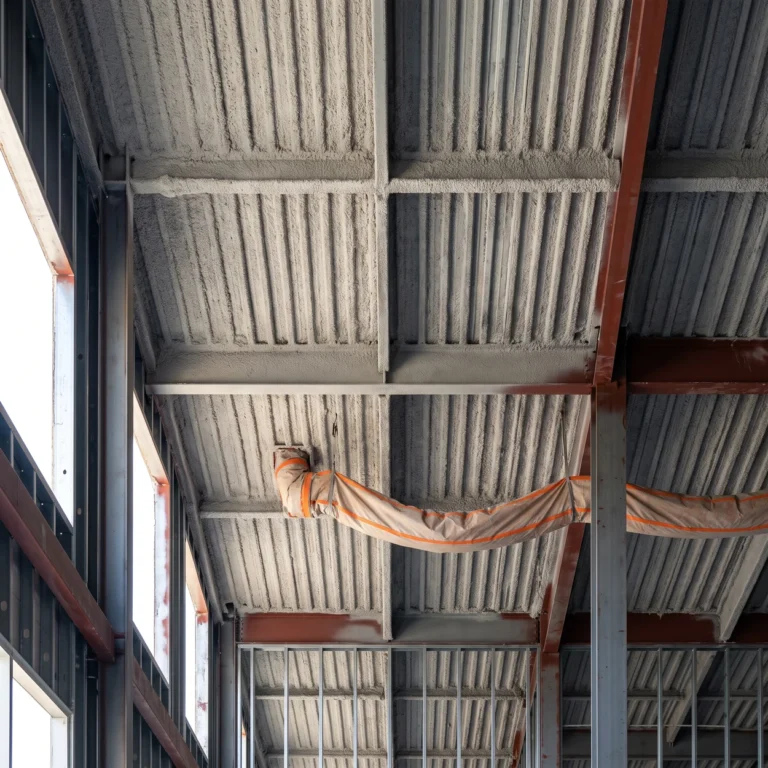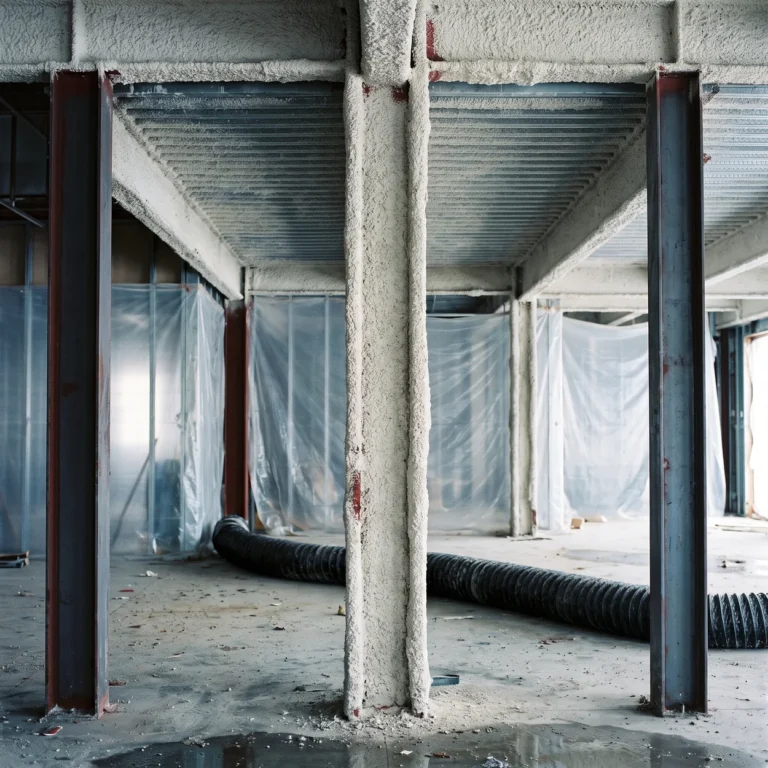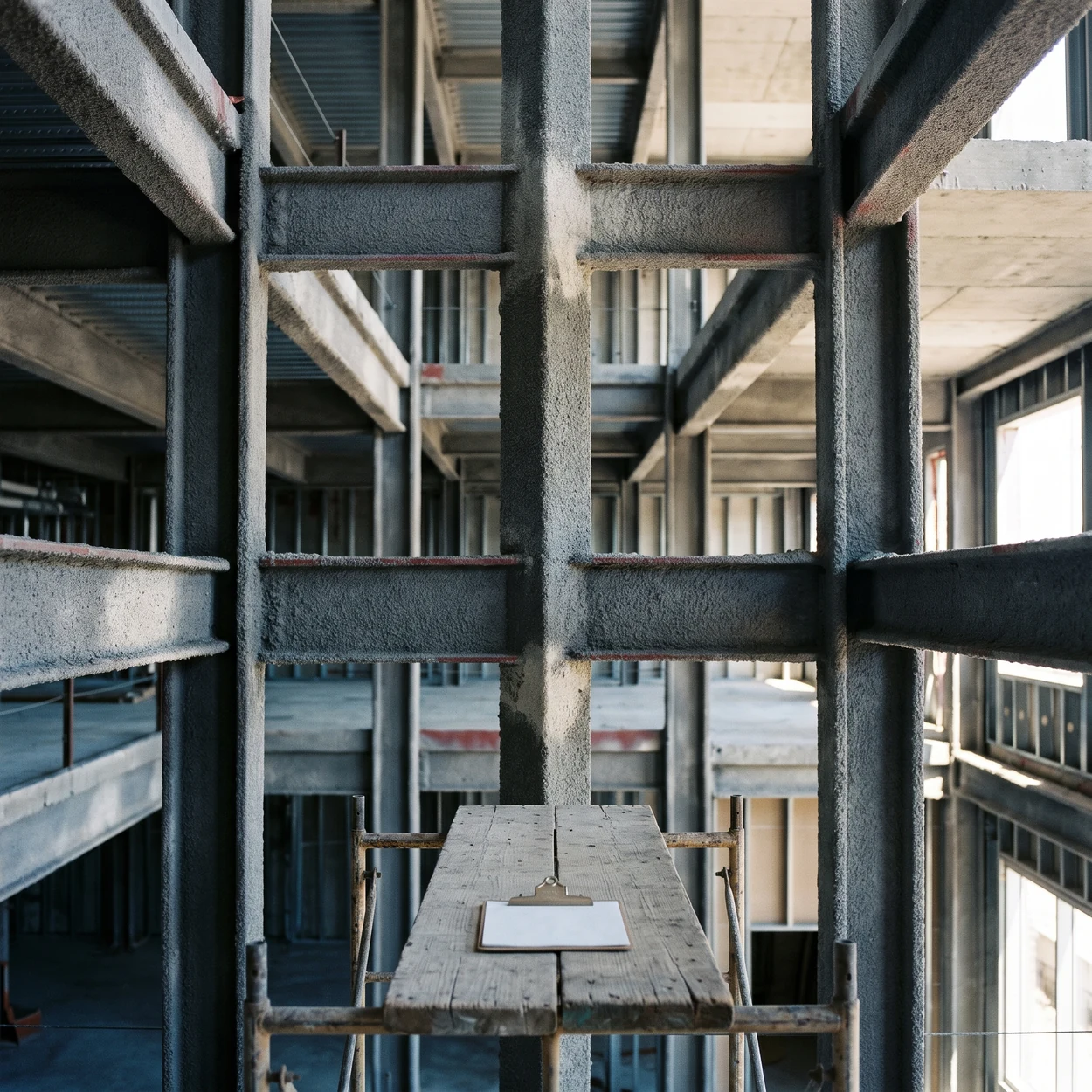
Fireproofing contractor prequalification is the screen a general contractor runs before a fireproofing sub can bid or be awarded. This article covers the standard items GCs ask for, from the safety record and experience modification rate to bonding, insurance, registration and references. It then covers the fireproofing questions most forms skip: manufacturer approval for the specified products, who actually sprays, and how the sub works with the independent inspector.
TLDR: A standard prequal form tells you whether a fireproofing sub is insurable, bondable and registered. It does not tell you whether that sub can install the product in your spec to the listed design. The questions that do are specific to this trade: approval from the maker of the specified product, whose crews will spray it, and how the sub handles the owner’s inspector. Here is what to ask.
Why a Clean Prequal Form Can Still Put the Wrong Sub on Your Steel
Picture a GC prequalifying subs for a three-story office building. The fireproofing spec names two SFRM products and a set of UL designs. One sub returns a clean package: a modest experience mod, a surety letter, insurance certificates and good references. It wins the job.
At submittals, the sub proposes a different product, because the maker of the specified product does not approve it as an applicator. Now the GC is carrying a substitution request to the licensed architect or engineer, with steel going up and the schedule set.
Nothing on the form was false. It just never asked the question that mattered, and the answer arrived after award, when the GC had the least leverage.
What Actually Separates Fireproofing Subs
I have been in this trade for over forty years, and the fireproofing sub that hurts a schedule is rarely the one with weak safety numbers. Those subs get screened out. The one that hurts is the sub that cleared the generic form and was never asked three questions. Does the maker of the specified product approve you? Will your own crews spray it? How do you work with the owner’s independent inspector?
That is the thesis of this article. Insurance, bonding and safety numbers are the floor. For fireproofing contractor prequalification to protect a rated assembly, the form has to ask about the product, the crew and the inspection.
What Is Fireproofing Contractor Prequalification?
Fireproofing contractor prequalification is the GC’s review of a fireproofing sub before bid or award. It covers the safety record, workers’ compensation experience modification, bonding, insurance, state registration or licensing, references and workload. A good form adds manufacturer approval for the specified products, self-performance, and inspection coordination.
Owners publish these lists too. Lawrence Livermore National Laboratory’s prequalification requirements for construction subcontractors are a good example. They ask for three years of experience mods, OSHA 300A logs, bonding capacity, insurance certificates, recent projects with owner contacts, and the value of work done by the sub’s own forces.
The Standard Items: Safety, Experience Mod, Bonding and Insurance
Safety record and OSHA logs
Most forms ask for several years of OSHA 300A summaries and the incidence rates that come from them. The Bureau of Labor Statistics formula for incidence rates multiplies injuries and illnesses by 200,000 and divides by hours worked. That 200,000 equals 100 employees working 40 hours a week for 50 weeks.
That base matters for a specialty sub. Take a hypothetical crew logging 50,000 hours in a year. One recordable injury gives a rate of 4.0, and a second doubles it to 8.0. A small sub’s rate can swing on one case, so read three years of logs and what happened, not one number.
Fireproofing adds its own safety item. Spray application can put crews in respirators, and 29 CFR 1910.134, applied to construction by 29 CFR 1926.103, requires a written respiratory protection program with worksite-specific procedures wherever respirators are necessary. Ask to see it.
Experience modification rate
The experience mod compares a company’s actual workers’ compensation losses with the losses expected for its work classes, and 1.0 is unity. The Oklahoma Insurance Department’s FAQ on NCCI’s rating plan explains that the formula gives full weight to the first part of each loss and partial weight to the rest. So frequency counts heavily, and a run of small claims carries real weight.
There is no single passing number. Lawrence Livermore asks for three years of mods and a written explanation for any year above 1.0. That beats a hard cutoff, because it asks what changed.
Bonding
On federal construction, the prime posts the bonds: FAR 28.102-1 requires performance and payment bonds on construction contracts over $150,000. A GC carrying those bonds may ask the fireproofing sub to bond its own scope.
So forms ask for the surety’s name, total and available bonding capacity, and, at Lawrence Livermore, a surety on the U.S. Treasury’s list of approved sureties. We do not publish our bonding, insurance or experience mod figures in an article; they go on your form, for your job.
Insurance
Forms ask for a certificate of insurance showing general liability, auto and workers’ compensation with employer’s liability, at limits the GC sets. On a job with an owner-controlled insurance program, the owner’s program supplies some of that coverage onsite, so settle how it treats the fireproofing sub before pricing.
The Fireproofing Questions Most Prequal Forms Skip
Manufacturer approval for the specified products
Fireproofing manufacturers approve the companies that apply their products. The federal guide specification for spray-applied fireproofing, UFGS 07 81 00, sets a useful bar. It wants a statement from the manufacturer that each installer is qualified and trained for the specified fireproofing, plus at least three years of experience and three installations of the type specified.
The same spec adds a line every GC should keep: “A manufacturer’s willingness to sell its products to the Contractor or installer does not infer qualification of the buyer.” A sub that can buy the product has not shown it can apply it.
For intumescent coatings, NFCA 400 says the contractor shall be trained and qualified in the application procedures by the intumescent manufacturer before starting the first application. Ask for the approval or training letter from the maker of each product in the spec.
Bahl Fireproofing is an approved applicator for the fireproofing and spray foam manufacturers whose products we install, and our own crews apply every product to the manufacturer’s application instructions. For spray-applied fireproofing that means Isolatek International (CAFCO), Carboline and GCP Monokote. For intumescent, it means Carboline and Isolatek International.
Who actually sprays
A name on a proposal does not tell you whose crew will spray. Ask who self-performs, and ask for the share of recent work done by the sub’s own forces, the way Lawrence Livermore does. Our own crews self-perform every scope we take.
How the sub works with the independent inspector
SFRM thickness and density are checked by a special inspector, a fully independent third party hired by the owner, never by the fireproofing contractor. Ask how the sub schedules around that inspector. NFCA 100 calls for inspection as each floor is sprayed, ahead of mechanical, electrical, plumbing and ceiling work, with results to the fireproofing contractor floor by floor.
The UL Solutions Qualified SFRM Contractor Program
Some specs ask about a third-party contractor program. The UL Solutions Qualified SFRM Contractor Program requirements describe a written exam for a designated responsible individual, covering the NFCA Fireproofing Handbook, inspection, and the UL Fire Resistance Directory. UL then audits the company’s management system, visits a job site, and re-audits every year. Companies that meet the program are listed on UL Product iQ.
Bahl Fireproofing is not a UL Solutions Qualified SFRM Contractor; very few fireproofing contractors are, and few specs require it. We are accredited for SFRM and IFRM under the NFCA Contractor Accreditation Program. If your spec requires that program, read the requirement at bid time and ask every bidder for its listing.
A Fireproofing Prequalification Checklist at a Glance
This table lists each item, what it tells you, and what it leaves out.
| Prequal item | What to ask for | What it tells you | What it does not tell you |
|---|---|---|---|
| OSHA logs and rates | Three or more years of 300A summaries | Injury history and trend | Whether crews know the product |
| Experience mod | Three years, explanations above 1.0 | Losses against expected | Product or listing knowledge |
| Respiratory program | Written program for spray work | Respirator compliance | Application quality |
| Bonding | Surety, total and available capacity | Financial backing | Fireproofing skill |
| Insurance | Certificate at the GC’s limits | Coverage in place | Fireproofing skill |
| Registration or license | The job state’s requirement | Legal to work or bid there | Quality of work |
| References | Recent projects, owner contacts | How past jobs went | Fit for your products |
| Workload | Crew capacity for your dates | Whether crews will show up | Product approval |
| Manufacturer approval | Letter from each specified maker | Allowed to apply that product | Safety record |
| Self-performance | Share of work by own forces | Who sprays your steel | Bonding capacity |
| Inspection process | How the sub works with the inspector | Floor-by-floor readiness | Inspection results |
The top half screens risk. The bottom half decides whether the fireproofing goes on right.
State Registration and Licensing Across Our Territory
Registration and licensing rules change at the state line, and three states in our territory show the range.
Nebraska requires a contractor to register with the Department of Labor before performing any construction work in the state, under Neb. Rev. Stat. 48-2104. In 48-2102, the Legislature wrote that it does not intend registration to endorse the quality or performance of any contractor. Registration is a legal step, not a quality check.
Iowa ties registration to coverage. Iowa Code section 91C.2 requires a contractor to register, show workers’ compensation coverage each year, and hold an employer account number. An out-of-state contractor must also file a $25,000 surety bond, or show it is prequalified with the Iowa Department of Transportation.
Arizona moves the question to bid day. Under A.R.S. 32-1151, it is unlawful to submit a bid as a contractor without a contractor’s license in good standing. A GC collecting fireproofing numbers for an Arizona job should check licensing before bids come in.
Other states in our territory set their own rules, so write the licensing line for the state and city of the job.
How to Add a Fireproofing Section to Your Prequal Form
- List the specified products and ask for each maker’s approval or training letter.
- Ask who self-performs, and what share of recent work was done by the sub’s own forces.
- Ask for the written respiratory protection program that covers spray work.
- Ask how the sub schedules around the special inspector, floor by floor.
- Check registration or licensing for the job’s state before bids are due.
Frequently Asked Questions
What does fireproofing contractor prequalification include? It usually covers the safety record, OSHA logs, experience mod, bonding, insurance, registration or licensing, references and workload. For fireproofing, add a manufacturer approval letter for each specified product, self-performance, and how the sub works with the special inspector.
How do GCs evaluate and prequalify a fireproofing sub? Most start with a standard risk screen: safety, experience mod, bonding and insurance. The better forms then ask which makers approve the sub, whose crews spray, and how inspection is scheduled. Reference calls should ask about thickness and density results, not only schedule.
What experience mod do GCs require from a fireproofing sub? There is no universal cutoff. A mod of 1.0 is the baseline, and forms like Lawrence Livermore’s ask for three years of mods with an explanation for any year above 1.0. On a small crew one claim can move the number, so the explanation matters.
Does a fireproofing sub need a manufacturer approval letter? It should have one for each specified product. UFGS 07 81 00 asks for a statement from the manufacturer that each installer is qualified and trained, plus three years of experience and three installations of the type specified. Being able to buy a product is not the same as being approved to apply it.
Is Bahl Fireproofing a UL Solutions Qualified SFRM Contractor? No. Very few contractors are, and few specs require it. Bahl Fireproofing is NFCA accredited for SFRM and IFRM and an approved applicator for the fireproofing and spray foam manufacturers whose products we install. If a spec requires the UL program, ask every bidder for its listing on UL Product iQ.
Does a fireproofing contractor need a state license? It depends on the state. Nebraska requires registration before work starts, Iowa requires registration with workers’ compensation evidence, and Arizona requires a license before a contractor may submit a bid. Check the state and the city for each job.
Key Takeaways
The standard form screens risk.
- Safety, experience mod, bonding and insurance.
- None shows a sub can apply the specified product.
Read safety numbers in context.
- The BLS rate uses a 200,000-hour base, so one case swings a small crew.
- Ask for three years and the story behind any bad year.
Manufacturer approval is the fireproofing question.
- Ask for a letter from the maker of each specified product.
- UFGS 07 81 00: three years and three installations of the type specified.
Ask who sprays.
- Self-performance tells you whose crew is on your steel.
- Our own crews self-perform every scope we take.
Know the UL program and what Bahl holds.
- The UL Solutions program audits a company every year.
- Bahl Fireproofing is not in that program; we are NFCA accredited for SFRM and IFRM.
Licensing changes at the state line.
- Nebraska and Iowa require registration; Iowa adds a bond for out-of-state contractors.
- Arizona requires a license before a contractor submits a bid.
Related Reading
- How to Choose a Fireproofing Contractor: A Buyer’s Checklist is written for owners choosing a contractor directly.
- SFRM Buyer’s Guide for General Contractors covers what a GC should settle about SFRM before breaking ground.
If you want a fireproofing sub that answers the product questions before award, with approval from the maker of every product we install, our own crews on your steel, and a schedule built around the owner’s inspector, send us your prequal form. We work throughout Texas, Oklahoma, Kansas, Nebraska, Minnesota, Wisconsin, Arizona, Missouri, and Iowa. Call me at 512-387-2111, email ross@bahlfireproofing.com, or Contact Bahl Fireproofing to get on the bid list. Our commercial fireproofing page covers the scopes we self-perform, and our service areas page shows where we work.
This article provides general educational information about prequalifying fireproofing subcontractors, and it is not engineering, legal, insurance, bonding or code-compliance advice. It does not replace project-specific direction from a licensed architect or engineer, or advice from your own insurance, surety and legal advisors. Contractor registration and licensing rules, bonding thresholds and code requirements vary by jurisdiction and change over time, so confirm them with the issuing agency for each job. Confirm manufacturer approval and program status directly with the manufacturer or program operator.