
Spray Foam
Insulation
A shop in your backyard or a data center on a commissioning date. Closed-cell and open-cell foam that seals the building instead of just filling it, installed by the same crews with the same equipment either way.
A seamless, airtight envelope
that performs under pressure.
Bahl Fireproofing delivers high-performance spray foam insulation services designed to enhance energy efficiency, improve thermal performance, and protect your building envelope. Our spray foam solutions form a seamless, airtight barrier that reduces energy loss, prevents moisture intrusion, and contributes to better indoor environmental quality.
Ideal for both new construction and retrofit projects, spray foam insulation adapts to complex surfaces and hard-to-reach areas, delivering consistent coverage and long-term durability. By minimizing air leakage and increasing R-value, our applications help reduce energy costs and support your sustainability goals.
That work runs from a detached shop or an addition on a house all the way up to distribution centers, cold storage and data centers. Residential or commercial, the install standard does not change: the right foam for the assembly, sprayed at the lift thickness the manufacturer specifies, with the thermal barrier settled before anyone occupies the space.
For commercial insulation that performs under pressure, choose Bahl Fireproofing's spray foam expertise.
A shop in the backyard, or a data center
The same two foams do both jobs. What changes between a garage and a server hall is the size of the crew, the submittal package and the inspection, not the material or the standard we install it to.
Shops, barns and garages
Metal buildings, pole barns, barndominiums and detached shops. Closed cell straight to the panel seals the laps, stops the condensation drip on your tools, and makes the space heatable instead of theoretical.
Homes and additions
Attics, crawl spaces, rim joists, additions and new builds. Open cell where you want sound and cavity fill, closed cell where you want the vapor control. We tell you which one your house actually needs.
Warehouses and cold storage
High-bay envelopes, freezers and coolers, grocery and food processing. This is where the vapor retarder is the whole point and a thin spec fails quietly for years before anyone opens the wall.
Data centers and critical facilities
Envelope and mechanical spaces where the thermal barrier, the surface burning limits and the NFPA 285 assembly all get documented before the first pass, on a schedule a commissioning date does not move for.
Closed cell or open cell: which problem do you have?
The two foams do different jobs. Closed cell is the envelope product: higher R per inch, a vapor retarder at thickness, rigid. Open cell is lighter, sound-absorbing, and not a vapor retarder. The climate zone and the assembly decide.
Spray polyurethane foam is applied as a liquid and expands in place to fill the cavity or coat the substrate. What makes it a code conversation, not just an insulation conversation, is that it is a foam plastic: the thermal barrier, surface burning limits and exterior wall assembly rules in IBC Chapter 26 apply to it.
The code triggers, stated plainly
| Requirement | Section | What it means on the job |
|---|---|---|
| Thermal barrier | IBC (2021) 2603.4 | Foam is separated from the interior by a 15-minute thermal barrier, or an approved assembly per 2603.9 |
| Surface burning | IBC (2021) 2603.3 | FSI 75 or less and SDI 450 or less, ASTM E84; exterior walls tighten to FSI 25 under 2603.5.4 |
| Exterior walls, Type I to IV | IBC (2021) 2603.5.5 | The wall assembly, not the foam, is tested to NFPA 285; the listed assembly fixes the components |
| Vapor control | Adopted IECC, by climate zone | Closed cell at thickness acts as a vapor retarder; direction of vapor drive reverses between Zone 2A and Zone 7 |
Texas is on the 2015 IECC (34 TAC 19.53), Oklahoma on the 2006 IECC and ASHRAE 90.1-2003, Kansas on the 2006 IECC (K.S.A. 66-1227), with home-rule cities amending upward; Minnesota, Wisconsin and Arizona are verified before those pages are written. Never a bare R-value: code, edition, table, climate zone, assembly.
Where spray foam goes
- Metal buildings: wall and roof panels, with the thermal barrier detail resolved.
- Cold storage and freezers, where the vapor retarder is the point.
- Roof decks and wall cavities in new construction and retrofits.
- Agricultural and industrial buildings in the north central states, where the vapor logic runs the other way.
Pricing a scope?
Send the drawings and the spec section. We return a number, not a range.
In Texas the heat is coming in.
In Minnesota it is going out.
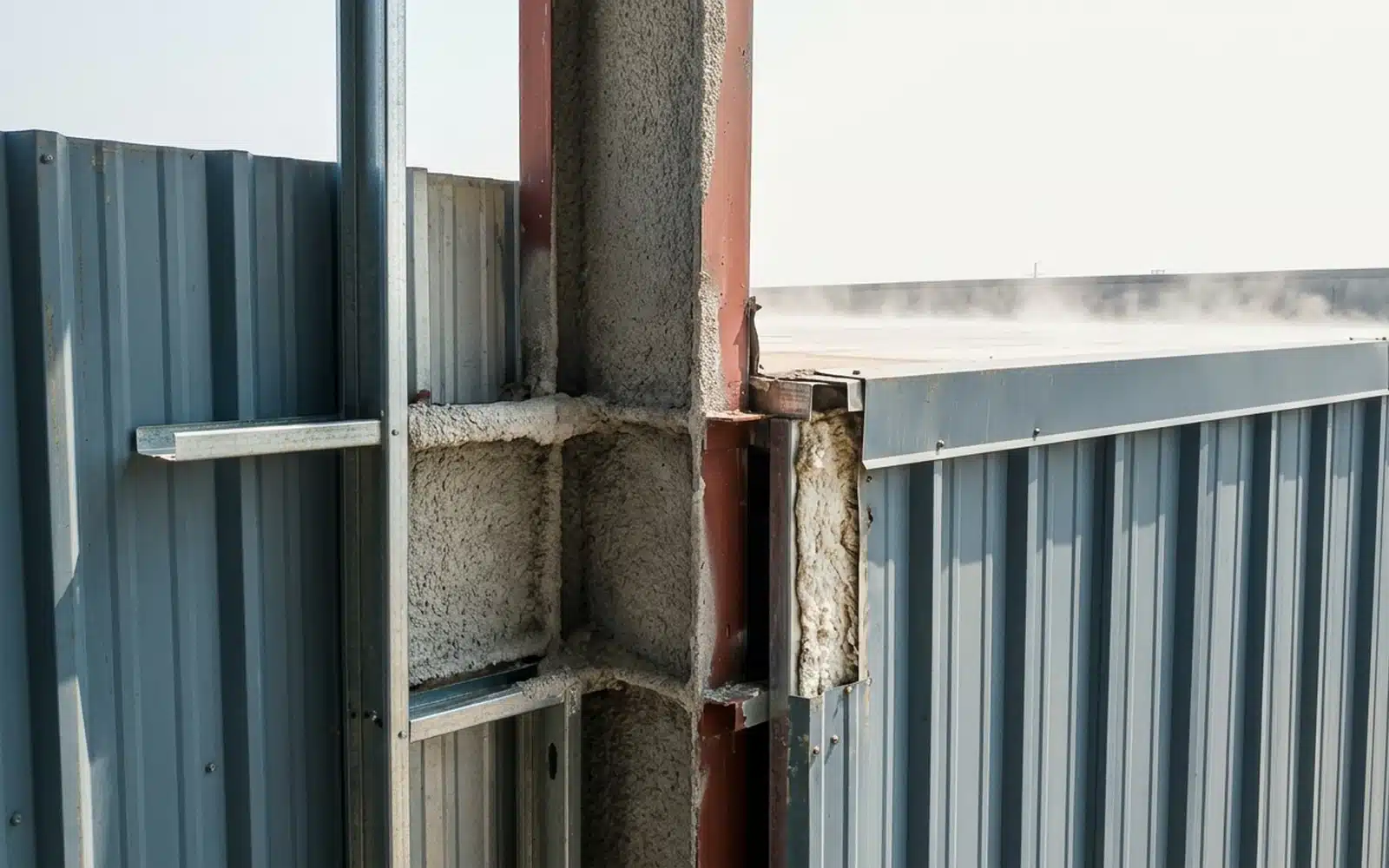
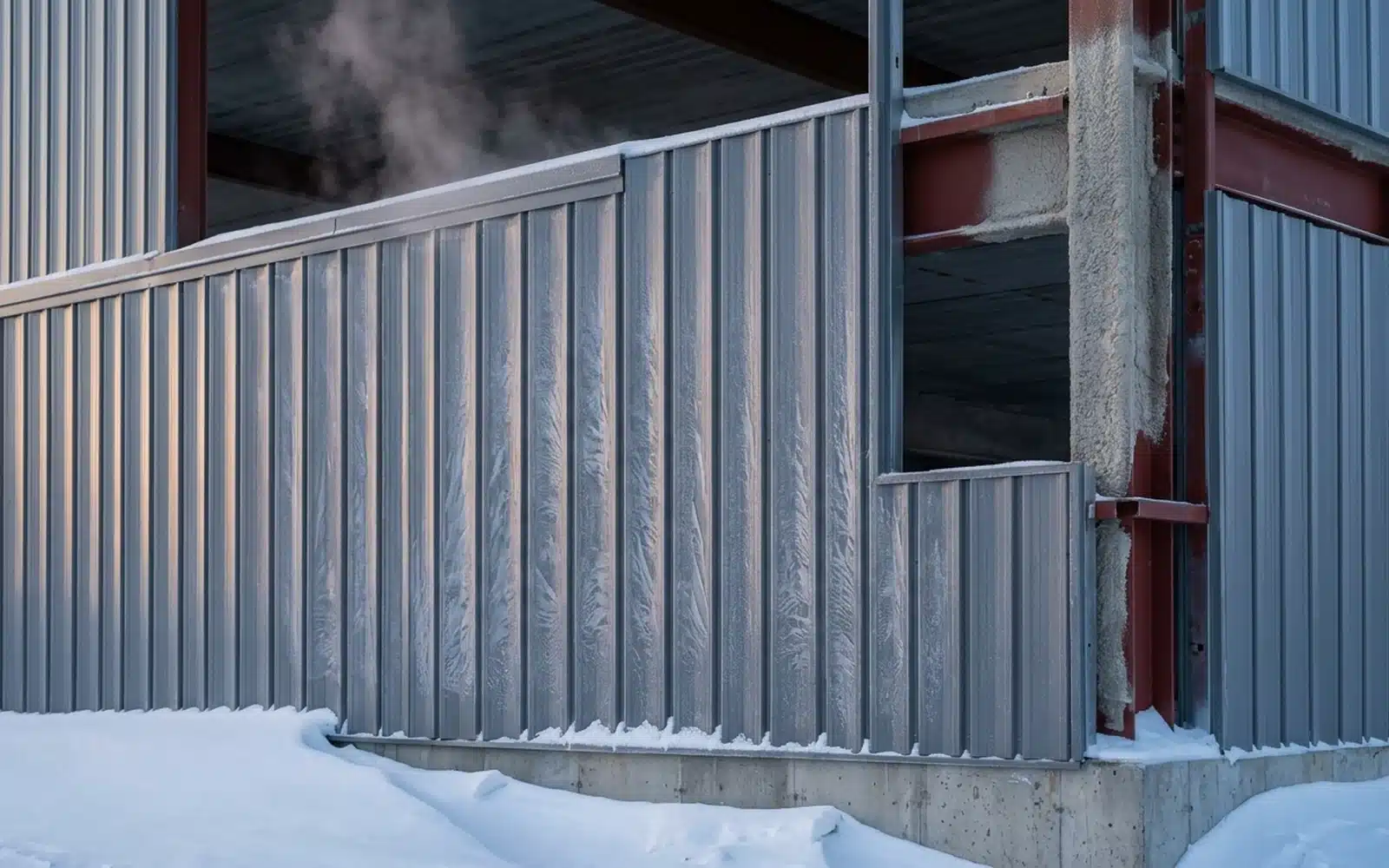
That reversal is why a foam detail cannot be copied between regions. The same closed-cell product does a different job in Houston (Zone 2A) than in Minneapolis (Zone 6A), and the vapor retarder sits on the opposite side of the assembly. We spec it for the climate the building is actually in.
How we install spray foam
Submittals
Product data, thermal barrier and NFPA 285 assembly documentation, thickness schedule.
Substrate prep
Moisture, temperature and adhesion checked; masking and ventilation set.
Application
Passes at the lift thickness the manufacturer specifies; no over-thick lifts.
Thickness check
Depth verified across the area against the schedule.
Thermal barrier
Confirmed or installed per 2603.4 before the space is occupied.


Contact Us
Call, email, or send the drawings through the form. All three land in the same place, and Ross reads them.
Request a spray foam bid
Spray foam insulation by state
Austin, Dallas-Fort Worth, Houston, San Antonio, Lubbock
Spray foam insulation in Texas →Oklahoma City, Tulsa
Spray foam insulation in Oklahoma →Wichita, Kansas City metro, Hays
Spray foam insulation in Kansas →Phoenix, Tucson
Spray foam insulation in Arizona →Minneapolis, St. Paul, Rochester, Duluth, Brainerd, Walker, Bemidji
Spray foam insulation in Minnesota →Milwaukee, Madison, Green Bay, Superior
Spray foam insulation in Wisconsin →Spray foam FAQ
When does spray foam need a thermal barrier?
Almost always. IBC (2021) Section 2603.4 requires a 15-minute thermal barrier between foam plastic and the interior, with specific exceptions and the 2603.9 special-approval path for tested assemblies.
What is NFPA 285 and does it apply to me?
It is the exterior wall assembly fire test. IBC (2021) Section 2603.5.5 requires it for foam in exterior walls of Type I to IV buildings, any height, with narrow exceptions. The assembly is tested, not the foam.
Closed cell or open cell?
Closed cell for the envelope, vapor control and metal buildings. Open cell for interior sound and cavities that do not need a vapor retarder. The climate zone decides more than preference does.
Do you do residential spray foam, or only commercial?
Both. We foam shops, barns, barndominiums, garages, additions and houses, and we foam warehouses, cold storage, schools and data centers. It is the same material and the same crews; the only thing that changes is the size of the job and the paperwork that comes with it.
What kinds of buildings do you spray?
A shop in the backyard all the way up to a data center. Metal buildings and pole barns, garages and workshops, barndominiums, homes and additions, warehouses, cold storage, grocery, manufacturing, schools, healthcare and mission-critical facilities. Same crews, same equipment, same install standard.
Is spray foam worth it for a metal shop?
It is the usual answer for a metal building, because the problem in a shop is air leakage and radiant heat at the panel, not just R-value. Closed cell adheres directly to the panel, seals the laps and stops the condensation drip that ruins tools and drywall. We will tell you when a cheaper assembly does the same job.
How soon can I use the space again?
Reoccupancy time comes from the product data sheet and the ventilation on site, and it is typically measured in hours rather than days for the products we run. We give you the actual number for the product going in your building before we schedule.
Will it lower my energy bill?
Air sealing usually moves the number more than R-value alone does, but the size of the change depends on the building, the equipment and how it is used. We will not quote you a percentage. We will tell you what the assembly does and let the energy model or your own bills settle the rest.
From the Bahl library
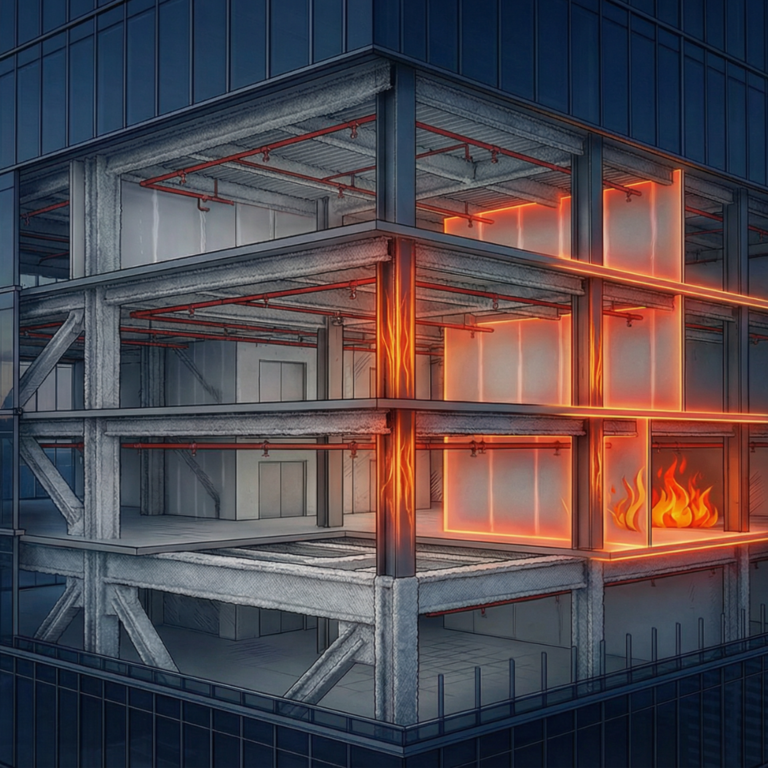
Commercial spray foam insulation: closed-cell and open-cell guide
Read the guide →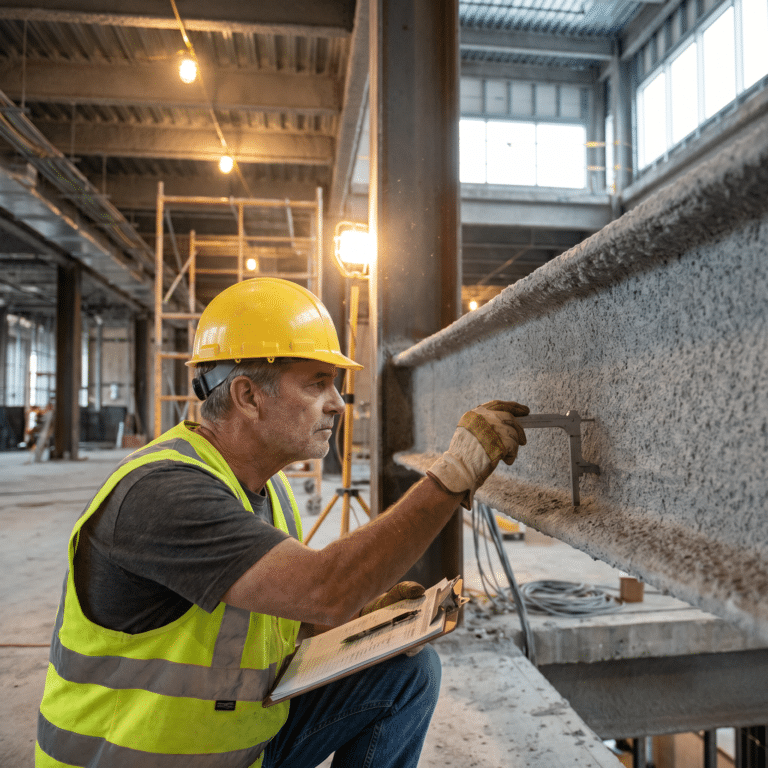
When does spray foam need a thermal barrier?
Read the guide →
Spray foam for metal buildings in Texas
Read the guide →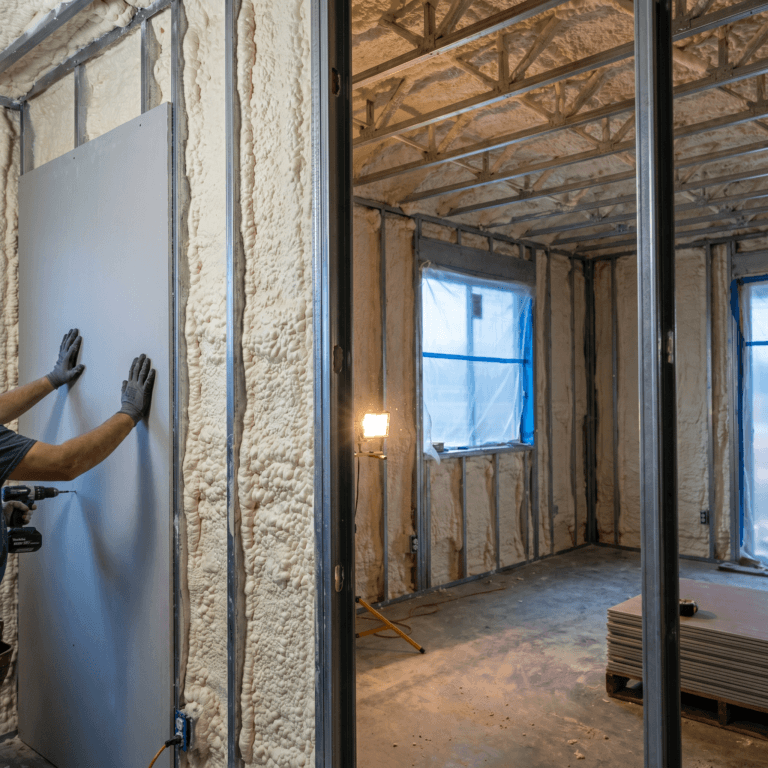
Spray foam insulation cost: what drives the price
Read the guide →This page describes Bahl Fireproofing's scope of work and general code context. Requirements, adopted code editions and inspection procedures vary by jurisdiction and project; confirm them with your licensed architect or engineer and the authority having jurisdiction. Nothing here is a warranty of a building's compliance or a substitute for the approved construction documents.