Owners and general contractors budgeting masonry insulation want a number per square foot. No credible published figure exists for Core Foam cost in Texas, Kansas, or Oklahoma, and inventing one would not help you anyway. This guide covers what actually moves the price of a Core Foam job, which of those drivers were locked in before the crew arrived, and how to compare two bids that look nothing alike.
TLDR: The cheapest thing about a Core Foam job is the foam. Core Foam cost is decided by the wall, and most of that wall was decided by other trades before our crew arrives. Unit size sets the volume, grouted cells add labor while removing material, and a wall built to be filled prices nothing like a wall that has to be discovered.
The Line Item That Turns a Low Bid Into a Change Order
An owner buys a 1980s split-face block office building in Oklahoma and asks three contractors to insulate the walls. Two numbers land close together. One lands well under both, and that is the one he signs.
The fill goes fine. Then the holes have to be closed. cfiFOAM’s guide specification puts injection holes roughly every 8 inches on center, starting about 4 feet above the floor and repeating every 10 to 14 feet vertically. Run that on a 100 foot elevation twenty feet tall and you get about 150 holes per row and two rows on the wall. Three hundred patches on a visible architectural face, matched for color, texture, and tooling.
That is a mason’s work, not a caulk gun’s, and it never appeared in the low bid. It arrives as a change order after the wall is drilled, the worst moment to negotiate it.
Nobody lied. The low bidder priced the fill. The other two priced the fill and the restoration. One wall, three different jobs.
Is There a Published Core Foam Cost Per Square Foot?
No. There is no credible published installed price for this work in Texas, Kansas, or Oklahoma, and we will not invent one. Every per-square-foot figure circulating online traces back to a lead generation site or a residential estimate, not to a cost database covering commercial masonry.
The only price data here that traces to a primary source sits upstream of the job. The Bureau of Labor Statistics Producer Price Index program publishes series PCU326150326150 for urethane and other foam product manufacturing, which stood at 199.424 in July 2026 against a December 2003 base of 100, released August 13, 2026. A broader insulation materials series, WPU1392, stood at 289.366 in June 2026 against a 1982 base of 100.
Read those for direction on material inputs and nothing else. Neither series is product specific or regional, and the urethane series is not even the right chemistry: Core Foam is an aminoplast foam from cfiFOAM, Inc. of Knoxville, Tennessee. Converting a producer price index into an installed square foot price is guessing with a decimal point attached. So the honest answer on Core Foam cost is that you read a bid, not a table.
The Pattern Behind Two Bids That Land Far Apart
I have been pricing sprayed and injected insulation across Texas, Kansas, and Oklahoma for more than twenty years, and the calls I get about Core Foam cost almost never start with the foam. They start with a spread. Three numbers came in, one sits well under the others, and the owner wants to know who is wrong.
People assume a gap that wide means somebody padded and somebody got hungry. What actually happens, nearly every time, is that the bidders priced two different scopes on one wall.
The most common gap is fillable area: one bidder deducted grouted cells and bond beams, one priced the whole elevation. The second is the finish, where one carried the joint restoration and one assumed the mason owned it. The third is verification, which no standard requires, so only one bidder priced it. None of it shows in a lump sum. It shows the moment you ask each bidder what fillable area they used.
Fill Volume Is Cores, and Grouted Cells Cost You Twice
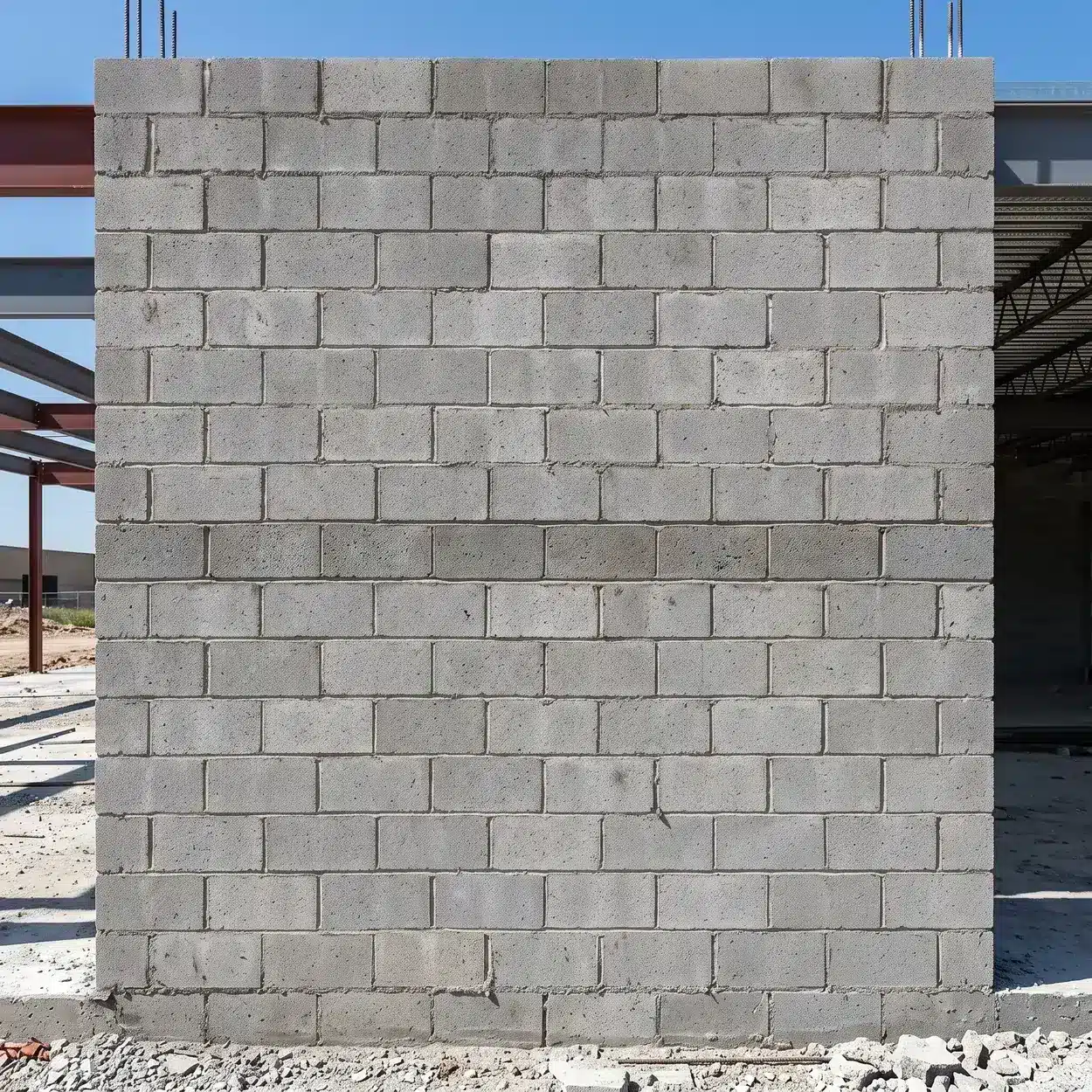
Here is the most useful correction in masonry estimating. You are not buying square feet of wall. You are buying the void volume inside the block, and that volume moves with unit size and web configuration.
A 12 inch unit’s cores are roughly twice as deep as a 6 inch unit’s, so the same square foot of wall takes on the order of twice the foam. A price per square foot that does not name the unit size is a placeholder. Net area and web thickness come from the supplier’s data for the unit delivered, and ASTM C90, the dry-cast loadbearing concrete masonry unit specification sets those minimums.
Now the part owners find backwards. Reinforced cells and bond beams are already solid concrete, so they take no foam at all. Less material, and a higher price.
A grouted cell is not a discount. It is an interruption. Somebody has to read the reinforcing and grouting drawings, shade every grouted cell, bond beam, and lintel on an elevation, and lay hole rows around what is open. A bond beam at the eight foot course forces a hole row above it, because material injected below stops there. That is a second row of drilling, patching, and verification on a wall that would otherwise have taken one. On a heavily reinforced wall the layout is the job, and the foam is close to a rounding error against it.
So Core Foam cost tracks core volume and layout, not elevation area. Price gross area with no deduction and the material figure runs high while the labor figure runs low, and the two errors cancel until the wall proves more reinforced than assumed.
New Construction Versus Retrofit, and What Happens to the Holes
Three conditions, three genuinely different jobs, and this is where Core Foam cost separates most sharply.
Top fill during construction is the cheapest case for this product. The lift top is open, the crew drops material down the cores, and nothing gets drilled or patched on the wall face. What it costs is coordination. Side fill, also called pressure fill, on a standing but unfinished wall is the normal commercial case: drilling, layout, and patching, but the face is not final and the patch standard is forgiving.
Retrofit on a finished building is the expensive one, for reasons that have nothing to do with foam. The building is occupied, so work happens around tenants or after hours. Reinforcing drawings are often missing, so fillable area gets discovered with a test row and a probe. And every hole lands in a face somebody looks at.
What that patch costs depends on the face. Under paint or veneer, closing a hole is a fill and a light sand. On exposed or architectural block the hole goes in the bed joint and gets tuckpointed with mortar matched in color, texture, and tooling, usually with a mock-up approved first. That is masonry restoration priced by a mason, and three hundred of those is not the same line item as three hundred under paint.
Access is the other multiplier. Hole rows repeat every 10 feet vertically, so a 30 foot wall gets three rows and two are lift work.
Eleven Drivers Behind Any Core Foam Cost Estimate
This is the table I would hand an owner comparing proposals. The right two columns matter more than the left two.
| Cost driver | Why it moves the number | What to ask the bidder | What a vague answer tells you |
|---|---|---|---|
| Unit size and net area | Core volume, not wall area; a 12 inch unit holds roughly twice a 6 inch | Which unit size and net area? | They priced wall area, not core volume |
| Block density | Decides what the filled wall is worth, not what it costs | Which density, off which submittal? | Nobody read the block submittal |
| Grouted cells and bond beams | Remove material, add layout, hole rows, verification | What fillable area, on what drawing? | Gross elevation area got priced |
| New construction or retrofit | Top fill needs no drilling or patching; retrofit needs both | Top fill or side fill, and when? | The schedule was never coordinated |
| Finish on the drilled face | A patch under paint and a tuckpointed joint are different trades | Who patches, to what standard? | Restoration is not in the number |
| Wall height | Rows repeat every 10 to 14 feet vertically, so height buys rows and lift time | How many rows, and what access gear? | Height got priced as area |
| Elevation continuity | Long runs fill faster per hole than broken-up walls | How many wall segments and setups? | Openings and returns were not counted |
| Penetration sealing | Unsealed conduit, sleeves, and boxes let material escape | Who seals penetrations, and is it your scope? | A scope gap between two trades |
| Verification | cfiFOAM’s guide spec calls for infrared scans at the architect’s request; anything beyond that is a priced practice | What do you verify, and what do I get? | Verification is not included |
| Mobilizations | Sits between grouting and finishes; a missed window is a second trip | How many trips, and what triggers one? | One mobilization was assumed |
| Material input pricing | Foam feedstock moves with producer indexes, not your project | Is escalation held, and how long? | The quote has no validity period |
Run two proposals through those rows and the spread usually explains itself in about fifteen minutes.
What Your Money Actually Buys Depends on the Block Density
Everything above is what the job costs. This is what you get, and it is the more important half.
Take one 8 inch unit with three 1 inch webs and Core Foam in the cores. In 85 pound per cubic foot lightweight block, the series-parallel values in cfiFOAM’s Thermal Properties Data Handbook for Core Foam filled block walls put the wall at R-8.21. In 135 pound per cubic foot normal weight block, the same unit with the same fill calculates to R-4.02. Same foam, same crew, same Core Foam cost, and the lightweight wall returns about 2 times the thermal resistance.
Now the comparison almost nobody runs. Same foam, same crew, three versions of the same 8 inch wall from cfiFOAM’s handbook.
| 8 inch unit, Core Foam in the cores | 85 pcf | 105 pcf | 125 pcf | 135 pcf |
|---|---|---|---|---|
| Three 1 inch webs, ungrouted | 8.21 | 6.19 | 4.64 | 4.02 |
| Two 3/4 inch webs, ungrouted | 11.95 | 9.39 | 7.21 | 6.28 |
| Three 1 inch webs, rebar cells every 48 inches | 5.54 | 4.50 | 3.62 | 3.24 |
Same Core Foam cost, and the wall that comes back runs from R-3.24 to R-11.95 depending on density, web geometry, and grouting. Those are block and structural decisions made before the bid. If your architect specified 135 pcf units with grouted rebar cells every 4 feet and the energy model leans on filled cores, the conversation is about the block, not the bid.
Two qualifiers travel with those numbers. The foam itself measures R-4.6 per inch at a 75F mean temperature under ASTM C518-21, per ICC-ES listing ESL-1648, or R-5.0 per inch at a 25F mean temperature, and the handbook uses the 75F figure. And each value includes air films and assumes the unit, webs, and grouting named in its row, so read the cell for the block actually delivered.
Two things the money does not buy at any price. It does not buy fire-resistance rating. Tested to ASTM E84 and UL 723, Core Foam has a flame spread index of 25 or less and a smoke developed index of 450 or less, per ESL-1648. Class A is a separate idea, a threshold of 0 to 25 flame spread and 0 to 450 smoke developed, and the listed result sits inside it. cfiFOAM states that its masonry foam neither adds to nor detracts from the fire-resistance rating of a CMU wall. It also does not buy coverage the manufacturer excludes: nothing horizontal, no flotation, no waterproofing role, no wet walls, and no extended contact with surfaces above 190 degrees Fahrenheit.
Why the Adopted Code Edition Changes the Budget in Texas, Kansas, and Oklahoma
Budgeting against a code minimum only works if you know which code, and across the three states we serve the adopted commercial energy codes sit most of a decade apart.
Texas enforces the 2015 IECC for commercial construction, effective November 1, 2016 under 34 Texas Administrative Code 19.53(a). Oklahoma is on the 2006 IECC with ANSI/ASHRAE/IES Standard 90.1-2003 and state amendments, effective September 14, 2022, a 2022 effective date on a 2006 edition. Kansas names the 2006 IECC for new commercial and industrial structures under K.S.A. 66-1227, and as a home rule state, adoption and enforcement belong to the local jurisdiction.
Here is the cost consequence, and it runs opposite to what owners expect. The older the adopted edition, the less insulation a code minimum buys. An owner in Oklahoma or Kansas specifying to a newer edition is buying performance, not compliance, and that belongs in the budget as an owner upgrade. No plans examiner will ask for it.
Home rule cuts the other direction too. Dallas amended up to the 2021 IECC while Fort Worth stayed on the 2015. Same envelope detail, two editions, twenty miles apart, and two budgets for two identical block buildings.
One distinction decides how a filled wall gets credited in any edition. The prescriptive mass wall rows are written in continuous insulation, abbreviated ci, meaning uninterrupted by framing or webs. Foam inside block cores is interrupted by every web, so it is cavity insulation and generally does not satisfy a prescriptive ci row alone. In the 2021 IECC, Table C402.1.3 is the insulation component R-value method and Table C402.1.4 is the assembly U-factor method. Core Foam usually points a project toward the second path or an added continuous layer. Budget for the fill being part of the envelope, not all of it, and confirm the edition with the authority having jurisdiction rather than the state.
How to Compare Two Core Foam Cost Proposals Line by Line
Start with the item most likely to be missing entirely. No third-party field verification protocol has been published for injected masonry foam: no field test standard, no listed inspection procedure, and no special inspection provision covering whether a core actually filled. Whatever verification a contractor performs is that contractor’s own practice.
So a bid carrying verification is not the same bid as one without it, and the one without it will always be cheaper. Ask what the practice is and what you receive: material at adjacent holes, consumption reconciled against calculated core volume, a sample re-drill below a bond beam, and an injection log by elevation and course.
Then run the comparison in this order.
- Normalize the block. Unit size, density, and net area off the approved submittal, not the specification’s generic call for concrete masonry units.
- Demand fillable area in square feet, after grouted cells, bond beams, and lintels come out, on a marked-up elevation.
- Separate the fill from the finish. Price the patch as its own line, with the face named and the mock-up included or excluded in writing.
- Price verification as a line, not a courtesy, and name the closeout document.
- Fix access and mobilizations. Lift or scaffold, which hours, how many trips, and what triggers another.
- Confirm the cure assumption. cfiFOAM normally suggests a 72-hour cure before a filled wall is painted, so the finish schedule has to leave room for it.
- Check the value against the block, using the density row that matches your submittal.
Two numbers that answer those seven items the same way are comparable. Two that do not are two different projects.
Related Reading
- Commercial K-13 insulation cost guide runs the same bid-reading logic on sprayed fiber, where substrate and access replace core volume.
- Spray foam insulation cost and what drives the price covers the envelope side, where thickness and substrate condition move the number.
- Commercial fireproofing cost and what to expect per square foot applies the same scope-comparison discipline to structural fire protection.
Frequently Asked Questions
How much does Core Foam cost per square foot? No credible published installed price covers commercial Core Foam work in our three states, and any figure offered as an industry number came from a lead generation site. Price turns on unit size, fillable area after grouting, access, and the finish on the drilled face. Get a project-specific bid.
Why can two bids on the same wall land so far apart? Because they are usually pricing two different scopes. The three common gaps are fillable area, joint restoration on the drilled face, and verification. Ask which fillable area each bidder used and on what drawing, and the spread explains itself.
Do grouted cells and bond beams make the job cheaper? No, and owners find that counterintuitive. Grouted cells are already solid, so they take no foam, but they force layout work, an extra hole row above each bond beam, and a separate verification pass. Less material, more labor, and labor is the larger half.
Does retrofit cost more than new construction? Almost always. Top fill on an open wall during construction needs no drilling and no patching, while a retrofit adds layout discovery where drawings are missing, lift or scaffold access, occupied-hours restrictions, and a patch on every hole in a visible face.
Is Core Foam cheaper than rigid board or spray foam on a masonry wall? That is not really a price comparison, because the materials do not occupy the same place in the wall. Injected foam goes inside the block cores, while board and mineral wool go in a drainage cavity or behind furring, which means building or opening an assembly. On a finished building, Core Foam is often the only one that avoids demolition.
What raises Core Foam cost the most on an existing building? Finish restoration and access, in that order. Tuckpointing several hundred holes on an exposed architectural face is masonry restoration with matched mortar and a mock-up, and it can run past the fill itself. Height then decides how many rows are reachable from the floor.
Key Takeaways
No citable Core Foam cost figure exists.
- No published installed price covers commercial Core Foam work in our three states.
- The only primary-source data is upstream: BLS series PCU326150326150 and WPU1392, directional on material inputs only.
Volume is cores and layout, not wall area.
- Fill volume is the void volume of the delivered unit, set by size and web configuration.
- A 12 inch unit holds roughly twice the foam per square foot that a 6 inch unit does.
- Grouted cells take no foam but add layout, a hole row above every bond beam, and another verification pass.
Retrofit price is finish and access, not foam.
- On architectural block, closing the holes is tuckpointing with matched mortar, a mason’s line item.
- Hole rows repeat every 10 feet vertically, so height converts into lift or scaffold time.
Verification is a scope item nobody standardized.
- No published third-party field protocol exists for injected masonry foam.
- A bid with verification and one without are not the same bid, and the second is cheaper.
The block and the adopted edition decide what the money bought.
- Same 8 inch unit and same fill: R-8.21 in 85 pcf block, R-4.02 in 135 pcf block, per cfiFOAM.
- Web geometry and grouting move the same 8 inch wall from R-3.24 to R-11.95 at the same foam cost.
- Texas is on the 2015 IECC, Oklahoma and Kansas the 2006, and Dallas amended up to the 2021 while Fort Worth held the 2015.
If you are budgeting masonry insulation and you want a Core Foam cost proposal that names the unit and net area it priced, deducts grouted cells and bond beams from the fillable area, carries the joint restoration for the face you actually have, and hands you an injection log instead of a promise, that is how we quote this work throughout Texas, Kansas, and Oklahoma. Call me at 512-387-2111 or email ross@bahlfireproofing.com to walk an elevation, or Contact Bahl Fireproofing to put a masonry scope out for pricing. Our K-13 sprayed fiber insulation page covers the sprayed side of our work until the masonry service page publishes, and the service areas we cover across three states page shows where we work.
This article provides general educational information about masonry insulation and project budgeting, and it is not engineering, legal, or code-compliance advice. It does not replace project-specific direction from a licensed architect or engineer. Any figures here are general ranges for illustration, not a quote or an estimate, and actual pricing depends on the specific project, the delivered units, access, finish requirements, and market conditions, so obtain a project-specific bid before deciding. Product specifications including R-value, density, and surface burning results are revised by manufacturers, so confirm current values against the latest data sheet, and note that suitability depends on project conditions, that fire-resistance ratings depend on the tested or calculated assembly and must be confirmed against the applicable listing, and that code citations reference a specific edition which varies by the authority having jurisdiction.