On open-structure commercial ceilings, the insulation question usually comes down to two options, and they are not the same kind of product. This guide compares K-13 spray-applied insulation against fiberglass batts for commercial ceilings and shows where each one actually belongs, so the cheaper choice on paper does not quietly turn into the expensive one over the building’s life.
TLDR: The mistake in K-13 vs fiberglass batts is treating them as interchangeable and picking by upfront price per square foot. They are different product classes. Fiberglass batts are a cavity-fill material that needs a cavity and support; K-13 is a monolithic spray that bonds to open, irregular structure and delivers thermal, acoustic, and finish performance in one pass. On an exposed commercial ceiling, batts sag, gap, and lose R-value, and the cheaper material often costs more over the building’s life. Match the product to the ceiling, not to the bid.
Specify fiberglass batts for an open-plenum gym, warehouse, or big-box ceiling because they cost less per square foot, and here is what tends to happen. The batts droop out of the metal deck flutes, gap around every pipe, hanger, and light fixture, compress wherever someone bumps them, and stop delivering the R-value the spec called for, sometimes within a few years. The echo the room was supposed to control is still there. And the fix is to tear them out and start over. Run it the other way, and over-specifying a spray system into a simple concealed framed cavity where a batt would have done the job fine wastes money too. The expensive mistake in K-13 vs fiberglass batts is not the price of the material. It is putting the wrong product on the wrong ceiling.
K-13 vs Fiberglass Batts: What Is the Real Difference?
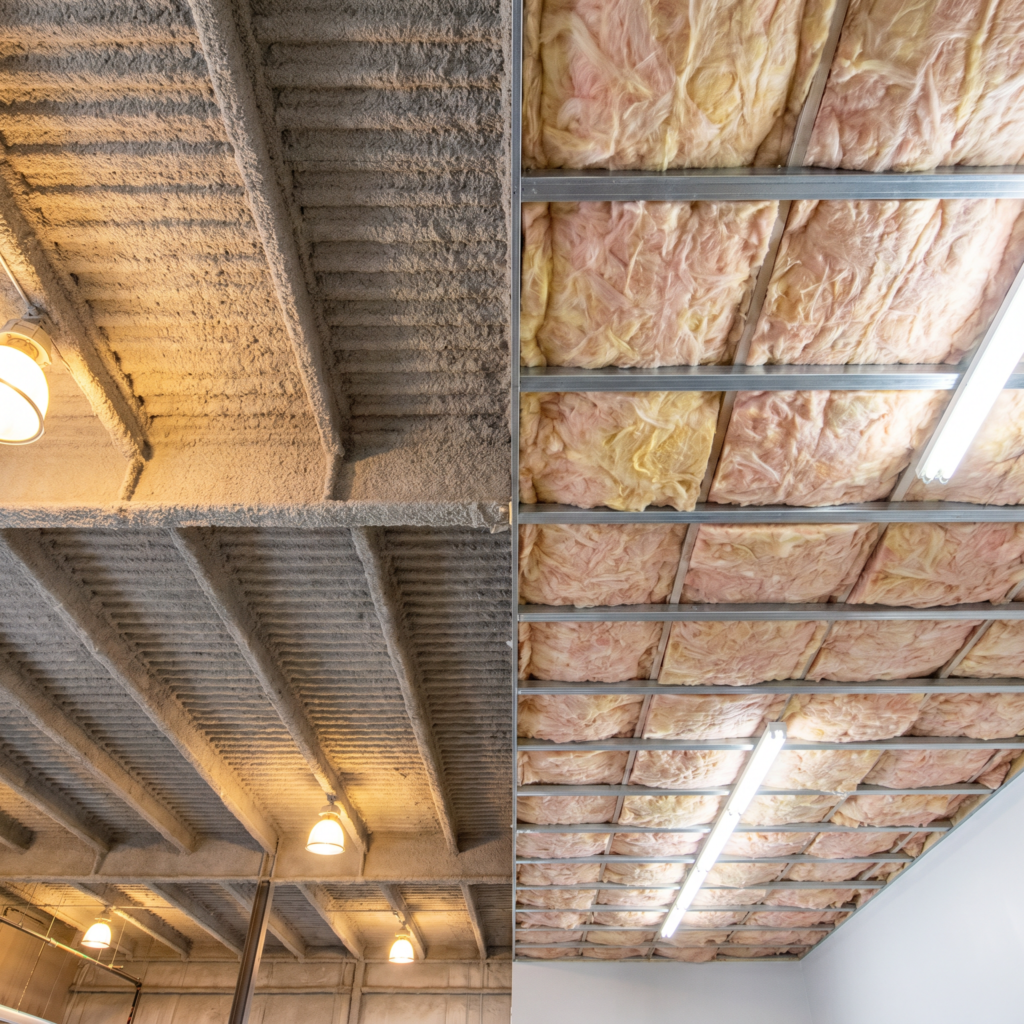
The real difference in K-13 vs fiberglass batts is form and application. Fiberglass batts are pre-cut blankets friction-fit into a framed cavity, so they need a cavity and support to stay in place. K-13 is spray-applied cellulose fiber that bonds in a monolithic layer to the structure itself, including open decks and irregular shapes, with no cavity required.
K-13, made by International Cellulose Corporation, is spray-applied cellulose fiber at a nominal 3.5 pounds per cubic foot density, rated at R-3.7 per inch. Fiberglass batts are spun-glass blankets rated at roughly R-3.1 to R-4.3 per inch depending on density. The per-inch numbers sit in the same neighborhood. The difference shows up in what happens when you put each one on a real commercial ceiling.
Where Each One Belongs
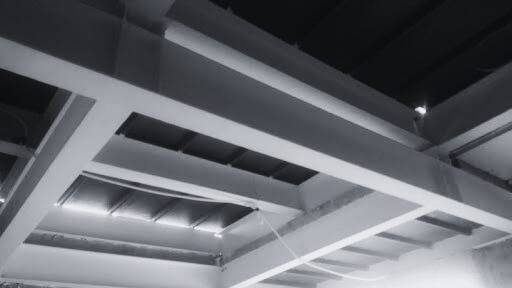
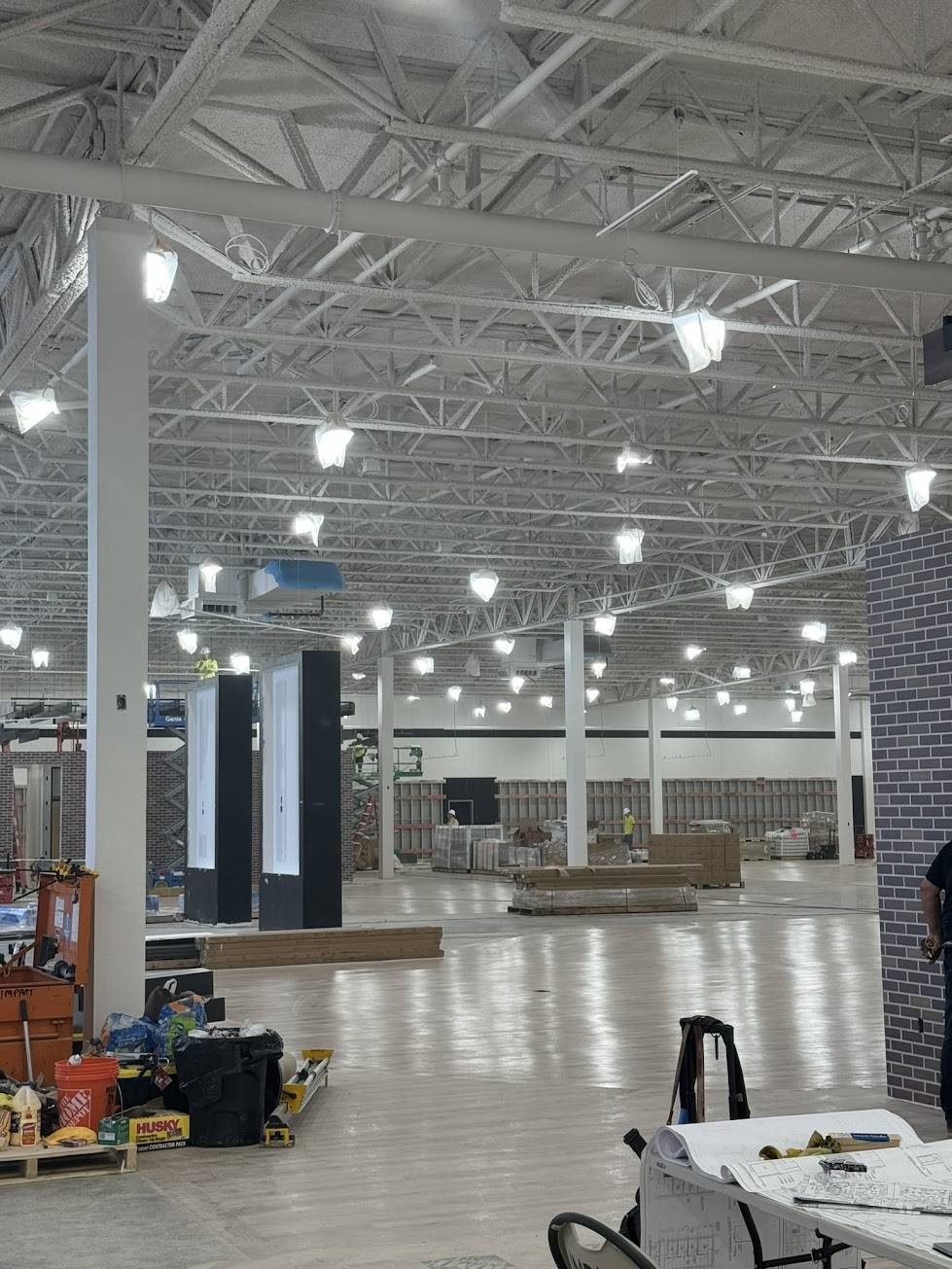
The whole decision turns on one question: is there a cavity? Fiberglass batt is a cavity-fill product. It works when there is a framed cavity, a stud bay or a joist bay, with something to hold it in place and a finished surface over it. K-13 is a surface-applied product. It bonds to the structure, so it works where there is no cavity at all, which describes most exposed commercial ceilings: open metal deck, bar joists, and structural steel left visible.
When Fiberglass Batts Make Sense
Batts earn their place in concealed, framed, accessible cavities that have support and a finished surface going over them. Walls, and floor-ceiling assemblies between conditioned levels, are the classic cases. In those conditions a batt is cost-effective and entirely appropriate, and reaching for a spray system there is usually overkill.
When K-13 Makes Sense
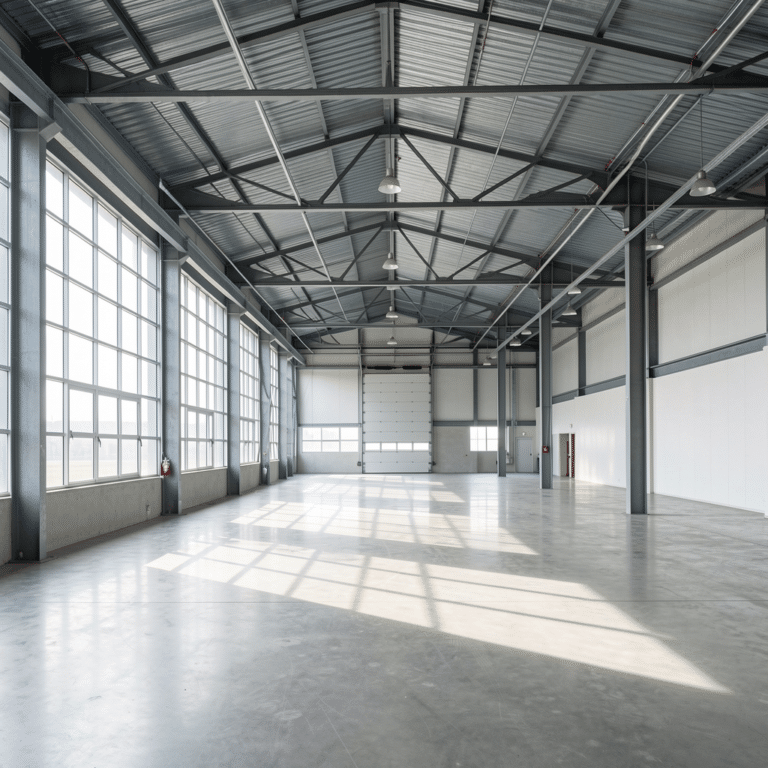
K-13 is the answer for open or exposed structure with no cavity to fill: warehouse and distribution ceilings, big-box retail, gymnasiums, natatoriums, and exposed-deck office and retail space where the structure is the ceiling. It bonds directly to the deck and joists, fills the flutes, follows irregular shapes, and serves as the finished surface in one operation. That is the work our K-13 spray-applied insulation services are built around.
On commercial ceilings across Texas, Oklahoma, Kansas, Nebraska, Minnesota, and Wisconsin, the batt jobs that go wrong almost never fail because the fiberglass was bad. They fail because someone put a cavity-fill product on an open structure that has no cavity to hold it. I have walked buildings where the batts had drooped out of the deck flutes, gapped around every pipe and hanger, and compressed wherever they got touched, on a ceiling the spec said was insulated to a number the assembly had stopped delivering years earlier. The fiberglass performed in the lab. The ceiling never gave it the conditions the lab assumed.
How They Compare Head to Head
| Factor | K-13 spray-applied | Fiberglass batt |
|---|---|---|
| Form and application | Monolithic spray, bonds to structure | Pre-cut blanket, friction-fit in a cavity |
| Best fit | Open, exposed, irregular structure; no cavity needed | Concealed, framed, supported cavities |
| R-value per inch | About R-3.7 | About R-3.1 to R-4.3 by density |
| Acoustic absorption (NRC) | Up to about 1.05 at 1.5 inches on ribbed metal deck | Varies with facing, mounting, and airspace |
| Behavior over time | Bonded and monolithic; no settling or sag | Sags, compresses, and gaps over time |
| Penetrations | Sprays around pipes and hangers, sealing gaps | Must be cut and fitted; gaps are common |
| Finish | Is the finished surface; textured, paintable, color options | Needs a separate finished surface |
| Metal deck flutes | Fills the flutes monolithically | Cannot fill flutes; leaves voids |
| Surface burning | ASTM E84 flame/smoke 5/5, Class A | Non-combustible, Class A |
| Cost basis | Higher installed; one system does three jobs | Lower material cost; needs support and finish |
R-Value: Why the Per-Inch Numbers Do Not Settle It
Both materials land in a similar per-inch range, K-13 at R-3.7 per inch and fiberglass at roughly R-3.1 to R-4.3 per inch by density, so on paper the thermal question looks like a wash or a slight batt edge at high density. But the R-value on the label is a lab number, tested at a controlled temperature with zero air movement, zero moisture, and a perfect installation. The DOE guidance on fiberglass insulation is explicit that batts form gaps and compress, reducing effectiveness over time, and that installation quality drives real performance. On an open ceiling with no cavity to hold a batt flat and gap-free, the in-place R-value drifts below the label quickly. K-13’s bonded, monolithic layer holds its thickness and coverage, so the installed R-value tracks the rating instead of decaying away from it.
Acoustics: The Job Batts Quietly Fail on Open Ceilings
NRC, the Noise Reduction Coefficient, is the single-number measure of sound absorption: the average of a material’s absorption at 250, 500, 1000, and 2000 hertz, measured in a reverberation room under ASTM C423, the sound absorption test method. K-13 is tested up to roughly NRC 1.05 at 1.5 inches on ribbed metal deck, and that qualifier matters, because an NRC number without the thickness and substrate behind it means nothing. On a warehouse, gym, or big-box ceiling, that absorption sprayed straight onto the deck is what controls the echo. Fiberglass batts can absorb sound too, but on an open ceiling they are the wrong delivery. Gapped, sagging, and often stranded above a deck they cannot bond to, they do not present a continuous absorptive surface to the room below. K-13 does.
Durability: The Number That Decides Life-Cycle Cost
This is where upfront price misleads. Fiberglass batts carry a manufacturer service rating measured in decades, on the order of 50 to 100 years undisturbed. The catch is the word undisturbed. In real commercial ceilings, especially open or overhead applications, field performance degrades within roughly 15 to 20 years as the batts compress, absorb moisture, and sag out of position, which is the same gapping and compressing the DOE describes. K-13, applied monolithically and bonded to the structure, does not settle or sag. International Cellulose’s environmental product data references a service life on the order of 75 years, and in the field the bonded layer holds its position and its performance. So the batt that won on the bid can lose on the building. Replace a sagged, gapped batt ceiling once in 15 to 20 years and the cheaper option has cost more than the system that simply stayed put.
Specifying for Texas, Kansas, and Oklahoma
In our service area, the building stock pushes this decision constantly. Texas and the surrounding region are full of exactly the buildings where the cavity-versus-no-cavity distinction decides the product: distribution warehouses, big-box retail, manufacturing floors, and school gyms, all with open structural ceilings and no cavity for a batt. On those ceilings, K-13 is the product that can actually stay in place and handle the acoustic and thermal job at once. Regional humidity sharpens the point, because in humid Gulf and South-Central climates, fiberglass batts that absorb moisture lose R-value and sag faster, while a bonded cellulose layer is less prone to the same moisture-driven slump. And on conditioned, framed interior assemblies, the kind found in offices and multi-level buildings, a batt is still the right and economical call. The lesson is not that one product wins everywhere. It is that the ceiling type, common across commercial ceilings across Texas, tells you which one to specify.
Common Mistakes in the K-13 vs Fiberglass Batts Decision
The recurring misses follow a pattern. Picking by material price per square foot instead of installed performance and life-cycle cost. Specifying batts for an open deck or exposed structure with no cavity to hold them. Treating the label R-value as the in-place R-value on an unsupported ceiling. Citing an NRC number with no thickness or substrate behind it. Forgetting that batts need a separate finished surface while K-13 is the finish. And over-specifying K-13 into a simple concealed framed cavity where a batt would have done the job. Each one comes back to the same root: matching the product to the bid instead of to the ceiling.
Frequently Asked Questions
What is the difference between K-13 and fiberglass batts? Fiberglass batts are pre-cut blankets that fill a framed cavity and need support to stay in place. K-13 is spray-applied cellulose fiber that bonds in a monolithic layer directly to the structure, including open decks and irregular shapes, with no cavity required. That difference in form decides where each one works.
Is K-13 better than fiberglass batts? Not universally. On open, exposed commercial ceilings with no cavity, K-13 is the stronger choice because it bonds in place and delivers thermal, acoustic, and finish performance at once. In concealed, framed, supported cavities, a fiberglass batt is appropriate and more economical. The ceiling decides.
Does K-13 have a higher R-value than fiberglass? Per inch they are similar, K-13 at R-3.7 and fiberglass at roughly R-3.1 to R-4.3 by density. The meaningful difference is in-place performance: a bonded K-13 layer holds its rated R-value, while a sagging or gapped batt on an open ceiling can drift well below its label.
Why do fiberglass batts sag on commercial ceilings? Because a batt is a cavity-fill product with nothing to hold it on open structure. Over time, gravity, handling, and absorbed moisture cause it to compress, gap, and droop out of metal deck flutes. The DOE notes directly that batts form gaps and compress, reducing effectiveness over time.
Can fiberglass batts match K-13’s acoustics on an open ceiling? Generally no. NRC depends on presenting a continuous absorptive surface to the room, and on an open ceiling a gapped, sagging batt cannot. K-13 sprayed onto the deck presents that continuous surface, which is why it is specified for echo control in gyms, warehouses, and big-box spaces.
How long does each one last? A fiberglass batt is rated for decades undisturbed, but on open commercial ceilings real-world effectiveness commonly degrades within 15 to 20 years through compression, moisture, and sag. K-13 is monolithic and does not settle; its environmental data references a service life on the order of 75 years.
Is K-13 fire-rated? K-13 tests to a Class A surface-burning classification, with a flame-spread and smoke-developed index of 5 and 5 under ASTM E84 surface burning characteristics. It is insulation, not structural fireproofing, so it controls surface burning of the material itself rather than providing a steel fire-resistance rating.
When should I still use fiberglass batts? In concealed, framed, supported cavities with a finished surface over them, such as interior walls and floor-ceiling assemblies between conditioned levels. There, a batt does the job at lower cost, and a spray system is unnecessary.
Key Takeaways
- They are different product classes. Fiberglass batts are cavity-fill and need support; K-13 is surface-applied and bonds to open structure. That distinction, not price per square foot, should drive the choice.
- The cavity question answers it. No cavity, as on open decks and exposed steel, points to K-13. A framed, supported, concealed cavity points to a batt.
- Per-inch R-value is similar; in-place R-value is not. K-13 at R-3.7 and fiberglass at R-3.1 to R-4.3 are close on the label, but a bonded layer holds its rating while an unsupported batt drifts below it.
- NRC needs context. K-13 reaches up to about 1.05 at 1.5 inches on ribbed metal deck. Any NRC figure without a thickness and substrate is not a real comparison.
- Durability decides life-cycle cost. Batts on open ceilings commonly degrade in 15 to 20 years; a monolithic K-13 layer stays put, so the cheaper material can cost more over the building’s life.
- K-13 is the finish. It provides thermal, acoustic, and finished surface in one pass, while a batt assembly still needs a separate finished surface.
- In our region, building stock favors K-13 on the big open ceilings. Warehouses, big-box retail, and gyms across Texas, Oklahoma, Kansas, Nebraska, Minnesota, and Wisconsin are open-structure ceilings where batts cannot stay in place.
Related Reading
- New to the product? Start with our complete K-13 contractor guide for the full picture on specs, performance, and applications.
- Wondering how it goes on? See how K-13 is applied on commercial projects for the application process and what good installation looks like.
- Have a warehouse ceiling? Our breakdown of K-13 for warehouse acoustic and energy control covers the open-deck case in depth.
If you have a commercial ceiling and you are weighing the cheaper batt against a system that stays put, the questions that matter are whether the structure is open or has a cavity, whether you need NRC and R-value in one pass, and whether the ceiling can hold a batt flat and gap-free for the life of the building. That open-plenum, monolithic-spray, deck-flute-filling, no-sag work is what our crew does throughout Texas, Oklahoma, Kansas, Nebraska, Minnesota, and Wisconsin. Reach me directly at 512-387-2111 or ross@bahlfireproofing.com, or Contact Bahl Fireproofing to talk through which product belongs on your ceiling before it goes out to bid.
This article provides general educational information about commercial insulation, K-13 spray-applied cellulose, and fiberglass batt insulation. It is not engineering advice and does not replace project-specific direction from a licensed architect or engineer. R-value, NRC, and surface-burning values are tested results that vary with thickness, substrate, mounting, and installation quality, and product specifications are revised by manufacturers, so confirm current values against the manufacturer’s latest published data for the specific product and assembly. K-13 is thermal and acoustic insulation with a Class A surface-burning classification; it is not a substitute for structural fire-resistive materials where a fire-resistance rating is required. Always confirm insulation selection, performance values, and code requirements with the manufacturer and a licensed architect or engineer before specifying or installing any system.