Cementitious fireproofing (SFRM) and intumescent coatings are the two primary methods of protecting structural steel from fire. They use completely different mechanisms, carry different inspection requirements, and serve different project conditions. If you are a general contractor, architect, specifier, or building owner deciding which system belongs on your project, this guide explains how each one works, when each one is the right choice, and the six questions that drive the selection decision.
TLDR: Cementitious SFRM is a thick, spray-applied thermal barrier that insulates steel through mass and low thermal conductivity. Intumescent coatings are thin, paint-like systems that expand many times their original thickness when exposed to heat, commonly cited as 15 to 50 times under standard test conditions, forming an insulating char. SFRM is the cost-effective choice for concealed steel. Intumescent is specified for architecturally exposed steel or, in epoxy form only, where UL 1709 hydrocarbon fire ratings are required.
Every fireproofing decision starts with one question: will the steel be visible in the finished space? If the answer is no, cementitious SFRM is almost always the right call. If the answer is yes, intumescent is almost always the practical choice. But that first question only gets you into the decision. The type of intumescent, the fire test standard, the climate zone, whether shop application is feasible, and the moisture exposure conditions all shape the final specification.
In 20-plus years of applying both systems across Texas, Kansas, and Oklahoma, I have seen what happens when the wrong system gets specified. Gypsum-based SFRM in a humid unconditioned warehouse that develops corrosion at the steel interface. Thin-film water-based intumescent specified for a jet fuel facility that requires UL 1709, which thin-film cannot provide. These are not theoretical risks. They are specification errors that cost real money to fix. This guide is designed to prevent them.
What Is the Difference Between Cementitious and Intumescent Fireproofing?
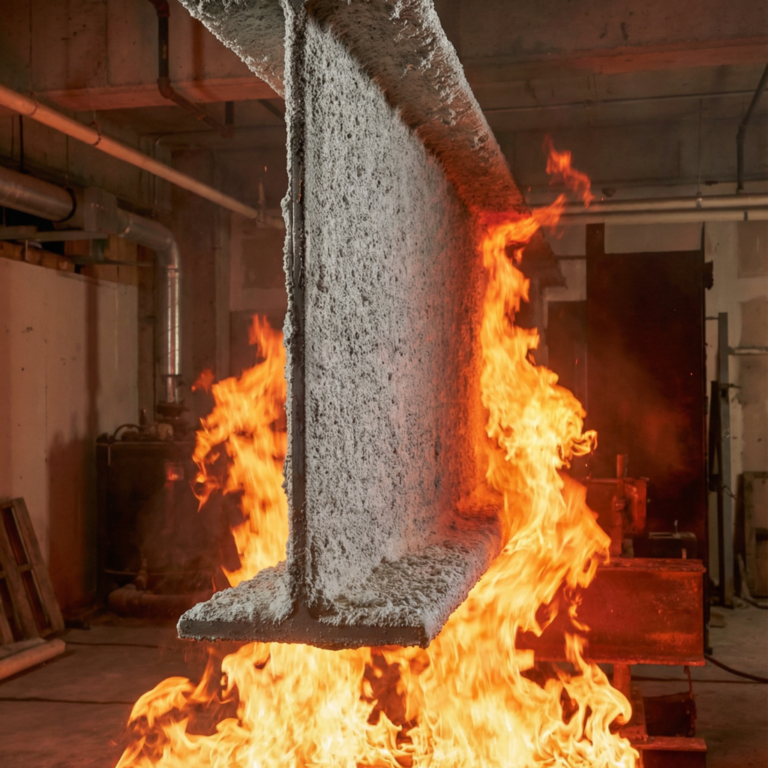
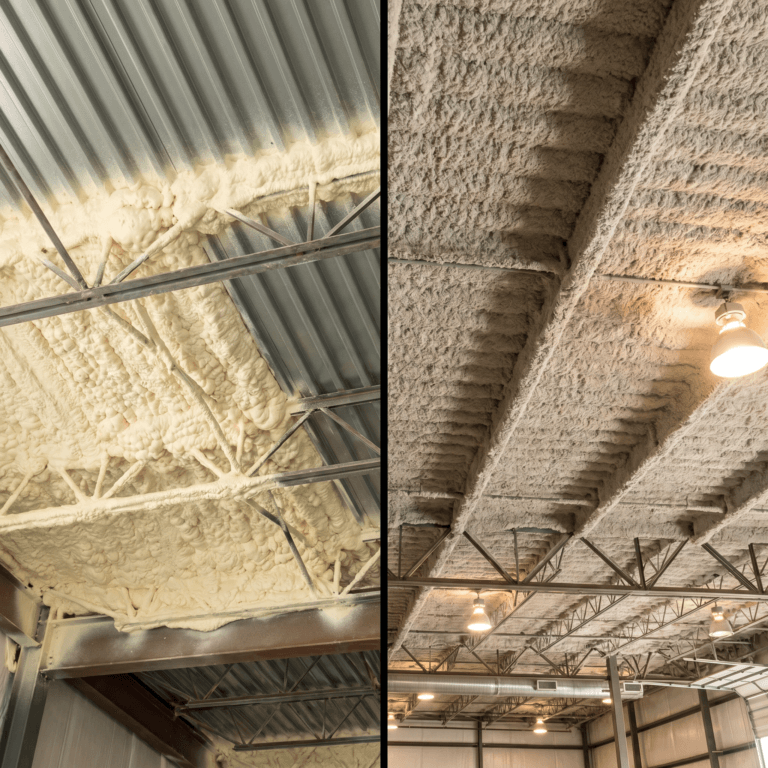
Cementitious fireproofing (SFRM) uses cement or gypsum binders combined with lightweight aggregates to create a thick, rough thermal barrier that insulates structural steel through mass and low thermal conductivity. Intumescent coatings are thin, paint-like systems that expand many times their original thickness when exposed to heat, commonly cited as 15 to 50 times under standard test conditions, forming an insulating char layer between the fire and the steel. SFRM is the cost-effective choice for concealed steel behind ceilings and walls. Intumescent is specified for architecturally exposed steel where aesthetics matter, or in epoxy thick-film form where UL 1709 hydrocarbon fire ratings are required.
Both systems achieve the same goal: protecting structural steel from reaching its critical failure temperature during a fire, buying the time specified in the building’s IBC construction type requirements. The fire-resistance ratings specified in IBC (2021) Table 601 determine how many hours of protection are required, and either system can meet those ratings when properly specified and applied. Understanding how IBC (2021) Table 601 fire resistance ratings connect to your construction type is the first step in any fireproofing specification.
Code note: unless otherwise stated, code references on this page are to the 2021 International Building Code. Code adoption is state and local. Across the states we serve, adopted IBC editions currently range from the 2012 edition to the 2024 edition, some states have no statewide commercial building code, and several enforce NFPA 1 or NFPA 101 rather than the International Fire Code. Minnesota and Wisconsin publish state-amended code books whose numbering and requirements differ from the model code. This is general technical information, not a code determination for your project. Confirm the adopted edition and any local amendments with your authority having jurisdiction.
How Cementitious SFRM Works
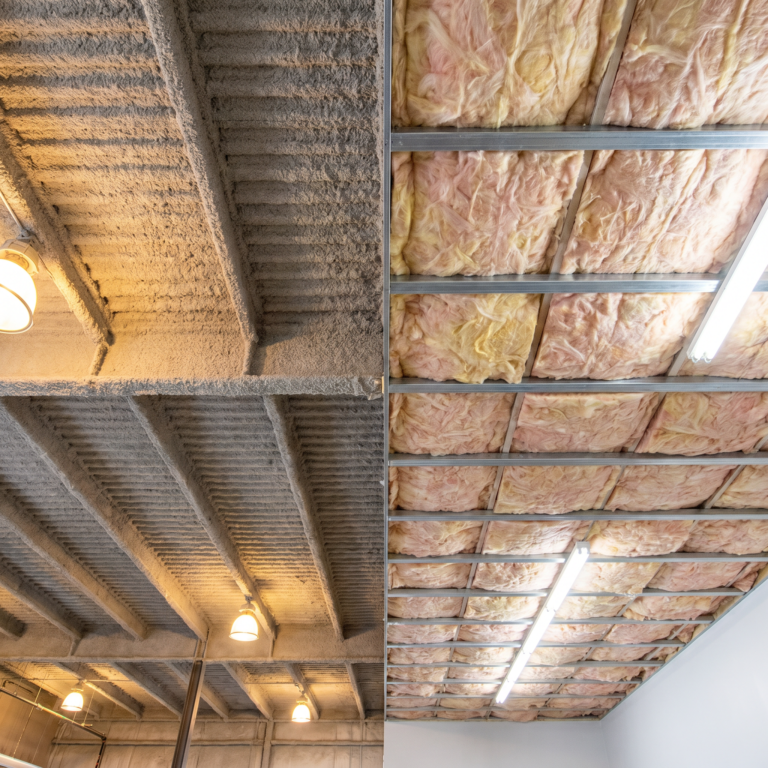
Cementitious SFRM is composed of Portland cement or gypsum binders mixed with lightweight aggregates (vermiculite, perlite, or mineral fiber) and water to create a wet slurry. The slurry is spray-applied to structural steel on-site and cures to form a solid, porous thermal barrier. Application thickness starts at half an inch and increases based on the specific UL fire-resistance design for the required hourly rating.
The protective mechanism is purely passive. The material’s mass, low thermal conductivity, and the endothermic evaporation of chemically bound water all delay heat transfer to the steel beneath. SFRM does not change state in a fire. It maintains its thickness and insulates through mass.
Cementitious SFRM is always field-applied. The wet slurry is batched on-site, sprayed through specialized equipment, and cured in place. The substrate must be clean, dry, and free of oil, grease, and loose scale. Primed or painted steel is permitted only when fire-tested adhesion has been demonstrated. The minimum substrate temperature for application is 40°F, a scheduling constraint with major implications in cold-climate markets.
SFRM comes in three density categories that affect durability, moisture resistance, and bond strength. Commercial density (15 to 21 pcf) uses gypsum binders and is designed for concealed applications. Medium density (22 to 39 pcf) uses cement binders and handles exposed interior conditions. High density (40 pcf and above) uses Portland cement and is designed for exterior exposure and industrial applications. Understanding how SFRM density categories affect product selection helps match the right product to your project’s exposure conditions.
How Intumescent Fireproofing Works
Intumescent coatings use a reactive chemistry that is fundamentally different from SFRM. The coating contains four components working together: an organic binder (epoxy or acrylic), an acid catalyst (ammonium polyphosphate), a carbonific source (pentaerythritol), and a spumific agent (melamine).
When exposed to heat beginning around 350 to 400°F, the acid catalyst decomposes and produces non-flammable gases (ammonia, carbon dioxide) that cause the binder matrix to foam and expand. By approximately 600 to 800°F, the expanded layer carbonizes into a stable char. This char, which is commonly cited as reaching 15 to 50 times the original coating thickness under standard test conditions and varies by product, acts as the insulating barrier between the fire and the steel.
The result is a thin, paint-like coating applied at dry film thicknesses measured in millimeters rather than inches. It looks and feels like paint on the finished steel. It can be top-coated in any color to match architectural finishes. And unlike SFRM, intumescent can be applied either in the field or in the shop at the steel fabricator’s facility.
The Three Types of Intumescent Coatings
“Intumescent” is not a single product. There are three fundamentally different systems, and they are not interchangeable. This is the distinction that matters most for specification accuracy.
Water-Based (Acrylic Thin-Film)
Water-based intumescent uses acrylic polymer resins as the binder. It expands 10 to 50 times its original dry film thickness. It carries ASTM E119 / UL 263 cellulosic fire ratings only. Low VOC, low odor, and soap-and-water cleanup make it suitable for occupied buildings during application. The tradeoff is sensitivity to humidity: application requires relative humidity below 85 percent, and the coating is prone to weathering from moisture and UV exposure if not protected by a topcoat. Multiple coats are often needed, and drying time increases in cold or humid conditions.
Water-based intumescent is the right choice for interior commercial spaces with architecturally exposed steel in conditioned environments: lobbies, atriums, office interiors, arenas, and similar applications where aesthetics drive the specification.
Solvent-Based (Alkyd Thin-Film)
Solvent-based intumescent uses alkyd resins dissolved in petroleum-derived solvents. It also carries ASTM E119 / UL 263 cellulosic ratings only. It dries faster than water-based, produces a harder and smoother decorative finish, and is more resistant to humidity and temperature variations during cure. Higher VOC content requires ventilation during application.
Solvent-based intumescent is specified for semi-exposed steel beams, interior areas with elevated humidity, and mild outdoor environments with a tested topcoat system for protection.
Epoxy Thick-Film
Epoxy intumescent uses epoxy resins and is applied at dry film thicknesses up to 25mm, significantly thicker than thin-film products. It expands many times its original thickness, commonly cited in the range of 15 to 50 times under standard test conditions, with the actual ratio depending on the product and the fire exposure. And here is the critical distinction: epoxy thick-film intumescent carries both ASTM E119 / UL 263 cellulosic ratings AND UL 1709 hydrocarbon rapid-rise fire ratings. No other intumescent type carries UL 1709.
Epoxy intumescent is specified wherever jet fuel, petroleum products, or industrial hydrocarbons are stored or handled near structural steel. This includes the aviation manufacturing corridor in Wichita, refinery environments in Tulsa and the Gulf Coast, offshore platforms, and petrochemical facilities. It also provides excellent corrosion protection and high impact resistance.
A specifier who selects thin-film water-based or solvent-based intumescent for a facility requiring UL 1709 has not met the specification, regardless of the fire rating hours achieved. Only epoxy thick-film carries UL 1709.
UL 1709 vs. ASTM E119: Why the Fire Test Standard Changes Everything
Both test standards use hourly ratings (1-hour, 2-hour, 3-hour, 4-hour), but they simulate completely different fire scenarios. A 2-hour ASTM E119 rating and a 2-hour UL 1709 rating are not the same level of protection.
ASTM E119 is based on a cellulosic fire curve: the burning rate of wood, paper, and textiles. The temperature reaches about 1,000°F at 5 minutes, 1,700°F at 1 hour, and 2,000°F at 4 hours. This is the standard for commercial and residential building fire protection.
UL 1709 simulates a hydrocarbon pool fire where liquid fuel ignites in the open. The temperature rise is dramatically faster, reaching near-peak temperatures almost immediately. ASTM E119 cellulosic ratings do not adequately predict fireproofing performance under hydrocarbon fire exposure.
In Bahl’s service territory, the UL 1709 distinction matters in two specific markets. The aviation manufacturing corridor along Wichita’s K-96 corridor includes facilities with jet fuel storage and handling that require UL 1709-rated fire protection on fuel-adjacent structural steel. The refinery and petrochemical corridor in the Tulsa metro area has the same requirement for petroleum-adjacent steel. In both markets, either high-density cementitious SFRM (40 pcf and above) or epoxy thick-film intumescent can meet UL 1709. Thin-film intumescent cannot.
Head-to-Head Comparison
| Dimension | Cementitious SFRM | Thin-Film Intumescent (Water/Solvent) | Epoxy Intumescent |
|---|---|---|---|
| Mechanism | Passive thermal mass | Reactive expansion and char | Reactive expansion and char |
| Fire test standard | ASTM E119 / UL 263 | ASTM E119 / UL 263 | ASTM E119 / UL 263 AND UL 1709 |
| UL 1709 capable | High-density SFRM only (40+ pcf) | No | Yes |
| Application thickness | 0.5 inch and greater | Less than 5mm DFT | Up to 25mm DFT |
| Aesthetics | Rough, textured, light grey/white | Smooth, paint-like, top-coatable in any color | Smooth, top-coatable |
| Application location | Field only | Field or shop | Field or shop |
| Min. application temp | 40°F substrate | 50°F air; RH below 85% | Varies by product |
| Moisture absorption | Yes (especially gypsum-based); corrosion risk | No; topcoat required for moisture sealing | No; excellent corrosion protection |
| Surface preparation | Clean, dry, free of oil/grease | SSPC-SP6 commercial blast minimum | SSPC-SP10 near-white blast typical |
| Special inspection | IBC 1705.15: density + thickness + bond strength | IBC 1705.16 / AWCI 12-B: thickness only | IBC 1705.16 / AWCI 12-B: thickness only |
| Installed cost | $5 to $14/SF | $4 to $14/SF depending on type | $10 to $20+/SF |
| Best application | Concealed structural steel; large floor plates | Exposed architectural steel where aesthetics matter | Hydrocarbon/aviation fuel environments requiring UL 1709 |
When Cementitious SFRM Is the Right Choice
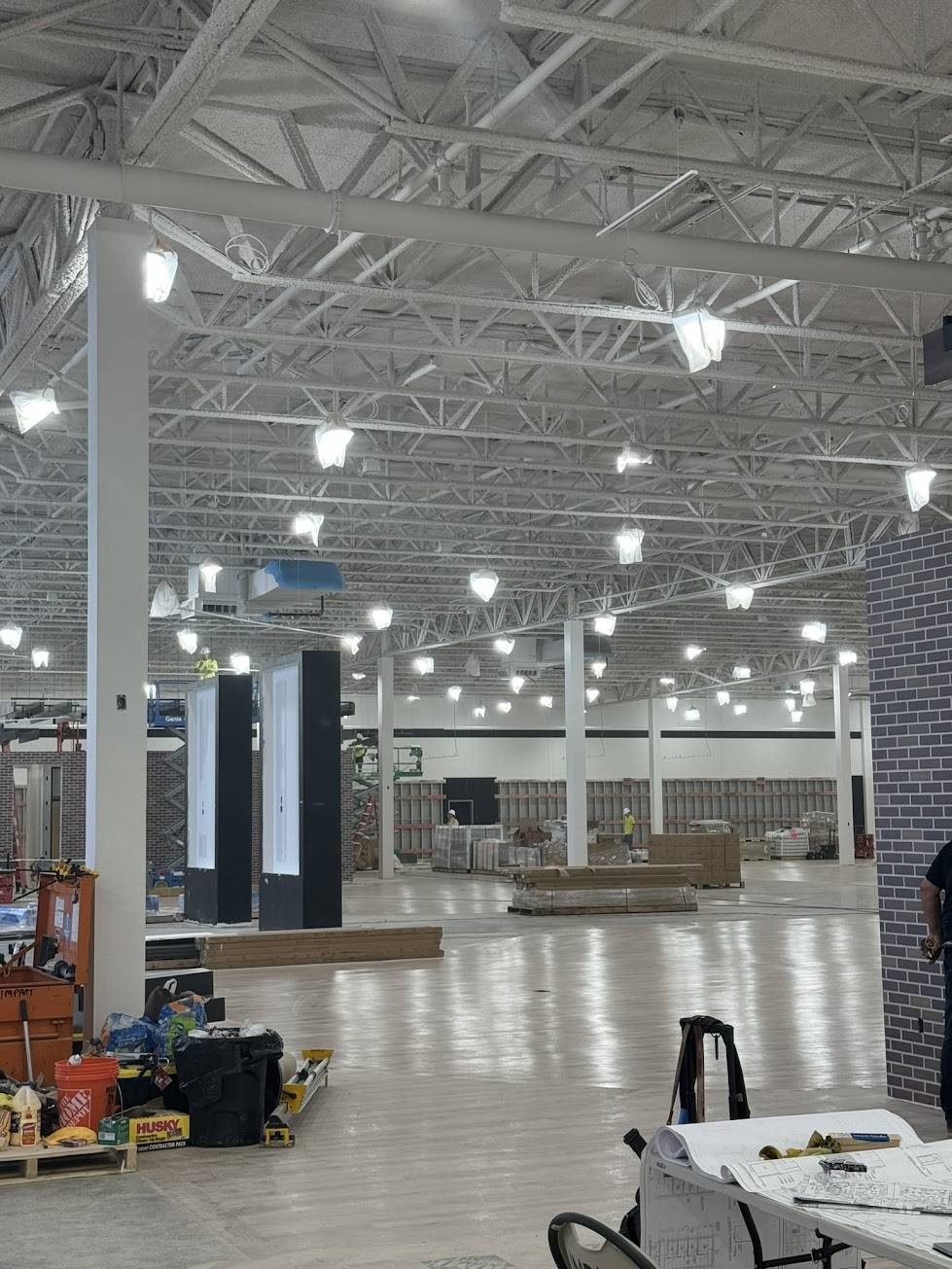
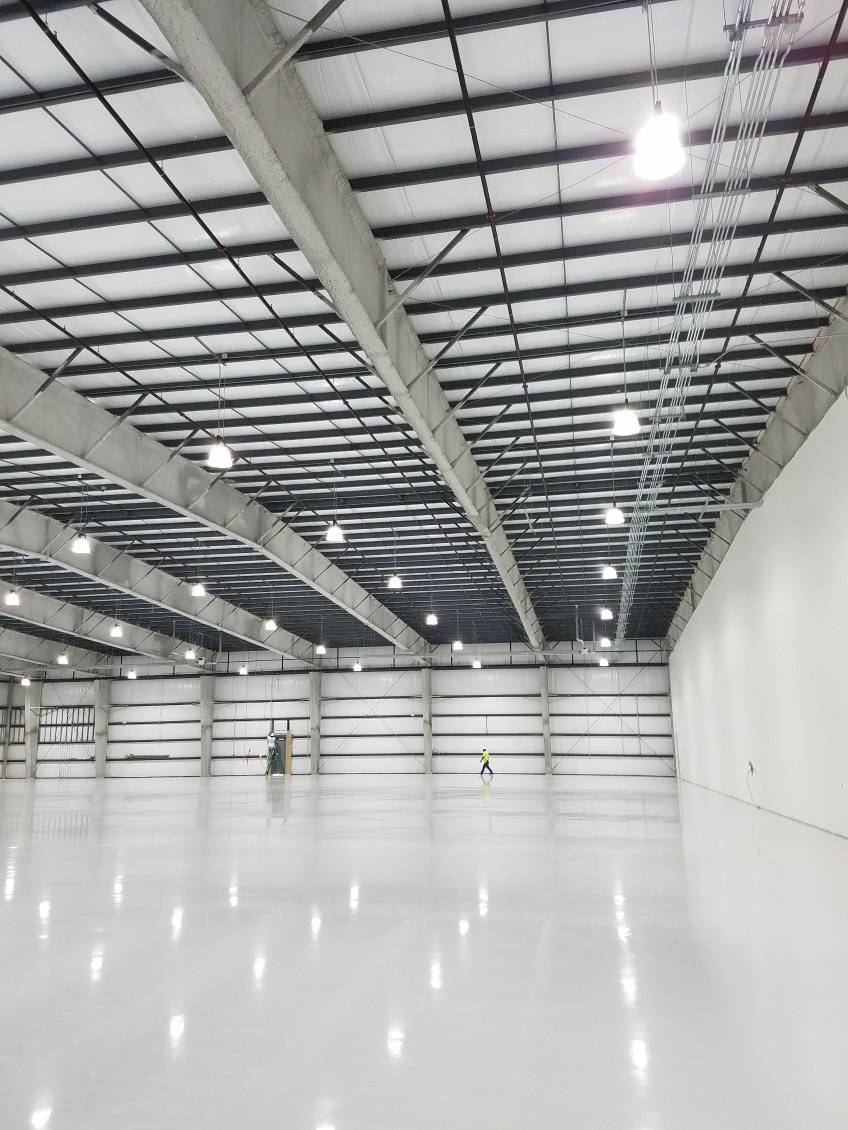
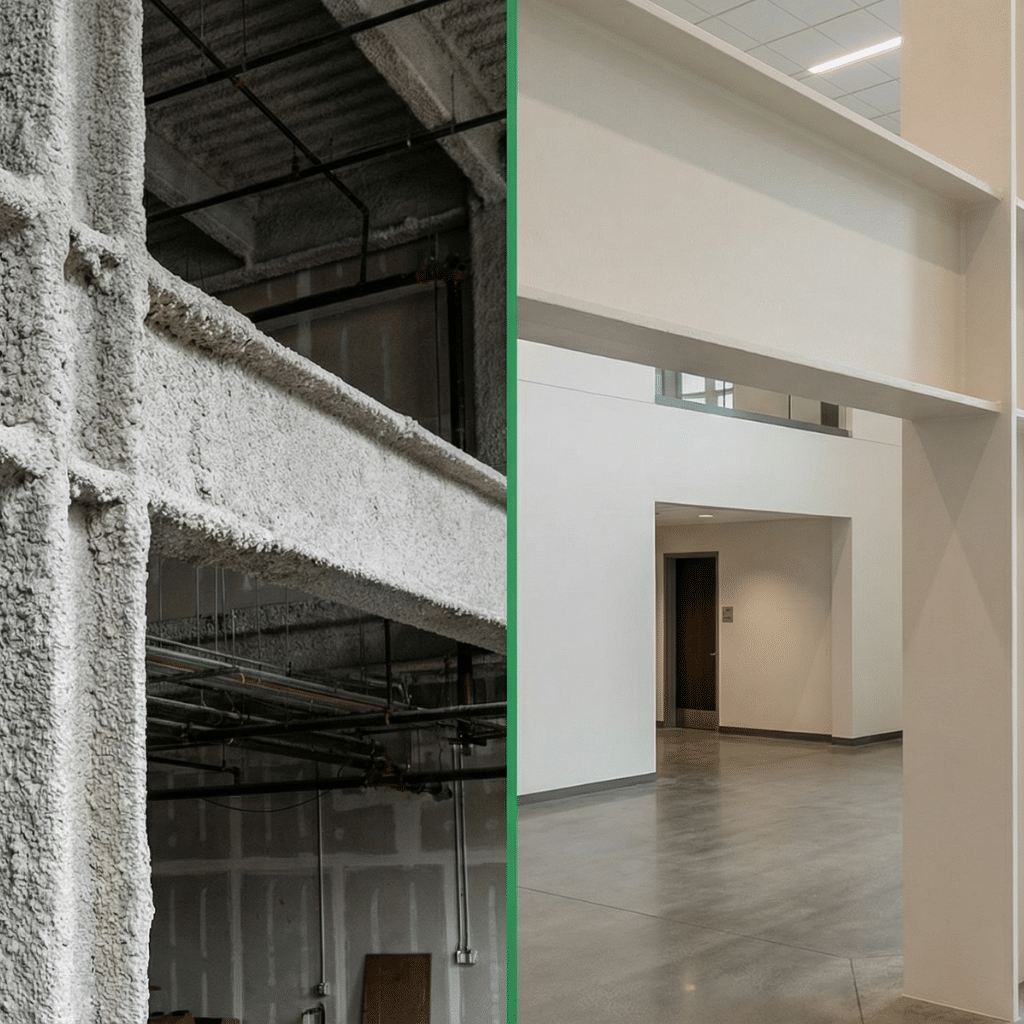
Cementitious SFRM is the right specification when the steel will be concealed behind suspended ceilings, drywall, or other finishes. It is the most cost-effective system for large-floor-plate commercial and industrial projects where aesthetic finish is not a factor. Standard commercial density product covers the most square footage per hour at the lowest material cost of any fire protection method.
SFRM is also the right choice for large industrial facilities with concealed steel where budget drives the specification. On a 200,000 SF distribution center with all-concealed steel, the cost difference between SFRM and intumescent across the entire structural frame can be substantial, and since nobody sees the fireproofing, the aesthetic advantage of intumescent has no value.
Where SFRM requires more careful specification is in moisture-prone environments. Gypsum-based commercial-density SFRM is hygroscopic. It absorbs ambient moisture. When moisture infiltrates the SFRM layer and reaches the steel substrate, it creates a wet, trapped environment at the steel interface. This is an ideal condition for corrosion under fireproofing (CUF), a documented failure mode that affects parking structures, coastal and high-humidity environments, and industrial facilities with process steam or wash-down operations.
In those environments, cement-based medium-density SFRM is more moisture-resistant than gypsum-based products. For our Gulf Coast Texas projects in the Houston metro area, where persistent humidity meets unconditioned industrial spaces, cement-based SFRM or intumescent is the more appropriate specification for exposed or moisture-prone conditions.
When Intumescent Is the Right Choice
Intumescent coatings are the practical choice whenever the structural steel will be architecturally exposed in the finished space. Lobbies, atriums, open-ceiling offices, arenas, airports, restaurants, museums, and any space where the design intent is to show the steel requires a finish that looks like paint, not a rough grey coating. The AISC architecture center’s guide to finishes, coatings, and fire protection provides additional context on how intumescent coatings integrate with architecturally exposed structural steel (AESS) specifications.
Intumescent is also the right specification for historic adaptive reuse projects where exposed steel is part of the renovated aesthetic. Downtown renovation projects in Wichita’s Douglas Design District, Oklahoma City’s Bricktown, and Dallas’s Deep Ellum frequently expose structural steel that was previously concealed. Intumescent provides fire protection without hiding the steel.
For retrofit projects where existing SFRM must be removed and replaced, intumescent is frequently the preferred replacement on exposed steel. It eliminates the strip-and-reapply cycle for future renovations, since the thin, durable coating does not require the same level of remediation as SFRM when building modifications happen later.
And for any project requiring UL 1709 hydrocarbon fire protection where aesthetics also matter, epoxy thick-film intumescent is the only system that provides both the fire rating and a finished appearance. High-density SFRM also meets UL 1709, but its rough, textured appearance is not suitable for visible applications.
Shop-Applied vs. Field-Applied Intumescent
This dimension does not exist for cementitious SFRM. SFRM is always field-applied. For intumescent, the choice between shop and field application is one of the most important project decisions.
Shop Application
Shop-applied intumescent follows a four-step process at the steel fabricator: abrasive blasting to anchor profile, primer application, intumescent coating, and topcoat. The steel arrives on site already fireproofed and ready for erection.
The advantages are significant. A controlled shop environment produces superior coating quality with no exposure to weather, temperature, or humidity during application. The on-site schedule compresses because fireproofing happens in parallel with site preparation rather than in sequence after steel erection. On-site staging is smaller with no spray equipment, slurry mixing, or overspray containment. And for Zone 4A markets like Wichita, shop application eliminates the 40°F substrate temperature problem entirely because the fabricator’s shop is heated year-round.
Shop-applied intumescent has been standard practice in the UK and Europe since the late 1990s and is growing in US adoption. It is not exotic or experimental.
The tradeoff is that transportation and storage of coated steel requires protection against handling damage, and field welds and connections require touch-up on site. These items need to be addressed in the fabricator contract, similar to primer touch-up exclusions.
Field Application
Field-applied intumescent follows the same scheduling logic as SFRM: it is applied after steel erection, subject to the 50°F minimum air temperature and 85 percent maximum relative humidity. For Zone 4A markets, field-applied intumescent faces similar seasonal constraints to SFRM. SFRM requires 40°F substrate temperature; intumescent requires 50°F air temperature. The practical winter window is comparable.
The strategic point for Bahl’s Texas, Kansas, and Oklahoma service area is this: on a Zone 4A Wichita project with exposed architectural steel in the lobby or atrium, shop-applied intumescent means the fireproofing happens off-site in a controlled environment regardless of the calendar. That eliminates the winter scheduling gap entirely for the exposed steel scope.
Corrosion Under Fireproofing: The Moisture Risk in Cementitious Systems
Corrosion under fireproofing (CUF) is a documented failure mode that affects gypsum-based low-density SFRM in moisture-prone environments. It is rarely discussed in comparison guides, but it changes the specification decision in specific project conditions.
The mechanism is straightforward. Gypsum-based SFRM is porous and hygroscopic. It absorbs ambient moisture continuously. When moisture infiltrates the SFRM layer and reaches the steel substrate, it creates a wet, trapped environment at the steel-SFRM interface. The SFRM physically traps moisture against the steel, accelerating the corrosion it is supposed to protect.
CUF occurs in parking structures exposed to de-icing salt infiltration, coastal and high-humidity environments like the Houston metro area, industrial facilities with process steam or wash-down operations, and buildings where the envelope is penetrated during construction and allows long-term weather exposure.
Mitigation options include specifying cement-based medium- or high-density SFRM (more moisture-resistant than gypsum), specifying intumescent coatings (which do not absorb moisture and, in epoxy form, provide corrosion protection to the steel surface), and ensuring topcoated intumescent systems are sealed against moisture infiltration.
For Bahl’s Gulf Coast projects, CUF risk is a legitimate specification factor. Low-density gypsum SFRM in an unconditioned Houston-area warehouse or parking structure is a poor choice when cement-based SFRM or intumescent provides better long-term performance in that humidity environment.
Special Inspections: Different Standards for Each System
The special inspection requirements are different for cementitious SFRM and intumescent coatings, and the differences affect construction scheduling.
SFRM: IBC Section 1705.15 (2021 IBC)
The special inspector verifies five items: condition of substrates, thickness of application, density in pounds per cubic foot (tested per ASTM E605), bond strength (adhesion/cohesion), and condition of the finished application. For a detailed walkthrough of what inspectors check and how to prepare, our fireproofing inspection guide for building owners covers the full SFRM inspection process.
Intumescent: IBC Section 1705.16 / AWCI Technical Manual 12-B
Special inspections for intumescent coatings follow AWCI 12-B, not the SFRM protocol. Thickness measurement is the primary field inspection, and it is the only inspection conducted after application and before any topcoat. Density testing (required for SFRM) is not a standard field test for intumescent. Measurement locations for beams follow the same pattern as SFRM (nine locations per 12-inch sample length).
The scheduling implication matters: all intumescent thickness measurements must be completed before the topcoat is applied. Once the topcoat goes on, the intumescent layer is locked out for inspection. GCs scheduling their first intumescent project sometimes miss this sequencing requirement. Build the inspection window into your schedule between intumescent application and topcoat, and coordinate with the special inspector in advance.
A Six-Question Decision Guide for Specifiers
Question 1: Is the structural steel concealed or exposed in the finished space?
Concealed behind suspended ceilings, walls, or other finishes: cementitious SFRM is almost always the right choice. It is cost-effective and the aesthetic limitation is irrelevant. Exposed and architecturally visible: intumescent is the practical choice. SFRM with a finished architectural enclosure can work but usually costs more for the same result.
Question 2: Is there jet fuel, petroleum, or industrial hydrocarbon exposure?
Yes: epoxy thick-film intumescent (UL 1709) or high-density cementitious SFRM with a UL 1709 listing. Thin-film water-based or solvent-based intumescent does not qualify for UL 1709. No: either system based on other criteria.
Question 3: What is the climate zone and construction schedule?
Zone 4A (Wichita): the 40°F substrate constraint for SFRM limits the practical spray window to April through October. Shop-applied intumescent eliminates this constraint for exposed steel. Zone 2A (Houston, Gulf Coast): high ambient humidity makes gypsum-based SFRM a higher CUF risk in unconditioned spaces. Cement-based SFRM or intumescent is preferred. Zone 3A (OKC, DFW, Tulsa): moderate constraint. Either system is viable with standard scheduling.
Question 4: Is shop application feasible?
If the steel fabricator can accommodate shop-applied intumescent and the project timeline supports it, shop application should be evaluated for all exposed steel. The quality and schedule advantages are significant. If not, field-applied SFRM on concealed steel and field-applied intumescent on exposed steel with appropriate temperature and humidity planning.
Question 5: What is the budget structure?
Cost sensitivity is the primary driver on a large-floor-plate project with all-concealed steel: SFRM. Exposed architectural steel regardless of budget: intumescent (SFRM with an architectural enclosure usually does not save money). Lifecycle cost matters in a moisture-prone environment: intumescent or cement-based medium-density SFRM is preferred over gypsum-based.
Question 6: Is this a renovation or retrofit?
Retrofit of existing SFRM on exposed steel: intumescent is frequently the preferred replacement. It removes the strip-and-reapply cycle for future renovations. Adding fire protection to previously unprotected steel: both systems are viable, with intumescent preferred if the steel is now architecturally exposed. Renovation where steel stays concealed: SFRM patch and reapply.
Frequently Asked Questions
Q: What is the difference between cementitious and intumescent fireproofing?
Cementitious SFRM is a thick, spray-applied thermal barrier that insulates steel through mass. Intumescent is a thin, paint-like reactive coating that expands when exposed to heat, forming an insulating char. SFRM is used for concealed steel. Intumescent is used for exposed architectural steel or where UL 1709 hydrocarbon fire ratings are needed (epoxy form only).
Q: Which fireproofing is better for exposed structural steel?
Intumescent coatings are the standard choice for exposed structural steel. They provide a smooth, paint-like finish that can be top-coated in any color. SFRM produces a rough, textured appearance that requires an architectural enclosure if the steel is visible. For aesthetically exposed steel, intumescent is almost always more practical and cost-effective than SFRM plus enclosure.
Q: Does intumescent fireproofing require special inspection?
Yes. Intumescent special inspections follow IBC Section 1705.16 in the 2021 and 2024 editions (1705.15 in the 2018 edition) and AWCI’s standard practice for intumescent thickness testing. The primary inspection is thickness measurement, which must be completed before any topcoat is applied. Unlike SFRM inspections, density testing is not a standard field requirement for intumescent coatings.
Q: What is shop-applied intumescent fireproofing?
Shop-applied intumescent is applied at the steel fabricator’s facility before the steel is delivered to the job site. The steel arrives fireproofed and ready for erection. This method produces higher coating quality (controlled environment), compresses the on-site schedule, and eliminates cold-weather application constraints. It has been standard practice in the UK and Europe for over two decades.
Q: When is UL 1709 fireproofing required?
UL 1709 is required wherever jet fuel, petroleum products, or industrial hydrocarbons are stored or handled near structural steel. Only epoxy thick-film intumescent or high-density cementitious SFRM (40 pcf and above) carry UL 1709 ratings. Thin-film water-based or solvent-based intumescent does not qualify for UL 1709 under any rating.
Q: Can intumescent fireproofing be used outdoors?
Water-based intumescent requires a tested topcoat system for any outdoor exposure and is generally limited to interior or protected exterior conditions. Solvent-based intumescent is more weather-resistant but also requires a topcoat for sustained exterior use. Epoxy thick-film intumescent is the most durable option for exterior and industrial environments. In all cases, the topcoat specification is part of the fire-tested system.
Q: What causes corrosion under fireproofing (CUF)?
CUF occurs when gypsum-based SFRM absorbs ambient moisture and traps it against the steel substrate. The porous, hygroscopic nature of gypsum binders creates an ideal environment for corrosion at the steel-SFRM interface. CUF is most common in parking structures, coastal environments, and unconditioned industrial facilities. Cement-based SFRM and intumescent coatings are more resistant to this failure mode.
Q: Is intumescent fireproofing always more expensive than SFRM?
Not necessarily. For concealed steel on large-floor-plate projects, SFRM is less expensive per square foot. But for exposed architectural steel, the true comparison is intumescent versus SFRM plus an architectural enclosure and finishing, which can easily exceed intumescent cost. Shop-applied intumescent also compresses schedules and reduces on-site labor, which affects total project cost beyond the per-square-foot material comparison.
Q: What surface preparation is needed for intumescent vs. SFRM?
SFRM requires a clean, dry substrate free of oil, grease, and loose scale, but does not require abrasive blasting. Intumescent typically requires SSPC-SP6 commercial blast at minimum. Epoxy thick-film systems often require SSPC-SP10 near-white blast. The more intensive surface preparation for intumescent is a significant cost driver that adds to total installed cost beyond material price alone.
Q: What is the difference between SFRM and IFRM?
SFRM stands for spray-applied fire-resistive material, which is the cementitious spray-applied fireproofing used on structural steel. IFRM stands for intumescent fire-resistive material (reactive coatings). Both are recognized by the IBC as methods for achieving fire-resistance ratings on structural steel. SFRM is inspected under IBC (2021) Section 1705.15 (Section 1705.14 in the 2018 and earlier editions). IFRM is inspected under IBC (2021) Section 1705.16 (Section 1705.15 in the 2018 and earlier editions). (In the 2018 and earlier editions these were 1705.14 and 1705.15 respectively, so confirm the adopted edition with the AHJ.)
Key Takeaways
The Selection Starts with Visibility
- Concealed steel behind ceilings and walls: cementitious SFRM
- Exposed architectural steel: intumescent coatings
- Both systems achieve the same IBC fire-resistance ratings when properly specified
Three Intumescent Types Are Not Interchangeable
- Water-based: interior commercial, conditioned environments, ASTM E119/UL 263 only
- Solvent-based: semi-exposed, moderate humidity, ASTM E119/UL 263 only
- Epoxy thick-film: the only intumescent type that carries UL 1709 hydrocarbon fire ratings
UL 1709 Limits Your Options
- Hydrocarbon fire exposure requires either high-density SFRM (40+ pcf) or epoxy thick-film intumescent
- Thin-film water-based and solvent-based intumescent do not carry UL 1709 ratings under any condition
Shop-Applied Intumescent Changes the Schedule Equation
- Steel arrives on site already fireproofed; no on-site spray equipment or winter constraints
- Eliminates the 40°F substrate problem in Zone 4A markets like Wichita
- Standard practice in UK/Europe for over 20 years; growing US adoption
Moisture Environment Affects the SFRM Decision
- Gypsum-based SFRM absorbs moisture and creates corrosion risk at the steel interface (CUF)
- Gulf Coast humidity and unconditioned industrial spaces favor cement-based SFRM or intumescent
- Intumescent coatings do not absorb moisture; epoxy systems provide corrosion protection
Related Reading
- For the full breakdown of SFRM types, density categories, and product selection, see our intumescent fireproofing guide for the complete intumescent product and specification reference.
- Need a comprehensive overview of spray-applied fireproofing from specification through inspection? Our spray-applied fireproofing guide covers the full SFRM process.
- Wondering how IBC construction type classifications determine whether your steel needs fire protection at all? Our code compliance guide explains the complete IBC code path from occupancy through IBC (2021) Table 601.
Choose the Right System for Your Next Project
If you are deciding between cementitious SFRM and intumescent coatings on an upcoming project, or if you need help determining which system, density category, and application method fits your specific building conditions, I would like to hear about it. Bahl Fireproofing applies both cementitious SFRM and intumescent coating systems on commercial projects throughout Texas, Oklahoma, Kansas, Nebraska, Minnesota, and Wisconsin. Request a consultation or bid today at 512-387-2111 or email ross@bahlfireproofing.com to discuss your project specifications.
This article provides general educational information about fireproofing and insulation services. It is not a substitute for professional engineering, architectural, or code-compliance advice. Fireproofing specifications, code requirements, and installation methods vary by project, jurisdiction, and building type. Always consult a licensed professional for project-specific guidance. Bahl Fireproofing is not responsible for decisions made based solely on the content of this article.