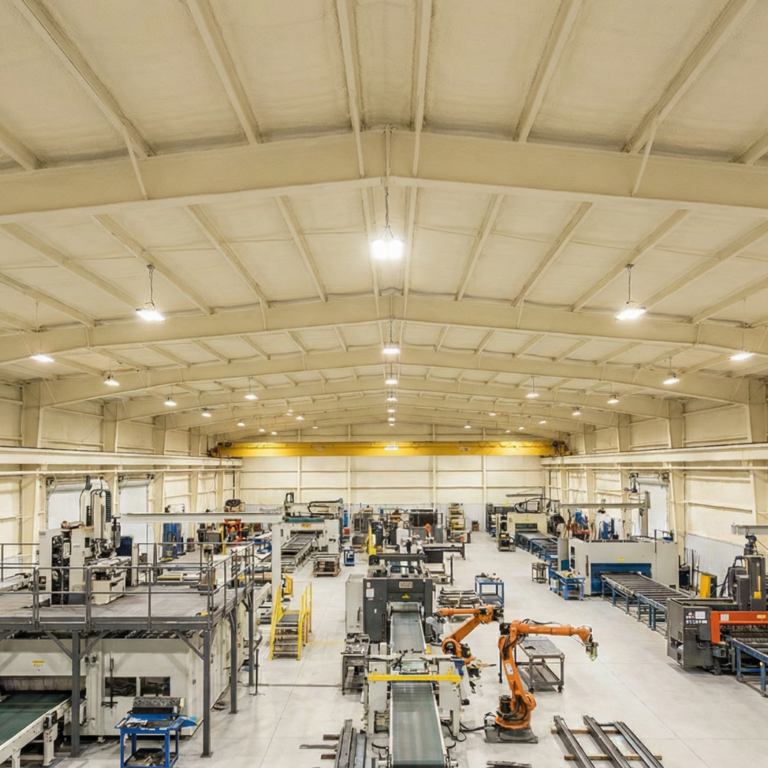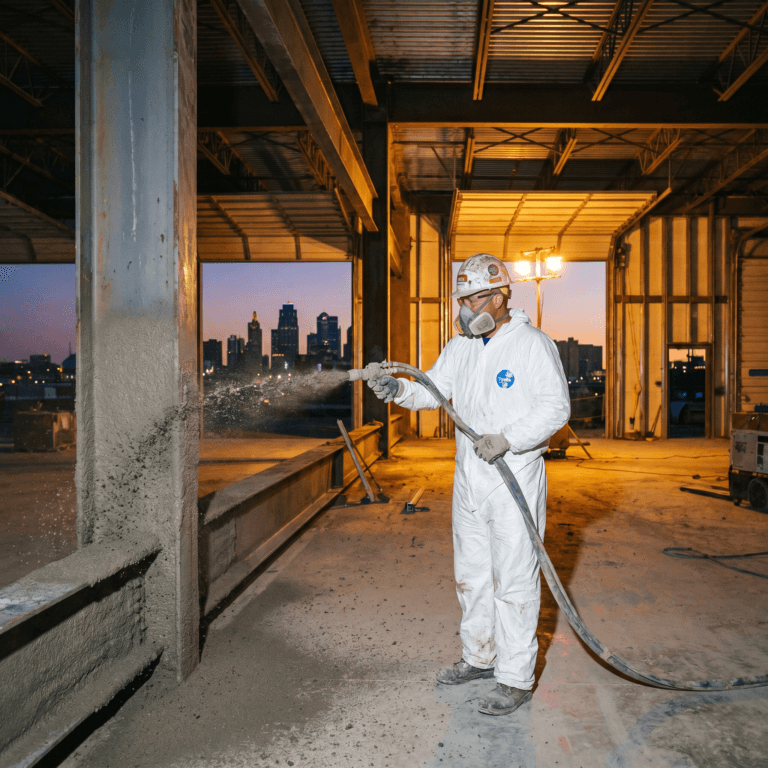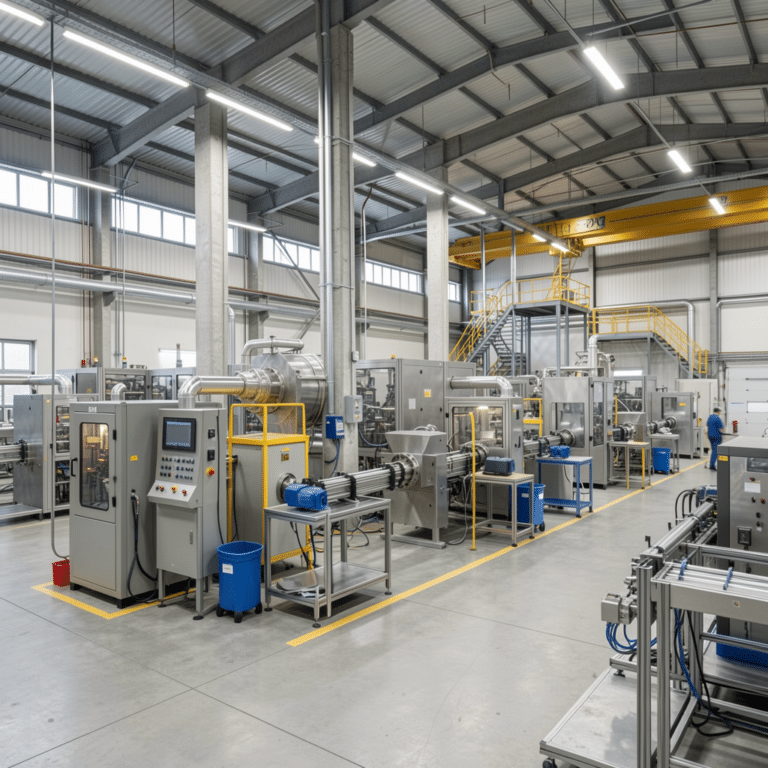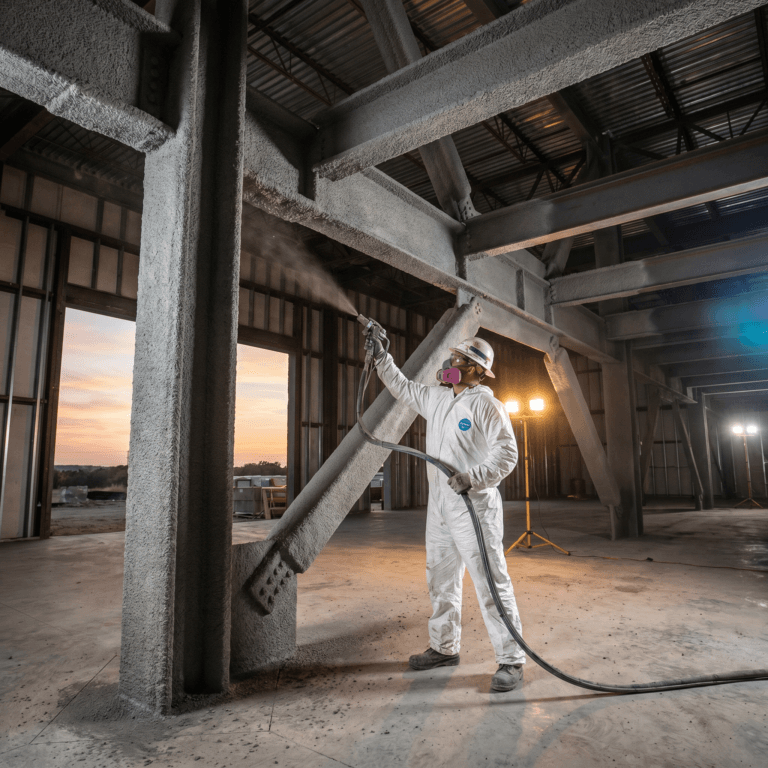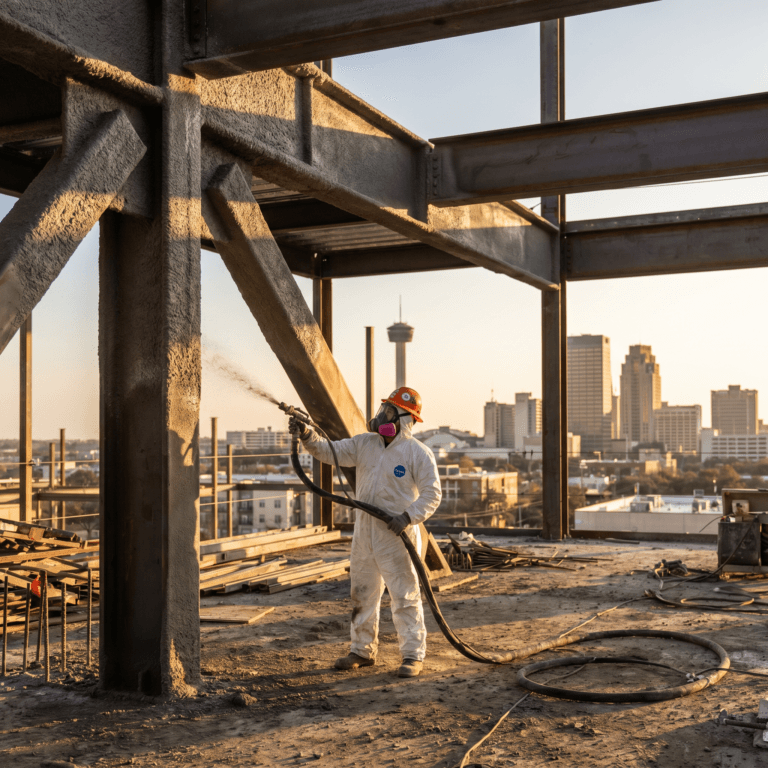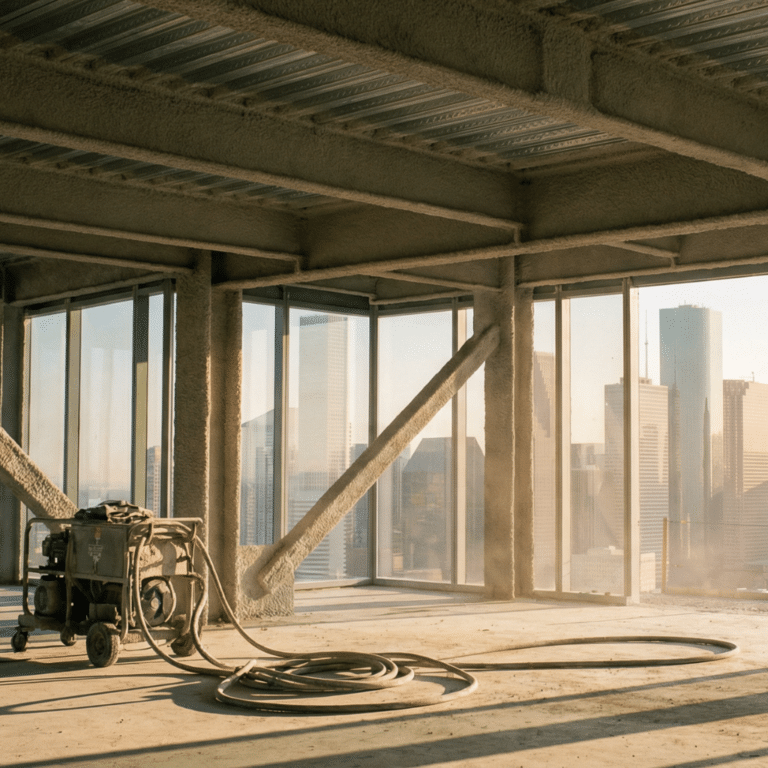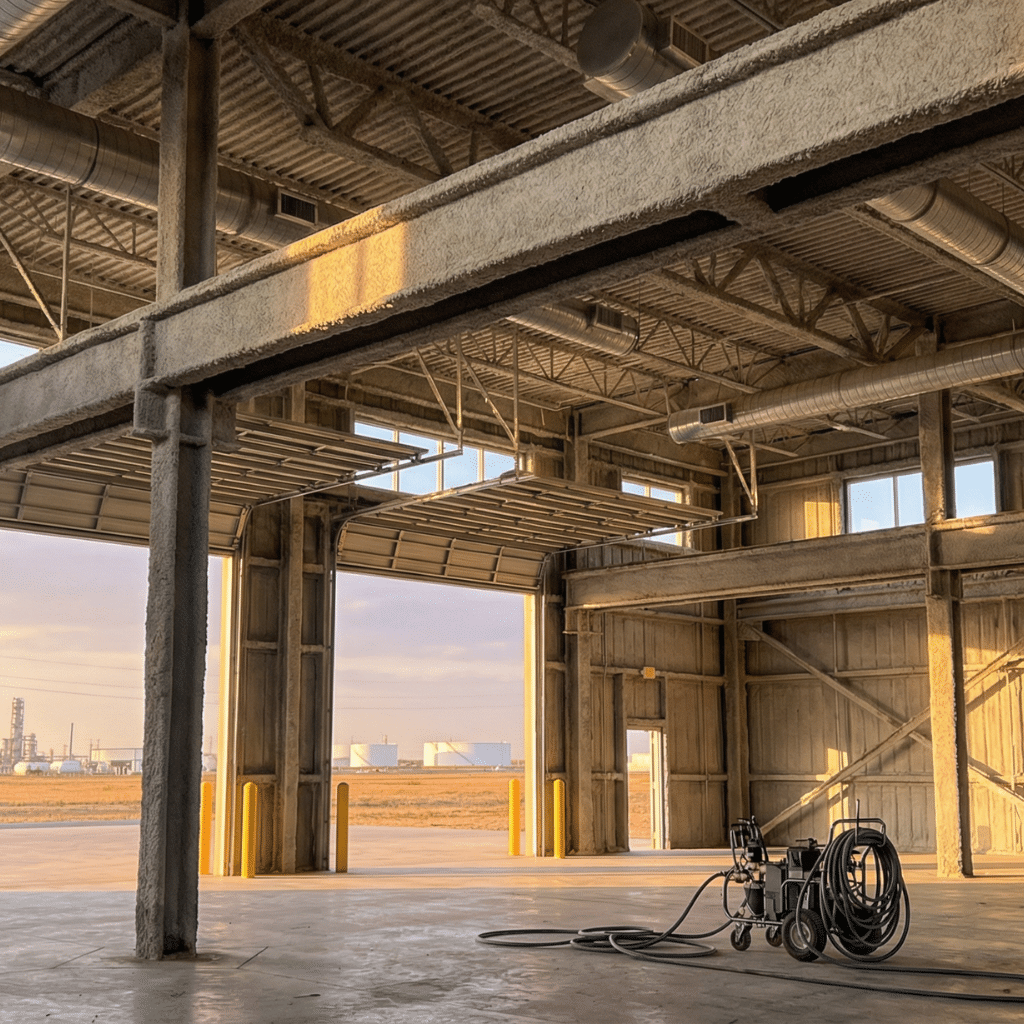
Tulsa’s fireproofing market is defined by two characteristics that set it apart from every other city in our service territory: a concentrated refinery corridor requiring UL 1709 hydrocarbon fire ratings, and three downtown buildings exceeding the 420-foot super high-rise threshold, more than Oklahoma City. From the HF Sinclair refinery complex in West Tulsa to the BOK Tower at 667 feet, the Port of Catoosa industrial corridor, and the Art Deco District’s adaptive reuse projects, Tulsa demands both standard commercial and heavy industrial fireproofing expertise. This guide covers what building owners, general contractors, and specifiers need to know about fireproofing for Tulsa commercial and industrial projects.
TLDR: Tulsa’s refinery corridor requires UL 1709 hydrocarbon fire-rated SFRM (40+ pcf), a fundamentally different specification than standard commercial fireproofing. Three Tulsa buildings exceed the 420-foot super high-rise threshold (BOK Tower, Cityplex Towers, Mid-Continent Tower). Oklahoma enforces the 2018 IBC statewide through the OUBCC. Bahl Fireproofing serves the Tulsa market with SFRM, intumescent coatings, K-13 insulation, and spray foam insulation.
Most of our Texas projects are standard commercial fireproofing: concealed structural steel, commercial density SFRM, cellulosic fire ratings per ASTM E119. Tulsa is different. In Tulsa, I regularly work on projects where the structural steel is outdoors year-round, exposed to Oklahoma’s freeze-thaw cycling, and the fire exposure is not a cellulosic building fire but a hydrocarbon pool fire from petroleum products. The UL 1709 fire curve reaches 2,000 degrees Fahrenheit within 5 minutes, and the SFRM specification for that exposure is 40 to 55 pcf high-density Portland cement products like the Carboline Pyrocrete line. That is a completely different world from spraying 15 pcf gypsum-based CAFCO 300 behind a ceiling grid.
That dual capability, commercial and industrial, is what Bahl Fireproofing brings to the Tulsa market. Over 20 years of fireproofing experience across Oklahoma, Texas, and Kansas means we understand both sides of the specification sheet.
Tulsa’s Commercial and Industrial Construction Landscape
Tulsa is a city of contrasts in the commercial construction market. The downtown core is experiencing a revitalization driven by George Kaiser Family Foundation investments, the Gathering Place park ($465 million, the largest privately funded public park in the US), and ongoing voter-funded civic improvements. New mixed-use construction in the Brookside and Riverside districts, adaptive reuse of Art Deco buildings in the Deco District, and suburban commercial growth in Broken Arrow and Bixby are creating standard commercial fireproofing demand.
At the same time, Tulsa’s identity as the historic oil capital of the world continues to drive industrial fireproofing demand. The HF Sinclair Tulsa Refining complex operates two refineries with a combined capacity exceeding 200,000 barrels per day. The mid-continent refinery and midstream infrastructure corridor running through West Tulsa and northeastern Oklahoma creates cyclical demand for high-density SFRM during scheduled refinery turnarounds and ongoing maintenance.
Google’s $9 billion Oklahoma data center investment includes the Pryor campus, approximately 60 miles east of Tulsa in Mayes County. The Pryor facility is Google’s second-largest data center in the world. While it is not a Tulsa metro project, it draws from the northeastern Oklahoma construction labor market and signals the region’s growing importance as a data center corridor.
The Port of Catoosa, located about 20 miles east of downtown Tulsa in Rogers County, is the largest inland port in the United States by tonnage. Handling over 2 million tons annually via the McClellan-Kerr Arkansas River Navigation System, the port and its surrounding industrial corridor generate warehouse, manufacturing, and heavy industrial fireproofing demand distinct from the downtown commercial market.
Does Your Tulsa Building Need Fireproofing?
Tulsa follows the same statewide building code as every other Oklahoma city. The Oklahoma Uniform Building Code Commission (OUBCC) administers the 2018 IBC with 2021 Oklahoma amendments as the minimum code for commercial construction. On January 13, 2026 the OUBCC adopted the 2024 editions of the IBC, IEBC, IFC, IFGC, IMC, IPC and IRC with Oklahoma amendments, and those codes take effect September 14, 2026. The 2018 codes remain in effect until that date, so confirm with the AHJ which edition applies to your permit. The Tulsa Fire Department serves as the local Authority Having Jurisdiction.
This statewide uniform code approach is a key distinction from Texas, where Dallas, Fort Worth, and Houston each adopted the 2021 IBC on different dates. In Oklahoma, the code version is consistent across Tulsa, Oklahoma City, and every other jurisdiction.
IBC Table 601 determines fire-resistance ratings by construction type:
| Construction Type | Structural Frame | Floor Construction | Roof Construction | Typical Tulsa Application |
|---|---|---|---|---|
| Type I-A | 3 hours | 2 hours | 1.5 hours | BOK Tower, hospitals, public assembly |
| Type I-B | 2 hours | 2 hours | 1 hour | Mid-rise offices, healthcare, mixed-use |
| Type II-A | 1 hour | 1 hour | 1 hour | Low-rise commercial, some warehouses |
| Type II-B | 0 hours | 0 hours | 0 hours | Single-story warehouses, distribution centers |
Tulsa’s high-rise landscape adds a dimension that surprises many people in the industry: Tulsa has three buildings exceeding the 420-foot super high-rise threshold, more than Oklahoma City (which has only Devon Tower at 844 feet). BOK Tower (One Williams Center) at 667 feet, Cityplex Towers at 648 feet, and Mid-Continent Tower at 513 feet all require 1,000 psf SFRM bond strength per IBC (2021) Section 403.2.3. Products evaluated and classified for high-rise fire protection at these thresholds include CAFCO 3000 for super high-rise applications.
Code note: unless otherwise stated, code references on this page are to the 2021 International Building Code. Code adoption is state and local. Across the states we serve, adopted IBC editions currently range from the 2012 edition to the 2024 edition, some states have no statewide commercial building code, and several enforce NFPA 1 or NFPA 101 rather than the International Fire Code. Minnesota and Wisconsin publish state-amended code books whose numbering and requirements differ from the model code. This is general technical information, not a code determination for your project. Confirm the adopted edition and any local amendments with your authority having jurisdiction.
Fireproofing Services for Tulsa Commercial and Industrial Projects
Bahl Fireproofing provides four core services across the Tulsa market, covering both standard commercial and heavy industrial applications.
Spray-Applied Fire-Resistive Material (SFRM) is the primary fire protection system for structural steel. In Tulsa, the full range of SFRM densities sees regular use: commercial density (15 to 21 pcf) for concealed steel in office buildings and healthcare facilities, medium density (22 to 39 pcf) for exposed conditions and high-rise bond strength requirements, and high density (40+ pcf) for refinery and industrial applications requiring UL 1709 hydrocarbon fire ratings. For detailed guidance on density selection and application methods, see our guide to commercial SFRM fireproofing.
Intumescent fireproofing coatings serve a unique role in Tulsa’s Deco District. When historic Art Deco buildings are renovated for modern occupancy, existing structural steel may need fire-resistance upgrades to meet current IBC requirements. Intumescent coatings are frequently specified in these adaptive reuse projects because they preserve the architecturally exposed steel elements that define the building’s character. The thin, paint-like finish achieves the same fire-resistance ratings as SFRM without concealing the structural steel that architects and preservationists want to showcase.
K-13 spray-applied insulation provides thermal and acoustic performance for exposed ceilings and walls. K-13 spray-applied insulation installation is commonly specified alongside SFRM on Tulsa projects: SFRM on the structural steel for fire protection and K-13 on exposed ceilings for sound absorption and thermal control.
Spray foam insulation (closed-cell and open-cell) insulates the building envelope. In Tulsa’s Climate Zone 3A, closed-cell spray foam provides thermal resistance and moisture control for exterior wall assemblies.
Tulsa Building Types: District-by-District Fireproofing Guide
Downtown and the Deco District
Downtown Tulsa’s three super high-rise buildings (BOK Tower at 667 feet, Mid-Continent Tower at 513 feet, and Cityplex Towers at 648 feet in south Tulsa) all require 1,000 psf SFRM bond strength under IBC (2021) Section 403.2.3. The downtown Deco District, home to one of the largest collections of Art Deco architecture in the United States, is experiencing a revitalization with adaptive reuse projects converting historic buildings to modern office, hotel, and mixed-use occupancies. These projects frequently require fire-resistance upgrades on existing structural steel, with intumescent coatings specified to preserve exposed architectural elements.
Tulsa Refinery Corridor (West Tulsa)
The HF Sinclair Tulsa Refining complex and surrounding midstream infrastructure represent Tulsa’s most specialized fireproofing demand. Refinery and petrochemical facilities require UL 1709 hydrocarbon fire ratings, which simulate a rapid-onset pool fire reaching 2,000 degrees Fahrenheit within 5 minutes. High-density cementitious products like Carboline Pyrocrete 241 (55 pcf, UL 1709 rated up to 4 hours) are the standard specification for these environments.
High-density SFRM at 40 to 55 pcf is required for refinery structural steel, pipe racks, and equipment supports. The Carboline Pyrocrete product line (Pyrocrete 40 at 40 pcf, Pyrocrete 241 at 55 pcf) provides both UL 1709 and ASTM E119 ratings for these environments. Specifying standard commercial density SFRM on a hydrocarbon-exposure application is a code violation and a life-safety failure.
Refinery fireproofing work in Tulsa follows a cyclical pattern driven by scheduled turnarounds: planned shutdowns where maintenance, repair, and replacement of fire protection systems occur on a multi-year cycle. Scheduling fireproofing crews for turnaround windows requires advance planning because the entire refinery maintenance workforce converges during the same shutdown period.
Port of Catoosa and Industrial East
The Port of Catoosa, the largest inland port in the United States by tonnage, anchors an industrial corridor east of Tulsa that generates warehouse, manufacturing, and heavy industrial fireproofing demand. Most single-story warehouses along this corridor are Type II-B construction (0-hour structural frame, no fireproofing required), but manufacturing facilities and multi-story buildings triggering Type II-A or higher require commercial density SFRM.
Healthcare Facilities
Tulsa’s healthcare market, anchored by Saint Francis Health System (the largest hospital in Oklahoma by bed count), Hillcrest Medical Center, Ascension St. John, and OSU Medical Center, requires Type I-A or I-B construction with 2 to 3 hour fire-resistance ratings and complex MEP coordination. The same spray-first, coordinate-MEP, then-patch approach that works on our Texas Medical Center projects in Houston applies to Tulsa healthcare construction.
Brookside, Riverside, and Suburban Growth
The Brookside and Riverside districts, catalyzed by the $465 million Gathering Place park, are seeing new mixed-use construction along Tulsa’s riverfront. Broken Arrow and Bixby, the fastest-growing Tulsa suburbs, are adding commercial and retail construction. These projects are standard commercial density SFRM applications at Type II-A or I-B construction types.
Refinery and Petrochemical Fireproofing: Tulsa’s Defining Angle
This section addresses the fireproofing specification that makes Tulsa unique in our service territory. While Houston’s Ship Channel has petrochemical facilities, Tulsa’s mid-continent refinery corridor concentrates this demand in a smaller geographic area with distinct scheduling and access patterns.
The fundamental distinction is the fire exposure. Standard commercial buildings are tested under ASTM E119 (UL 263), which follows a cellulosic fire curve reaching approximately 1,000 degrees Fahrenheit at 5 minutes and 1,700 degrees Fahrenheit at 1 hour. Refinery and petrochemical facilities require UL 1709, which simulates a hydrocarbon pool fire reaching 2,000 degrees Fahrenheit within 5 minutes and maintaining that temperature for the duration of the test. The severity difference is not incremental. It is a fundamentally different fire event that demands a fundamentally different SFRM specification.
Standard commercial density SFRM (15 pcf gypsum-based) is not tested, rated, or acceptable for UL 1709 exposure. Only high-density Portland cement products (40+ pcf) carry UL 1709 listings. Carboline Pyrocrete 241 (55 pcf) achieves UL 1709 ratings up to 4 hours, ISO 22899-1 jet fire ratings, and cryogenic protection, making it the standard for Gulf Coast and mid-continent refinery applications.
Refinery structural steel is exposed outdoors year-round in Oklahoma’s climate. This means the SFRM must withstand freeze-thaw cycling, wind-driven rain, UV exposure, and physical contact from maintenance activities. High-density products handle these conditions far better than commercial density materials, but the outdoor exposure still requires periodic inspection and maintenance on a multi-year cycle.
Tulsa-Specific Challenges
Freeze-Thaw Cycling and Ice Storms
Tulsa shares OKC’s freeze-thaw cycling challenge, with temperatures that can swing from 70 degrees to below freezing in under 24 hours. Tulsa receives slightly more winter precipitation than OKC, and recurring ice storms (including the severe December 2022 event) make this a persistent construction scheduling concern. When structural steel will be temporarily exposed during construction, medium-density exterior-rated SFRM (CAFCO BLAZE-SHIELD HP, 22 pcf, the only medium-density product UL-classified for exterior use) is the appropriate specification. Our Oklahoma City fireproofing guide covers the detailed product recommendations for freeze-thaw protection across the state.
Art Deco Adaptive Reuse
Tulsa’s Deco District contains one of the largest collections of Art Deco architecture in the United States. When these historic buildings are converted to modern occupancy, existing structural steel must meet current IBC fire-resistance requirements. The challenge is achieving code compliance without concealing the architectural steel that defines the building’s historic character. Intumescent coatings provide the solution: a thin, paint-like finish that achieves fire-resistance ratings while preserving the exposed steel aesthetic. Choosing between intumescent and cementitious systems for these projects requires understanding both the differences between intumescent and cementitious fireproofing and the specific design intent of the renovation.
Outdoor Industrial Steel Exposure
Refinery and industrial structural steel along the Tulsa refinery corridor and the Port of Catoosa industrial zone is exposed to Oklahoma weather year-round. Unlike commercial building steel that is enclosed within the building envelope shortly after SFRM application, industrial steel remains permanently exposed. This creates ongoing maintenance requirements: periodic visual inspection for cracking, delamination, and weather damage, with repair and recoating during scheduled turnarounds.
How Much Does Fireproofing Cost in Tulsa?
Tulsa’s fireproofing cost profile splits into two distinct markets: standard commercial and heavy industrial.
| Density Category | Installed Cost/SF | Typical Tulsa Application |
|---|---|---|
| Commercial (15 to 21 pcf) | $5 to $14 | Office buildings, healthcare, concealed steel, warehouses |
| Medium (22 to 39 pcf) | $7 to $16 | Exposed conditions, high-rise, freeze-thaw protection |
| High (40+ pcf) | $10 to $20+ | Refinery corridor, petrochemical, parking garages |
| Intumescent (comparison) | $10 to $30+ | Art Deco adaptive reuse, architecturally exposed steel |
Tulsa-specific cost drivers include refinery turnaround scheduling premiums (compressed timelines during planned shutdowns), outdoor application requirements for industrial steel (weather-dependent scheduling), freeze-thaw protection costs for steel exposed during construction, and mobilization logistics. The refinery corridor commands the highest per-square-foot costs due to high-density product requirements, UL 1709 specification complexity, and the safety training and access protocols required for active refinery environments.
Special Inspections: What Tulsa Building Owners Need to Know
Special inspections for spray-applied fireproofing are mandatory under IBC Chapter 17, IBC (2021) Section 1705.15 (Section 1705.14 in the 2018 and earlier editions), enforced statewide through the OUBCC. The building owner, not the fireproofing contractor, is responsible for engaging an approved special inspection agency. The Tulsa Fire Department serves as the local Authority Having Jurisdiction.
The special inspector verifies five items: substrate conditions, SFRM thickness (per ASTM E605), density (per ASTM E605), bond strength (per ASTM E736), and finished condition. Testing frequency requires one sample per 2,500 square feet of sprayed area. For a detailed walkthrough of the inspection process, see our guide on the fireproofing inspection process for building owners.
Related Reading
Explore more fireproofing resources from Bahl Fireproofing:
- Need to understand IBC code requirements for your Tulsa building? This guide covers commercial fireproofing requirements for building owners.
- Learn how Bahl Fireproofing serves commercial projects across our full Oklahoma service territory.
Frequently Asked Questions
What Building Code Does Tulsa Follow for Fireproofing?
Tulsa follows the same statewide code as all Oklahoma cities. The Oklahoma Uniform Building Code Commission (OUBCC) administers the 2018 IBC with 2021 Oklahoma amendments as the minimum code for commercial construction. The OUBCC adopted the 2024 editions on January 13, 2026, effective September 14, 2026. The Tulsa Fire Department is the local Authority Having Jurisdiction. This statewide approach differs from Texas, where each city adopts codes independently.
Does Tulsa Have More Super High-Rise Buildings Than Oklahoma City?
Yes. Tulsa has three buildings exceeding the 420-foot super high-rise threshold: BOK Tower (One Williams Center) at 667 feet, Cityplex Towers at 648 feet, and Mid-Continent Tower at 513 feet. Oklahoma City has one: Devon Tower at 844 feet. All four buildings require 1,000 psf SFRM bond strength per IBC (2021) Section 403.2.3.
What Is UL 1709 and Why Does It Matter for Tulsa Refineries?
UL 1709 is the fire resistance test standard for hydrocarbon fire exposure. The UL 1709 fire curve reaches 2,000 degrees Fahrenheit within 5 minutes, simulating a rapid-onset pool fire from petroleum products. This is fundamentally different from the ASTM E119 cellulosic curve used in standard commercial buildings. Tulsa’s refinery corridor (HF Sinclair Tulsa Refining and surrounding midstream infrastructure) requires UL 1709-rated SFRM, typically high-density products at 40 to 55 pcf from the Carboline Pyrocrete line.
How Does Tulsa’s Weather Affect Fireproofing Installation?
Tulsa shares Oklahoma City’s freeze-thaw cycling challenge, with temperatures that can swing from 70 degrees to below freezing in under 24 hours. Ice storms are more common than snowstorms in northeastern Oklahoma. SFRM applied to steel that is temporarily exposed during construction must use medium-density exterior-rated products (CAFCO BLAZE-SHIELD HP, 22 pcf) to prevent freeze-thaw damage. Refinery steel that is permanently exposed outdoors requires high-density products and periodic maintenance inspection.
What Is the Fireproofing Challenge with Tulsa’s Art Deco Buildings?
When historic Art Deco buildings in Tulsa’s Deco District are converted to modern occupancy, existing structural steel must meet current IBC fire-resistance requirements. Intumescent fireproofing coatings are specified because they achieve fire-resistance ratings with a thin, paint-like finish that preserves the architecturally exposed steel, which is central to the building’s historic character. Standard SFRM would conceal the steel entirely, destroying the design intent.
How Much Does Commercial Fireproofing Cost in Tulsa?
Commercial density SFRM installs at $5 to $14 per square foot, medium density at $7 to $16, high density at $10 to $20+, and intumescent coatings at $10 to $30+. Refinery and petrochemical work commands the highest costs due to high-density product requirements (40+ pcf), UL 1709 specification complexity, turnaround scheduling premiums, and safety training requirements.
What Types of Fireproofing Does Bahl Provide in Tulsa?
Bahl Fireproofing provides four services in the Tulsa market: cementitious spray-applied fireproofing (SFRM) across all density categories for both commercial and industrial applications, intumescent fireproofing coatings for architecturally exposed steel (including Art Deco adaptive reuse), K-13 spray-applied insulation for acoustic and thermal performance, and spray foam insulation for building envelope thermal control.
Who Is Responsible for Fireproofing Special Inspections in Tulsa?
The building owner is responsible for engaging an approved special inspection agency under IBC (2021) Section 1705.15, enforced statewide through the OUBCC. The Tulsa Fire Department is the local Authority Having Jurisdiction. The special inspector tests substrate conditions, SFRM thickness, density, bond strength, and finished condition at a minimum of one sample per 2,500 square feet.
Key Takeaways
Tulsa’s Unique Market Position
- Tulsa’s refinery corridor creates sustained demand for UL 1709 hydrocarbon fire-rated SFRM (40+ pcf), a specification that no other Bahl Fireproofing market concentrates to this degree
- Tulsa has three buildings exceeding the 420-foot super high-rise threshold (BOK Tower, Cityplex Towers, Mid-Continent Tower), more than Oklahoma City’s single super high-rise (Devon Tower)
- The Art Deco District presents a unique intumescent fireproofing opportunity for adaptive reuse projects preserving exposed structural steel
Code and Compliance
- Oklahoma enforces the 2018 IBC statewide through the OUBCC with 2021 Oklahoma amendments. The 2024 IBC takes effect statewide September 14, 2026
- The statewide uniform code means the same IBC version applies in Tulsa, Oklahoma City, and every other Oklahoma jurisdiction
- IBC (2021) Table 601 determines fire-resistance ratings by construction type; most single-story warehouses (Type II-B) do not require fireproofing
Climate and Weather
- Freeze-thaw cycling and ice storms are the primary SFRM risks in northeastern Oklahoma, similar to OKC but with slightly more winter precipitation
- Refinery structural steel is permanently exposed outdoors, requiring high-density products and periodic maintenance inspection
- Medium-density exterior-rated SFRM (CAFCO BLAZE-SHIELD HP) is critical for any steel temporarily exposed during construction
Industrial Fireproofing
- UL 1709 hydrocarbon fire ratings (2,000 degrees Fahrenheit in 5 minutes) are required for refinery and petrochemical facilities, fundamentally different from standard ASTM E119 cellulosic ratings
- Carboline Pyrocrete products (40 to 55 pcf) are the standard for Tulsa refinery applications
- Refinery fireproofing follows a cyclical turnaround schedule with compressed timelines during planned shutdowns
Whether you are specifying fireproofing for a downtown Tulsa high-rise, coordinating UL 1709-rated fire protection on a refinery turnaround, renovating an Art Deco building in the Deco District, or planning structural fire protection for a Port of Catoosa industrial facility, the right specification and experienced application make the difference between a project that passes inspection and one that faces costly rework. Bahl Fireproofing serves the Tulsa and northeastern Oklahoma market with over 20 years of commercial and industrial fireproofing experience. Contact Bahl Fireproofing today at 512-387-2111 or email ross@bahlfireproofing.com to discuss your Tulsa project or request a detailed estimate.
This article provides general educational information about commercial and industrial fireproofing in the Tulsa, Oklahoma market. It is not a substitute for project-specific engineering, design, or code analysis. Fire-resistance ratings, bond strength requirements, density specifications, and cost ranges referenced in this article are based on the 2018 International Building Code (as adopted statewide by the Oklahoma Uniform Building Code Commission with 2021 Oklahoma amendments, effective September 14, 2021), manufacturer published data, standardized testing (ASTM, UL), and field experience as of early 2026. Building codes, fire ratings, and fireproofing requirements vary by jurisdiction. The Tulsa Fire Department is the Authority Having Jurisdiction for commercial building fire code enforcement in Tulsa. Always consult a licensed professional engineer, architect, or code official for project-specific requirements. Bahl Fireproofing is a commercial fireproofing and insulation contractor, not an engineering or design firm.