Spray Foam Insulation for Data Centers: Precision Climate Control
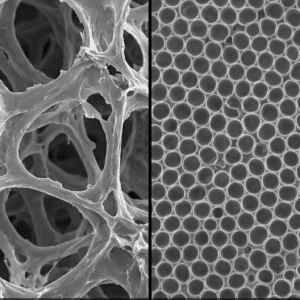
Spray foam insulation for data centers addresses precision climate control challenges where industry average Power Usage Effectiveness of 1.58 indicates total facility power consumption 58 percent higher than IT equipment load alone. Cooling systems consume 40 to 54 percent of total power representing largest non-IT energy expense requiring optimization through building envelope air sealing and thermal insulation. Air infiltration accounts for 25 to 40 percent of energy loss in commercial buildings enabling unconditioned outdoor air to enter facility and conditioned air to escape through gaps and penetrations. Closed-cell spray foam delivers R-6.0 to R-7.0 per inch thermal resistance while creating monolithic air barrier reducing HVAC loads 20 to 50 percent and runtime 15 to 25 percent during peak seasons.
TLDR: Spray foam insulation reduces data center cooling costs through comprehensive air sealing preventing hot and cold aisle mixing while maintaining ASHRAE humidity guidelines of 40 to 60 percent relative humidity with dew point between 41 and 59 degrees Fahrenheit. Spray foam insulation creates vapor barrier at 2-inch minimum thickness for closed-cell applications eliminating moisture infiltration threatening equipment reliability. Closed-cell R-6.0 to R-7.0 per inch thermal resistance combined with seamless application eliminating thermal bridging through structural steel and concrete achieves energy savings typically ranging 15 to 50 percent. Spray foam provides thermal insulation and air sealing but does not replace fire-rated construction assemblies or fire suppression systems required by NFPA 75 with thermal barrier required between foam and interior spaces.
Air Sealing for HVAC Efficiency
Data center cooling systems operate continuously requiring 40 to 54 percent of total facility power. Air infiltration through building envelope gaps and service openings allows unconditioned outdoor air entering while conditioned air escapes creating additional cooling load. Department of Energy research indicates air infiltration accounts for 25 to 40 percent of energy loss in commercial buildings.
Spray foam creates airtight thermal barrier reducing energy loads 20 to 50 percent through comprehensive sealing. Closed-cell formulations deliver superior performance reducing HVAC loads 30 to 50 percent while open-cell products achieve 20 to 35 percent reduction. HVAC runtime decreases 15 to 25 percent during peak seasons. Energy savings typically range 15 to 50 percent depending on building tightness, climate zone, and HVAC efficiency per building envelope air sealing performance standards.
Seamless application fills irregular spaces around mechanical penetrations and structural connections that rigid board insulation leaves unsealed. Monolithic seal addresses both conductive heat transfer through materials and convective transfer through air circulation maximizing thermal performance while minimizing cooling system energy consumption.
Preventing Hot and Cold Aisle Mixing
Hot aisle containment systems can double cooling capacity by preventing heated exhaust air from recirculating into cold aisles. Cold aisle containment reduces cooling energy costs up to 30 percent while decreasing electricity for air movement by 75 percent. Containment implementation achieves 5 to 10 percent energy expense reduction requiring physical barriers including ceiling panels, doors, or rigid partitions maintaining pressure differentials.
Traditional containment systems face challenges from air mixing near rack tops and aisle ends creating unpredictable temperatures. Building envelope air leakage undermines containment effectiveness as unconditioned air infiltrates through walls and roof disrupting airflow patterns. Spray foam building envelope sealing complements aisle containment by preventing external air infiltration.
Spray foam application to exterior walls and roof deck creates continuous thermal and air barrier supporting hot and cold aisle separation strategies. Eliminating building envelope leakage allows containment systems to maintain design pressure differentials. Combined approach maximizes cooling efficiency supporting Power Usage Effectiveness improvement toward leading-edge target of 1.10.
Moisture Barrier for Humidity Control
ASHRAE guidelines recommend data center humidity range of 40 to 60 percent relative humidity with dew point maintained between 41 and 59 degrees Fahrenheit. Closed-cell spray foam acts as vapor barrier at 2-inch minimum thickness blocking moisture infiltration while open-cell formulations remain vapor-permeable and do not provide moisture barrier requiring closed-cell specification for data center applications.
Dual-action moisture control eliminates air leakage preventing condensation cycle while creating non-porous barrier blocking water vapor transmission. Air leakage carries moisture-laden outdoor air into facility where temperature differentials cause condensation on cold surfaces. Spray foam air sealing prevents moisture-laden air entry eliminating primary condensation mechanism.
Vapor barrier function prevents moisture diffusion through building materials when vapor pressure drives moisture from high-concentration areas toward low-concentration zones. Closed-cell spray foam at 2-inch minimum thickness provides continuous vapor barrier maintaining interior humidity within ASHRAE guidelines. Mold cannot grow without moisture presence making spray foam effective mold prevention strategy.
High R-Value for Cooling Cost Reduction
Closed-cell spray foam delivers R-6.0 to R-7.0 per inch thermal resistance nearly double open-cell R-3.6 to R-3.8 per inch performance. Standard application thickness of 2 to 3 inches achieves R-12 to R-21 for closed-cell or R-7.2 to R-11.4 for open-cell installations. Higher R-value reduces conductive heat transfer through building envelope minimizing cooling load from solar gain.
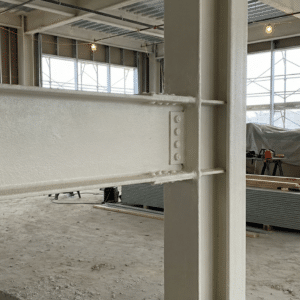
Seamless application eliminates thermal bridging through structural steel framing members and concrete columns that create heat pathways bypassing traditional insulation. Spray foam coverage over structural elements breaks thermal bridges maintaining continuous insulation plane per International Energy Conservation Code thermal performance requirements.
Monolithic seal fills gaps and irregular spaces that batt insulation and rigid board products cannot address. Closed-cell formulation provides dual thermal and air barrier function in single application simplifying installation while maximizing energy performance. Building envelope optimization reduces cooling energy consumption supporting operational cost reduction and sustainability goals.
Class A Fire Rating with Required Thermal Barrier
Spray foam products achieve ASTM E84 Class A fire rating with flame spread index 0 to 25 and smoke developed index 450 maximum representing highest surface burning classification available. Typical Class A spray foam demonstrates flame spread index approximately 15 and smoke developed index approximately 130. ASTM E84 measures surface burning characteristics during 30-minute test but does not constitute fire-resistance rating for structural assemblies measured by ASTM E119 testing.
Thermal barrier between spray foam and interior spaces required per International Building Code Section 2603 typically consisting of one-half inch gypsum drywall with 15-minute rating. Thermal barrier prevents foam from reaching autoignition temperature during fire exposure. Spray foam cannot be left exposed in most building areas per IBC foam plastic insulation requirements.
Spray foam provides thermal insulation and air sealing but does not replace fire-rated construction assemblies required by building codes. Data centers require three levels of fire protection including building-level passive fireproofing and active sprinkler systems, room-level clean agent suppression, and rack-level targeted protection per NFPA 75. Licensed fire protection engineer determines fire-rated construction requirements and spray foam suitability. Bahl Fireproofing provides spray foam installation supporting data center climate control throughout Texas, Kansas, and Oklahoma facilities.
Key Takeaways
- Data centers average Power Usage Effectiveness of 1.58 with cooling systems consuming 40 to 54 percent of total power requiring building envelope optimization
- Air infiltration accounts for 25 to 40 percent of energy loss with spray foam air sealing reducing HVAC loads 20 to 50 percent and runtime 15 to 25 percent
- Hot and cold aisle containment achieves 5 to 10 percent energy expense reduction with spray foam envelope sealing preventing external air infiltration that compromises containment effectiveness
- Closed-cell spray foam acts as vapor barrier at 2-inch minimum thickness maintaining ASHRAE humidity guidelines of 40 to 60 percent relative humidity and dew point 41 to 59 degrees Fahrenheit
- Closed-cell delivers R-6.0 to R-7.0 per inch thermal resistance eliminating thermal bridging through structural steel and concrete with seamless application achieving energy savings typically 15 to 50 percent
- ASTM E84 Class A rating measures surface burning characteristics with flame spread 0 to 25 and smoke developed 450 maximum but does not constitute fire-resistance rating measured by ASTM E119
- Spray foam provides thermal insulation and air sealing but does not replace fire-rated construction assemblies or fire suppression systems required by NFPA 75 with thermal barrier required between foam and interior spaces
If your data center requires precision climate control through comprehensive air sealing and moisture barrier supporting equipment reliability while reducing cooling costs, our team installs spray foam insulation meeting performance specifications. Contact Bahl Fireproofing to discuss spray foam application complementing fire-rated construction and fire suppression systems protecting critical infrastructure.
Disclaimer: This article provides general educational information about spray foam insulation for data centers and does not constitute professional mechanical engineering advice or building envelope design certification. Spray foam provides thermal insulation with closed-cell R-6.0 to R-7.0 per inch and open-cell R-3.6 to R-3.8 per inch plus air sealing reducing HVAC loads 20 to 50 percent. Spray foam does not replace fire-rated construction assemblies or fire suppression systems required by NFPA 75. ASTM E84 Class A rating measures surface burning characteristics with flame spread 0 to 25 and smoke developed 450 maximum but does not constitute fire-resistance rating measured by ASTM E119 for structural assemblies. Thermal barrier typically one-half inch gypsum drywall with 15-minute rating required between spray foam and interior spaces per IBC Section 2603. Wall assemblies requiring fire-resistance rating per ASTM E119 must maintain that rating even when containing spray foam insulation. Licensed fire protection engineer must determine fire-rated construction requirements and fire suppression system specifications. Data centers require three levels of fire protection including building-level passive fireproofing and active sprinkler systems, room-level clean agent suppression, and rack-level targeted protection. Closed-cell spray foam acts as vapor barrier at 2-inch minimum thickness while open-cell is vapor-permeable and does not provide moisture barrier. Energy savings typically range 15 to 50 percent depending on building tightness, climate zone, and HVAC efficiency. Hot and cold aisle containment requires physical barriers with spray foam complementing but not replacing aisle containment systems. Cost varies by application area, thickness, substrate type, accessibility, and thermal barrier requirements. Always consult licensed fire protection engineer, mechanical engineer, and building envelope consultant to verify code requirements and system specifications.