Spray Foam Insulation for Cold Storage: Achieving High R-Values in Freezer Facilities
Freezer insulation using closed-cell spray polyurethane foam delivers R-6.0 to R-7.0 per inch thermal resistance enabling refrigerated warehouses and freezer facilities to achieve required thermal performance ranging from R-30 for coolers maintaining 32 to 55 degrees Fahrenheit to R-45 for freezers operating between negative 20 and 25 degrees Fahrenheit. Applications ranging from 4.6 to 7 inches thickness meet ASHRAE 90.1 energy standards while simultaneously providing vapor barrier properties and air sealing capabilities. This triple functionality addresses the primary challenges facing cold storage operators including heat gain through building envelopes, moisture infiltration causing insulation degradation, and air leakage increasing refrigeration equipment runtime.
TLDR: Closed-cell spray foam insulation achieves R-6.0 to R-7.0 per inch thermal resistance meeting cold storage requirements of R-30 for coolers and R-45 for freezers with applications ranging from 4.6 to 7 inches thickness. Foam thickness exceeding two inches provides vapor barrier properties preventing moisture migration while monolithic application eliminates air infiltration accounting for 25 to 40 percent of building energy loss. Spray foam insulation for cold storage functions as primary thermal insulation system combining insulation, air barrier, and moisture barrier in single material unlike supplemental insulation products requiring separate vapor retarders. International Building Code requires thermal barriers consisting of minimum one-half inch gypsum board over spray foam in occupied spaces providing 15-minute fire protection. Licensed mechanical engineers determine complete building envelope systems meeting ASHRAE 90.1 energy requirements, vapor barrier specifications, and local building code compliance. Professional certified applicators install spray foam at component temperatures between 60 and 90 degrees Fahrenheit requiring construction phase application or facility shutdown periods.
Closed-Cell Foam for Moisture Barrier
Cold storage facilities operating below 40 degrees Fahrenheit face continuous moisture drive from warm humid exterior air toward cold interior surfaces where water vapor condenses. Moisture accumulation within insulation systems reduces thermal performance with four percent moisture content by weight causing 70 percent effectiveness loss. Traditional insulation materials including fiberglass batts and mineral wool absorb moisture degrading thermal resistance. Cold storage design requires Class I vapor retarders with permeance ratings below 0.1 perms installed on exterior warm sides of insulation assemblies.
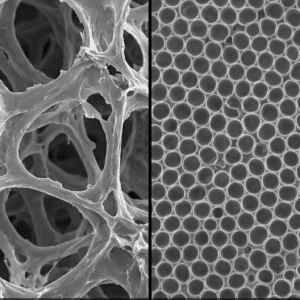
Closed-cell spray polyurethane foam applications exceeding two inches thickness function as vapor barriers eliminating need for separate vapor retarder materials in many building assemblies. Five-inch closed-cell foam achieves approximately 0.4 perm vapor permeance qualifying as Class II vapor retarder per building codes. Two and one-half inch applications deliver 0.8 perm vapor transmission rates. The material’s closed-cell structure prevents water vapor passage maintaining vapor barrier integrity throughout service life. Some cold storage designs require dedicated Class I vapor retarders with permeance below 0.1 perms which licensed building envelope consultants and mechanical engineers determine for specific applications.
Closed-cell foam’s moisture resistance extends beyond vapor transmission control. The material does not absorb liquid water maintaining thermal performance when exposed to condensation. Fiber-based insulation materials lose thermal resistance when wet requiring extended drying or replacement. Closed-cell foam’s impermeability prevents moisture absorption preserving R-value under adverse conditions.
Freezer facilities operating between negative 20 and negative 90 degrees Fahrenheit experience severe condensation risk. Warm humid air reaching subfreezing surfaces forms ice accumulation damaging insulation systems and structural components. Ice buildup on ceiling surfaces creates falling hazards endangering workers and products. Spray foam’s vapor control prevents moisture migration eliminating ice formation at critical interfaces. Walk-in coolers and freezers benefit substantially from closed-cell foam’s combined thermal and moisture control preventing the 15 to 20 percent efficiency loss typical of systems with moisture infiltration.
Vapor barrier location proves critical in cold storage design. Building Science Corporation research emphasizes placing vapor retarders on warm sides of insulation assemblies. Exterior wall applications place foam against building envelope exterior providing proper vapor barrier location blocking moisture drive inward. Licensed building envelope consultants evaluate complete moisture management systems determining vapor barrier placement and penetration details.
Extreme R-Values for Sub-Zero Temperatures
ASHRAE 90.1 energy standards establish minimum insulation requirements varying by climate zone and facility operating temperature. Refrigerated warehouses maintaining interior temperatures between 32 and 55 degrees Fahrenheit require minimum R-30 roof insulation. Freezer facilities operating between negative 20 and 25 degrees demand minimum R-45 roof assemblies. California Title 24 energy code mandates minimum R-40 roof insulation and R-36 wall insulation for freezer applications.
Closed-cell spray polyurethane foam delivers R-6.0 to R-7.0 per inch thermal resistance tested per ASTM C518 thermal transmission properties standards. High-density closed-cell formulations achieve R-6.5 to R-8.0 per inch in specific applications. This thermal performance significantly exceeds open-cell spray foam providing R-3.5 to R-3.8 per inch and traditional batt insulation delivering R-3.0 to R-3.8 per inch. The superior R-value per inch enables thinner applications achieving required thermal resistance reducing material costs.
Closed-cell foam applications meeting cold storage requirements involve straightforward thickness calculations. Facilities requiring R-30 thermal resistance for cooler applications achieve specification with 4.6 to 5 inches closed-cell foam thickness. Freezer facilities demanding R-45 minimum insulation meet requirements with 6.4 to 7 inches foam thickness. California freezers requiring R-40 roof insulation achieve compliance with 5.7 to 7 inches depending on specific foam R-value.
Temperature differential between cold storage interiors and ambient conditions drives continuous heat transfer through building envelopes. Freezer facilities maintaining negative 20 degrees Fahrenheit interior temperature experience 90 to 110 degree differential during summer months in Texas, Kansas, and Oklahoma. Each Btu of heat entering refrigerated spaces requires compressor work removing it maintaining design temperatures. Insufficient insulation forcing refrigeration equipment to run continuously increases energy consumption 25 to 40 percent above properly insulated facilities. Cold storage operators processing temperature-sensitive pharmaceuticals, frozen foods, or industrial products cannot tolerate temperature fluctuations requiring consistent thermal barriers.
Aged R-value considerations affect long-term thermal performance specifications. Closed-cell foam R-value decreases approximately six percent over 365 days as blowing agents diffuse from cell structures. Initial R-values approaching R-7.0 per inch decline toward R-6.0 per inch long-term performance. Licensed mechanical engineers specify foam thickness accounting for aged R-value ensuring facilities maintain required thermal resistance throughout service life. Conservative specifications prevent performance degradation requiring costly retrofits when insulation proves inadequate after aging effects manifest.
Air Sealing for Refrigeration Efficiency
Air infiltration represents primary energy loss mechanism in commercial buildings accounting for 25 to 40 percent of heating and cooling energy consumption. Cold storage facilities experience 15 percent energy loss specifically from air leakage introducing warm humid exterior air into refrigerated environments. Each cubic foot of infiltrating air at 90 degrees Fahrenheit and 60 percent relative humidity contains moisture and thermal energy requiring removal through refrigeration equipment. Uncontrolled air leakage increases refrigeration equipment runtime, raises energy costs, and compromises temperature stability.
Closed-cell spray foam applications create monolithic air barriers eliminating gaps and penetrations where air infiltration occurs. The material expands during application filling cracks, joints, and irregular surfaces producing continuous coverage. Traditional batt insulation compressed around obstacles leaves gaps permitting air movement. Spray foam’s seamless application addresses air leakage comprehensively throughout building envelopes.
Air sealing benefits extend beyond energy reduction. Cold storage facilities maintaining precise temperature ranges protect perishable products. Air infiltration introduces temperature fluctuations as warm exterior air enters refrigerated spaces. Spray foam air barriers improve temperature stability 40 to 60 percent compared to conventional insulation systems enabling tighter temperature control. Pharmaceutical cold storage maintaining specific temperature ranges benefits substantially from enhanced environmental stability.
Energy efficiency improvements deliver measurable cost reductions. Industry data documents energy bill reductions ranging from five to 30 percent per year following spray foam installation. Energy consumption decreases up to 50 percent in well-executed applications. HVAC equipment sizing reduces up to 35 percent as air sealing lowers heating and cooling loads. Air leakage stops up to 90 percent with comprehensive spray foam applications translating directly to operating cost reductions.
Refrigeration equipment capacity requirements decrease as air sealing reduces thermal loads. Compressors sized for facilities with 15 percent air infiltration losses operate continuously handling preventable loads. Spray foam reducing air leakage 90 percent substantially lowers compressor runtime extending equipment service life from 12 to 18 years. Reduced runtime decreases maintenance requirements saving 20 to 30 percent on annual service contracts and delays capital equipment replacement. Cold storage operators realize lifecycle cost advantages through extended compressor longevity and reduced service frequency.
Loading dock operations introduce significant air infiltration challenges. Refrigerated warehouses with 10 to 15 loading docks experience air exchange volumes exceeding building interior volume hourly during peak operations. Spray foam air barriers around dock doors, overhead doors, and adjacent wall penetrations minimize infiltration at high-risk locations. Comprehensive sealing of electrical conduit penetrations, plumbing chases, and structural connections prevents air bypass around primary insulation systems maximizing refrigeration efficiency and protecting product quality.
Preventing Thermal Bridging
Thermal bridging occurs where conductive materials bypass insulation creating preferential heat transfer paths. Structural steel framing, metal studs, and concrete slabs conduct heat substantially faster than insulation materials. Wood framing in wall assemblies occupies approximately 25 percent of wall face area providing R-2.5 thermal resistance while cavity insulation delivers R-13 creating thermal bridges reducing overall wall efficiency 30 percent or more. Metal building systems experience severe thermal bridging through steel purlins, girts, and columns. Warehouses lose 20 percent of cooled air through unsealed joints around metal siding and structural connections.
Continuous insulation strategies address thermal bridging by covering structural members with uninterrupted insulation layers. International Building Code and ASHRAE 90.1 increasingly require continuous insulation meeting thermal performance requirements independent of cavity insulation. Closed-cell spray foam applied to building envelope exteriors or structural member exteriors provides continuous coverage eliminating thermal bridges. Applications covering steel beams, metal studs, and structural connections prevent conductive heat transfer improving overall assembly performance.
Interior spray foam applications behind studs reduce thermal bridging effects. One inch closed-cell foam behind wall framing delivers R-6.0 to R-7.0 thermal resistance keeping framing members warmer reducing heat loss. This continuous insulation layer supplements cavity insulation addressing the 25 percent wall area occupied by framing achieving superior thermal performance compared to cavity insulation alone.
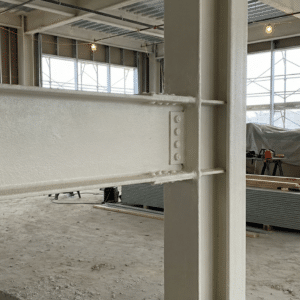
Cold storage facilities utilizing metal building systems face substantial thermal bridging challenges. Steel purlins and girts supporting roof and wall panels create continuous thermal bridges from exterior to interior. Uninsulated metal building systems experience condensation on interior surfaces as steel members reach dew points. Winter conditions with exterior temperatures at 20 degrees Fahrenheit and interior freezer conditions at negative 10 degrees create surface temperatures on exposed steel dropping to 15 degrees causing severe condensation and ice formation. Spray foam covering structural steel eliminates thermal bridges preventing condensation while dramatically improving thermal performance. Applications to metal building interiors coat purlins, girts, columns, and roof deck creating comprehensive thermal barriers maintaining steel temperatures above dew point.
Concrete slab edges represent significant thermal bridges in cold storage facilities. Slab perimeters contact exterior soil and foundations providing heat transfer paths bypassing wall insulation. Uninsulated slab edges conducting heat from exterior grade through concrete introduce 15 to 25 Btu per linear foot per hour heat gain into freezer facilities. Closed-cell foam applied to slab edges and foundation walls eliminates edge thermal bridging. Underslab insulation combined with edge treatment provides comprehensive slab thermal control with ASHRAE 90.1 specifying slab insulation R-values ranging from R-18 to R-30 depending on facility type and climate zone. Two to three inch slab edge insulation extending four feet horizontally under slab perimeter reduces edge heat gain 70 to 85 percent protecting temperature-sensitive floor-stored products.
Fire Code Requirements and Thermal Barriers
International Building Code Section 2603 establishes fire safety requirements for foam plastic insulation in building applications. Spray polyurethane foam must meet ASTM E84 surface burning characteristics achieving Class A rating with Flame Spread Index 25 or less and Smoke Developed Index 450 or less. Typical closed-cell spray foam products achieve Flame Spread Index approximately 15 and Smoke Developed Index approximately 130 meeting Class A requirements.
Critical distinction exists between ASTM E84 surface burning tests and ASTM E119 fire-resistance rating tests. ASTM E84 evaluates material surface flame spread and smoke generation characteristics. ASTM E119 tests complete assemblies determining fire-resistance ratings measuring time structural elements withstand standard fire exposure maintaining load-bearing capacity. Spray foam meeting ASTM E84 Class A requirements does not provide structural fire protection and does not replace fire-rated construction assemblies required by building codes. Spray foam insulation serves as thermal insulation with excellent surface burning characteristics but does not protect structural steel from fire exposure requiring separate fireproofing systems.
International Building Code requires thermal barriers over foam plastic insulation in occupied spaces. Thermal barriers consisting of minimum one-half inch gypsum board or equivalent materials cover spray foam delaying foam involvement in fires. The 15-minute thermal barrier provides evacuation time and limits fire spread. Thermal barrier requirements apply to interior building spaces where occupants work or congregate. Unoccupied attics and crawl spaces may receive foam without thermal barriers under specific conditions detailed in IBC Section 2603.
Licensed fire protection engineers and building officials determine thermal barrier requirements for specific cold storage applications. Refrigerated warehouse areas with minimal human occupancy may qualify for reduced thermal barrier requirements compared to office areas. Walk-in coolers and freezers classified as unoccupied spaces potentially receive spray foam without gypsum board covering depending on local code interpretations. Authority having jurisdiction approval proves essential as jurisdictions interpret code requirements differently.
Fire suppression system interactions with spray foam insulation require evaluation. NFPA 13 sprinkler installation standards establish requirements based on building construction, occupancy classification, and combustible loading. Some jurisdictions mandate sprinkler installation in buildings with spray foam while others permit foam without sprinklers based on thermal barrier presence and construction type. Cold storage facilities insured through Factory Mutual programs must meet FM Global property loss prevention data sheets addressing spray foam applications considering fire performance, sprinkler protection, and building construction.
Key Takeaways
Closed-cell spray polyurethane foam delivers R-6.0 to R-7.0 per inch thermal resistance enabling cold storage facilities to achieve ASHRAE 90.1 requirements of R-30 for coolers and R-45 for freezers with 4.6 to 7 inches thickness applications meeting energy code specifications per ASHRAE 90.1 energy standards.
Foam applications exceeding two inches thickness provide vapor barrier properties with five-inch applications achieving approximately 0.4 perm vapor permeance qualifying as Class II vapor retarders eliminating need for separate vapor retarder materials in many assemblies while some cold storage designs require dedicated Class I vapor retarders below 0.1 perms determined by licensed building envelope consultants.
Monolithic spray foam applications eliminate air infiltration accounting for 25 to 40 percent of building energy loss reducing refrigeration equipment runtime five to 30 percent per year while improving temperature stability 40 to 60 percent compared to conventional insulation systems.
Continuous insulation covering structural steel members, metal studs, and concrete slabs prevents thermal bridging reducing wall efficiency losses exceeding 30 percent improving overall assembly thermal performance beyond cavity insulation R-values alone.
International Building Code Section 2603 requires thermal barriers consisting of minimum one-half inch gypsum board over spray foam in occupied spaces providing 15-minute fire protection with spray foam meeting ASTM E84 Class A requirements but not providing structural fire protection or ASTM E119 fire-resistance ratings.
Building Science Corporation commercial spray foam guidelines establish professional installation requirements including certified applicators, component temperature maintenance between 60 and 90 degrees Fahrenheit, proper mixing ratios, thickness verification, and 24 to 48 hour off-gassing periods before occupancy.
Cold storage spray foam insulation across Texas, Kansas, and Oklahoma requires closed-cell applications during construction phases or planned shutdown periods as substrate temperatures must reach 60 to 90 degrees Fahrenheit for proper foam adhesion and expansion preventing application during freezer operations.
If your refrigerated warehouse or freezer facility requires primary thermal insulation achieving R-30 to R-45 performance while providing integrated air barriers and vapor barriers, our team coordinates spray foam installation with certified applicators meeting ASHRAE energy standards and IBC thermal barrier requirements. Contact Bahl Fireproofing for cold storage spray foam insulation solutions enhancing refrigeration efficiency through comprehensive building envelope thermal control.
Disclaimer: This article provides general educational information and does not constitute professional engineering advice or code compliance certification. Closed-cell spray polyurethane foam functions as primary thermal insulation and does not replace structural fireproofing protecting load-bearing steel or fire-rated assemblies. Spray foam provides ASTM E84 Class A surface burning characteristics but does not provide ASTM E119 fire-resistance ratings and does not replace spray-applied fire-resistive materials or intumescent coatings. International Building Code Section 2603 requires thermal barriers consisting of minimum one-half inch gypsum board over spray foam in occupied spaces. Closed-cell spray foam required for cold storage applications with open-cell foam inappropriate due to moisture absorption. Licensed mechanical engineer, fire protection engineer, building envelope consultant, and authority having jurisdiction determine complete insulation systems, thermal barrier requirements, vapor barrier specifications, R-value requirements, sprinkler system design, and application specifications for cold storage facilities. R-value requirements vary by climate zone and facility type per ASHRAE 90.1 and International Energy Conservation Code. Professional certified applicator installation required with component temperatures between 60 and 90 degrees Fahrenheit preventing application on freezer-temperature substrates. Performance and cost vary by foam type, thickness, application conditions, climate zone, and project specifics. Always consult licensed professionals to verify building code requirements and complete system specifications.