K-13 Warehouse Insulation: Acoustic Control and Energy Savings
What is K-13 Warehouse Insulation? Warehouse workers struggle to hear safety instructions over forklift noise while facility managers watch energy bills climb from poorly insulated metal buildings. K-13 spray-applied cellulose insulation addresses both warehouse insulation challenges simultaneously through a single application that controls noise and reduces energy costs.
TLDR: K-13 warehouse insulation provides combined acoustic and thermal performance achieving NRC ratings up to 1.05 and R-values up to R-37.5. Material reduces reverberation time by 50 to 70 percent while meeting commercial energy code requirements. K-13 is NOT structural fireproofing and cannot replace fire-resistance-rated systems required for steel protection. Licensed professionals must determine appropriate fireproofing and insulation services specifications based on building type and climate zone.
What Makes Warehouse Insulation Challenging
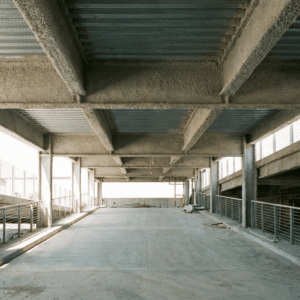
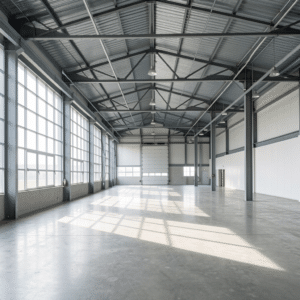
Large warehouse spaces with concrete floors, metal roof deck, steel racking, and wall panels reflect sound waves, creating excessive reverberation that makes speech unintelligible. Forklifts at 80 to 95 dBA, conveyor systems at 75 to 85 dBA, and multiple equipment sources combine to exceed 85 dBA, triggering OSHA hearing conservation requirements while increasing accident risk when workers cannot hear warnings.
Metal building construction provides minimal thermal resistance allowing temperature extremes and energy waste. Condensation forms on cold interior surfaces without proper insulation creating maintenance issues and structural damage risk.
How K-13 Controls Warehouse Noise Through Superior Absorption
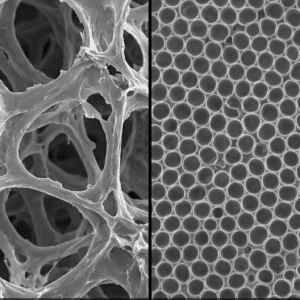
K-13 spray-applied cellulose achieves Noise Reduction Coefficient ratings from 0.70 at one inch thickness to 1.05 at three inches when tested per sound absorption testing standards exceeding fiberglass batts at 0.60 to 0.70, spray foam at 0.70, and ceiling tiles at 0.50 to 0.70. Cellulose fibers absorb sound energy through friction while spray application creates a monolithic coating filling around penetrations without gaps.
Projects applying two to three inches of K-13 to 70 percent of ceiling area reduce ambient noise by 8 to 12 decibels while cutting reverberation time from 4 to 6 seconds down to 1.5 to 2.5 seconds. Speech intelligibility improves from 50 to 60 percent to 80 to 90 percent word recognition. Higher warehouses exceeding 30 feet clear height benefit from 70 to 90 percent coverage on roof deck undersides.
K-13 Thermal Performance for Warehouse Energy Savings
K-13 provides R-3.75 thermal resistance per inch reaching R-18.75 at five inches without support and R-37.5 at ten inches with High-R System. Climate zones determine requirements with Zone 2 needing R-15 to R-20, Zone 3 requiring R-20 to R-25, and Zone 4 demanding R-25 to R-30 per IECC standards for Texas, Kansas, and Oklahoma facilities.
Spray application fills voids eliminating thermal bridging and air infiltration. Representative 100,000 square foot warehouses adding R-19 K-13 to 80 percent of roof deck reduce heating costs by 25 to 40 percent and cooling costs by 30 to 50 percent. Licensed professionals verify compliance with local energy codes based on specific building use and location.
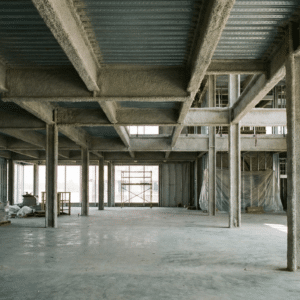
K-13 Application on Warehouse Metal Deck
K-13 adheres to clean, dry steel surfaces without primers with surface preparation requiring removal of oil, grease, and loose rust. Spray application combines cellulose fibers with water-based adhesive building specified thickness measured to plus or minus 10 percent tolerance.
Installation requires lifts or scaffold for high-bay warehouses with overspray protection covering floors, equipment, and HVAC units. Surface and ambient temperatures must meet manufacturer-specified minimums, typically 40 degrees Fahrenheit or higher, during application and 24 hours after. Material cures in 24 to 48 hours with exposed textured surface serving as final ceiling finish in seven standard colors plus custom options.
K-13 Over Fireproofing: Understanding Critical Limitations
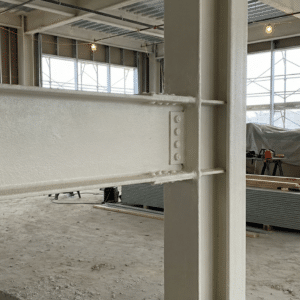
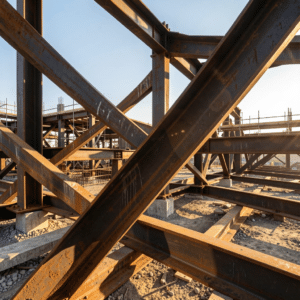
K-13 provides thermal insulation and acoustic control but does NOT replace structural fireproofing required for fire-resistance ratings. The material cannot protect structural steel from fire exposure on its own. Warehouses requiring fire-rated steel assemblies must install spray-applied fire-resistive materials or intumescent coatings per building code requirements before considering K-13 application.
K-13 appears in 15 UL-approved assemblies as allowable sprayed fiber for application over existing spray-applied fireproofing adding thermal and acoustic performance while maintaining fire-resistance ratings. Typical scenarios apply SFRM to structural steel first providing required fire ratings then install K-13 over cured fireproofing adding two to four inches of thermal and acoustic treatment. System selection requires licensed professional specification of exact UL assembly numbers with verification of compatibility requirements.
Cost Considerations for Warehouse Insulation Projects
K-13 installed costs range from $4.00 to $6.50 per square foot for two-inch applications providing R-7.5 and NRC 1.00, while three-inch installations delivering R-11.25 and NRC 1.05 run $5.50 to $9.00 per square foot. Five-inch High-R applications reaching R-18.75 cost $8.00 to $14.00 per square foot with building height and geographic location significantly affecting final pricing.
Representative 100,000 square foot warehouse applying three inches of K-13 to 70 percent of ceiling area averages $455,000 total cost providing both acoustic treatment reducing noise by 8 to 12 decibels and thermal insulation meeting R-11 energy code requirements. Alternative solutions like fiberglass batts at $1.50 to $2.50 per square foot provide thermal only while acoustic panels at $8 to $15 per square foot deliver acoustic only. K-13 eliminates need for separate systems.
Key Takeaways
- K-13 spray-applied cellulose provides combined acoustic and thermal warehouse insulation with NRC ratings up to 1.05 and R-values reaching R-37.5
- Acoustic treatment reduces warehouse ambient noise by 8 to 12 decibels and cuts reverberation time by 50 to 70 percent, which could improve worker safety and communication.
- Thermal insulation performance from R-11 to R-30 meets IECC requirements for metal building warehouses, reducing heating costs by 25 to 40 percent and cooling costs by 30 to 50 percent
- K-13 is NOT structural fireproofing and cannot replace fire-resistance rated SFRM or intumescent systems required for steel protection per building codes
- Installed costs range from $4 to $14 per square foot depending on thickness, building height, and project conditions
- Material applies directly to metal deck substrates without primers, cures in 24 to 48 hours, and provides exposed finish in seven standard colors plus custom options
- Licensed professionals must specify insulation R-values based on climate zone, energy code requirements, and building use while verifying thermal testing performance standards compliance
If your warehouse needs acoustic control for OSHA hearing conservation compliance combined with thermal insulation reducing energy costs, our team applies K-13 systems throughout Texas, Kansas, and Oklahoma. Contact Bahl Fireproofing to discuss your warehouse insulation requirements before noise complaints or utility bills force reactive solutions.
Disclaimer: This article provides general educational information about fireproofing and insulation systems and does not constitute professional engineering advice or product specification. Code requirements vary by jurisdiction and may be based on different editions of applicable standards. System selection must be based on project-specific fire ratings, thermal requirements, acoustic performance needs, environmental conditions, substrate requirements, and budget constraints. Always consult with a licensed professional and verify UL or FM assembly listings before finalizing specifications.
K-13 provides thermal insulation and acoustic control but does NOT replace structural fireproofing systems required for fire-resistance ratings. Warehouse insulation specifications, acoustic performance targets, and thermal R-value requirements vary based on building type, occupancy classification, climate zone, and operational conditions. Cost estimates are representative and may vary depending on project size, building height, geographic location, material thickness, and installation complexity. Energy savings estimates depend on existing conditions, building operation, climate factors, and HVAC efficiency. Acoustic performance varies based on coverage area, material thickness, substrate type, and room geometry. Installation must be performed by International Cellulose Corporation licensed contractors following manufacturer specifications and applicable building codes.