Intumescent Fireproofing Hospital Steel: Clean, Aesthetic Fire Protection
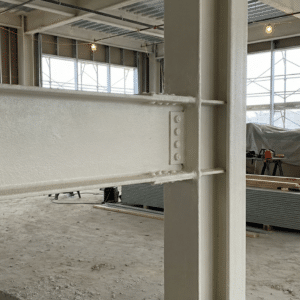
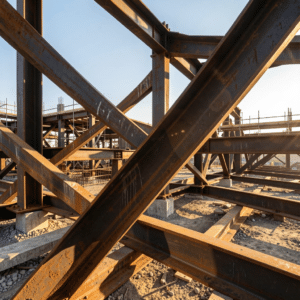
Hospital lobbies, atriums, and public spaces increasingly feature exposed structural steel as architectural design element. Intumescent fireproofing provide required fire protection while maintaining smooth, paint-like finish preserving architectural intent. UCHealth Longs Peak Hospital incorporated 150-foot arched roof with exposed steel protected by intumescent fireproofing creating distinctive design element featured in hospital logo. Healthcare facilities require cleanable surfaces supporting infection control protocols making intumescent coatings’ smooth, non-porous finish superior to traditional spray-applied materials generating particulate contamination.
TLDR: Intumescent fireproofing hospital steel achieves required Type I-A or Type I-B fire-resistance ratings while maintaining smooth, cleanable surfaces essential for infection control. Water-based formulations provide low VOC emissions appropriate for occupied facilities eliminating patient relocation during application. Intumescent fireproofing expands when heated creating insulating char layer protecting structural steel without rough texture that traps contaminants and hinders disinfection. Licensed professional must verify complete UL-listed assembly including primer, intumescent thickness, and topcoat as product substitution invalidates fire-resistance rating.
Smooth Finish for Hospital Cleanability
Intumescent coatings create smooth, paint-like finish facilitating efficient cleaning required in healthcare environments. Spray-applied fire-resistive materials produce rough, textured surface harboring contaminants and hindering disinfection. Facility Guidelines Institute requires surfaces free of fissures, open joints, or crevices preventing bacterial colonization and enabling terminal cleaning.
Traditional cementitious fireproofing flakes and dusts creating particulate contamination. Intumescent coatings eliminate flaking through cohesive film maintaining integrity. Smooth surface enables single-pass cleaning with hospital-grade disinfectants without material degradation.
Healthcare facilities use quaternary ammonium compounds, sodium hypochlorite, and hydrogen peroxide formulations. Intumescent coatings withstand repeated chemical exposure while porous spray-applied materials absorb cleaning solutions reducing performance and creating microbial reservoirs. Non-porous finish prevents moisture intrusion supporting infection prevention.
Maintaining Exposed Steel in Public Spaces
Hospital lobbies and atriums serve as first patient interaction establishing facility impression affecting satisfaction scores. Exposed structural steel contributes to contemporary healthcare design creating open, welcoming environments per healthcare architecture design trends. UCHealth Longs Peak Hospital specified intumescent coatings for 150-foot arched roof preserving exposed steel beams as prominent architectural feature incorporated into hospital branding.
Type I-A construction requires 3-hour fire-resistance rating for primary structural frame. Type I-B construction mandates 2-hour rating representing minimum standard for hospital licensure. Massachusetts healthcare law requires Type IB minimum regardless of building height or floor area. Intumescent coatings achieve required ratings while maintaining architectural visibility unlike concealment methods using gypsum board or suspended ceilings. Bahl Fireproofing serves healthcare facilities across Texas, Kansas, and Oklahoma markets.
Design flexibility enables architects to showcase structural systems as aesthetic elements. Exposed steel painted with intumescent coatings integrates fire safety with design intent creating distinctive spaces. Return on aesthetic investment includes improved patient experience scores and architectural recognition supporting facility reputation.
Low Odor for Occupied Healthcare Facilities
Water-based intumescent formulations produce minimal odor enabling work in occupied buildings without patient relocation. Traditional solvent-based coatings generate strong chemical odors triggering respiratory irritation and patient complaints requiring temporary space closure. Healthcare facilities operate 24 hours daily making low-disruption application methods essential. Similar occupied facility considerations apply to K-13 acoustic insulation installation in patient care areas.
Low VOC water-based products comply with South Coast Air Quality Management District Rule 1113, California Air Resources Board 2007 SCM, and California Department of Public Health v1.2-2017 standards. LEED v4.1 limits total volatile organic compounds to 500 micrograms per cubic meter. GREENGUARD Gold certifications verify products meet stringent emissions testing appropriate for immunocompromised patients.
Application scheduling around patient care activities enables coating installation during lower-census periods minimizing operational disruption. Faster room turnover reduces revenue loss from bed unavailability. Ventilation requirements of 0.3 air changes per hour for 48 to 72 hours post-application remain manageable within existing HVAC capacity.
Fire-Resistance Ratings and UL Assembly Verification
Intumescent coating systems consist of primer, intumescent base coat, and topcoat tested as complete assembly. UL fire-resistance directory lists approved combinations including steel configuration, primer type, intumescent thickness, and topcoat specifications. Product substitution invalidates entire assembly rating. Licensed structural engineer must specify exact UL-listed assembly and verify contractor compliance through ASTM E119 standard test methods.
Extrapolating coating thickness beyond UL-listed maximum causes delamination and performance failure. Higher fire ratings require proportionally thicker applications. Some assemblies specify maximum thickness preventing over-application. Third-party inspection verifies dry film thickness across protected surfaces confirming compliance per International Building Code fire protection requirements.
Steel member size and shape affect required coating thickness with thin sections requiring thicker protection due to rapid heat transfer. Licensed professional must calculate required thickness for each steel configuration ensuring complete protection meeting code requirements.
Application Conditions and Surface Preparation
Temperature during application must remain between 50 to 95 degrees Fahrenheit with ideal range of 62 to 90 degrees. Relative humidity must stay below 80 percent with optimal conditions at 65 percent or less. High humidity causes foaming, sagging, and incomplete curing reducing fire performance. Ventilation providing minimum 0.3 air changes per hour for 48 to 72 hours post-application enables proper curing.
Surface preparation removes mill scale, rust, and contaminants through abrasive blasting. Substrate moisture content must remain below 15 percent preventing delamination. Primer application within specified window after surface preparation prevents flash rusting and ensures intumescent adhesion.
Do not use propane or kerosene heaters as combustion products add moisture compromising curing. Electric heaters or indirect-fired systems maintain proper conditions. Cold weather application requires heated enclosures. Hot weather requires shade preventing rapid solvent evaporation before proper film formation.
Cost Considerations and Project Planning
Intumescent coating costs range from $4 to $12 per square foot installed depending on fire rating, steel configuration, and accessibility. Two-hour rated system costs approximately $1,188 compared to $410 for gypsum board enclosure or $1,800 to $2,430 for spray-applied material with architectural covering. Premium justified by aesthetic value and cleanability in public-facing hospital spaces.
Combination approach applies spray-applied fire-resistive materials to concealed steel in mechanical spaces while specifying intumescent coatings for exposed steel in lobbies and corridors. Strategy optimizes cost while maintaining design intent. Mechanical rooms benefit from cost-effective cementitious fireproofing where aesthetics remain secondary.
Labor represents significant cost with skilled applicators required. Multiple coat systems for high fire ratings increase project duration. Scheduling coordination with other trades prevents contamination and eliminates rework. Protective measures during construction preserve coating integrity.
Maintenance and Inspection Requirements
Regular inspection identifies coating damage from physical impact, moisture intrusion, or modifications. Insurance carriers and code officials require documented maintenance programs. Visual inspection detects damage while destructive testing verifies coating thickness at specified intervals.
Repair procedures match original UL-listed assembly specifications. Partial repairs require feathering into existing coating. Touch-up work after mechanical modifications restores protection compromised by penetrations.
Facilities management protocols include periodic inspection schedules, repair procedures, and contractor qualifications. Documentation establishes compliance with insurance requirements and regulatory inspections.
Key Takeaways
- Intumescent coatings provide smooth, paint-like finish enabling efficient cleaning and disinfection required for healthcare infection control protocols
- UCHealth Longs Peak Hospital showcases exposed steel protected by intumescent fireproofing as prominent architectural element featured in hospital branding
- Water-based formulations produce low odor and VOC emissions enabling application in occupied facilities without patient relocation or operational disruption
- Type I-A construction requires 3-hour fire-resistance rating while Type I-B requires 2-hour rating with Massachusetts mandating Type IB minimum for hospitals
- Licensed professional must verify complete UL-listed assembly as product substitution or thickness extrapolation beyond listed parameters invalidates fire-resistance rating
- Application conditions including temperature 50-95 degrees Fahrenheit and humidity below 80 percent directly affect coating performance and fire protection
- Cost ranges from $4 to $12 per square foot with premium justified by aesthetics and cleanability in public-facing spaces versus concealed structural areas
If your healthcare facility requires fire protection maintaining architectural design intent while supporting infection control through cleanable surfaces, our team applies intumescent fireproofing systems meeting hospital requirements. Contact Bahl Fireproofing to discuss intumescent coatings for exposed structural steel before design decisions affect aesthetic and operational outcomes.
Disclaimer: This article provides general educational information about intumescent coatings for hospital steel and does not constitute professional engineering advice or fire protection design certification. Fire-resistance requirements vary by jurisdiction per International Building Code. Healthcare facilities require Type I-A or Type I-B construction with Massachusetts mandating Type IB minimum. Intumescent coating selection must be based on UL-listed fire-resistance assemblies matching specific steel configurations with licensed structural engineer verification. Product substitution or thickness extrapolation beyond UL-listed parameters invalidates fire-resistance rating. Application conditions including temperature, humidity, and ventilation directly affect coating performance requiring strict environmental controls. Surface preparation and substrate moisture content critical to adhesion. Cost estimates vary by project size, steel complexity, accessibility, fire rating, and regional labor rates. Always consult licensed structural engineer and fire protection engineer to verify code requirements, UL assembly selection, and installation specifications.