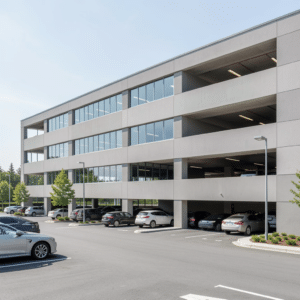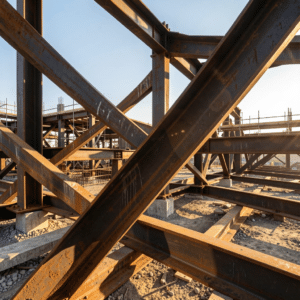
You own a 20-year-old office building. A recent inspection flagged that your exposed structural steel beams don’t have adequate fire protection. You face two options: tear out and rebuild, or retrofit fire protection on the existing steel. Retrofitting is usually the answer, but it’s not as simple as painting over old steel. It takes planning, proper surface prep, and realistic expectations. Let me walk you through what an intumescent fireproofing retrofit looks like, what it costs, and when it makes sense.
Can You Retrofit Intumescent Fireproofing on Existing Steel?
In most cases, yes. Intumescent fireproofing works well for retrofit projects when the conditions are right. Here’s a simple framework to help you decide.
Yes, retrofit works when:
- Structural steel is still sound with no significant damage
- Steel is accessible for surface prep and coating application
- Fire rating requirement is 3 hours or less
- Building owner accepts the timeline and cost
Maybe retrofit with caution when:
- Steel has incompatible primers or old paint that needs stripping
- The building is heavily occupied (requires off-hours work and low-VOC products)
- Steel has minor structural damage needing repairs first
No, retrofit isn’t possible when:
- Structural members are significantly damaged or weakened
- Fire rating requirement exceeds 4 hours
- Steel is completely inaccessible or historic restrictions apply
The key is honest assessment and proper surface prep. When those boxes are checked, intumescent retrofit delivers excellent results.
The Retrofit Challenge: Existing Steel
New steel is clean and ready to coat. Existing steel is different. Here are the five challenges we face on every intumescent fireproofing retrofit project.
Rust and Corrosion
Existing steel exposed to moisture or humidity often has rust. Light surface rust can be managed with proper prep. Heavy rust or pitting may require grinding, sandblasting, or structural assessment. Rust is like a disease. You have to get it all out before treating the steel, or it spreads under the new coating.
Existing Coatings and Paint
Old paint or primers may be incompatible with intumescent systems. Some coatings need complete removal through blasting. Others can be cleaned and sanded. A contractor must test compatibility before work starts.
Mill Scale and Contaminants
Mill scale from the original rolling process must be removed for proper adhesion. Dirt, grease, and industrial fallout also prevent bonding. Cleaning is essential, not optional.
Structural Damage or Deterioration
Before coating, assess whether steel is still structurally sound. Damaged steel may need strengthening first. A licensed engineer must approve the retrofit approach. Sometimes structural repairs exceed retrofit cost.
Accessibility Challenges
Steel in tight spaces, above drop ceilings, or behind pipes is hard to access. Temporary removal of obstacles adds cost. Easy access means lower cost. Poor access means higher cost and longer timelines.
Surface Prep: The Most Critical Step
Surface preparation is not glamorous, but it is the most important part of a successful intumescent fireproofing retrofit. A coating applied to a poorly prepared surface will fail, no matter how good the coating is. According to ASTM E119 fire testing standards, fire-resistance ratings depend on proper assembly installation, which starts with surface prep.
| Rust Condition | Prep Method | Process | Result |
|---|---|---|---|
| Light surface rust | Wire brush plus rust converter | Scrub with wire brush; apply rust-converting primer | Clean, ready for intumescent |
| Moderate rust and scale | Grinding plus wire brush | Grind away rust; wire brush; solvent wipe | Rough profile for adhesion |
| Heavy rust or pitting | Sandblasting (SSPC-SP6) | Abrasive blast to bare metal | Bare metal; best adhesion; higher cost |
| Old incompatible paint | Chemical strip plus wash | Strip with approved solvent; wash; dry | Clean steel ready for coating |
| Light mill scale only | Wire brush plus solvent wipe | Brush; wipe with solvent to remove oils | Clean surface; ready for primer |
Surface Prep Checklist:
- Inspect and document existing condition with photos
- Remove loose rust, flaking paint, and debris
- Clean surface of all oils, grease, and dirt
- Apply appropriate primer for conditions
- Verify surface dryness before coating
- Document all prep work for inspector review
Poor surface prep is the number one reason retrofit coatings fail early. You cannot coat rust or grease. The surface must be clean.
In a Texas warehouse retrofit, we spent 60% of project time on surface prep. That investment paid off: the intumescent coating held up over 10 years without problems.
Working in Occupied Buildings
Schools, hospitals, offices, and manufacturing facilities don’t close for months. You cannot spray during business hours because it disrupts occupants. Traditional spray methods create dust, overspray, and noise.
Scheduling Solutions
Apply coatings during off-hours: evenings, weekends, or closures. Water-based, low-VOC intumescent coatings dry overnight. Buildings are ready for normal operations by morning.
Product Selection
Choosing the right coating matters for occupied buildings. Understanding the different types of intumescent fireproofing helps you match product to project conditions.
Water-based, low-VOC intumescent coatings work best for occupied buildings due to lower odor and fast drying. Solvent-based products smell stronger and cure slower. Epoxy intumescents have highest VOC and are reserved for unoccupied areas.
Containment and Protection
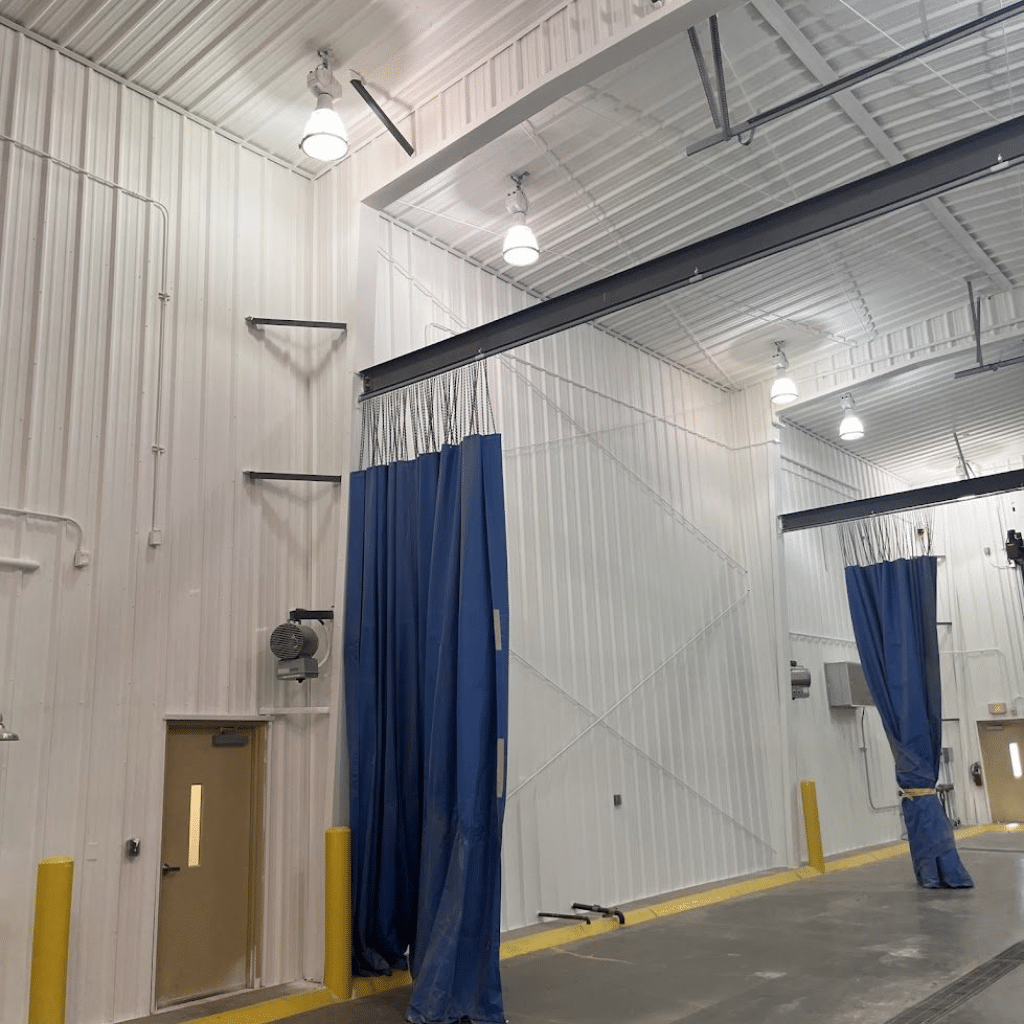
Use plastic sheeting and expandable walls to contain spray. Protect adjacent areas, HVAC systems, and equipment. Floor protection reduces cleanup costs and complaints.
We retrofitted a Texas school’s exposed steel during summer break. We used water-based, low-VOC coatings applied evenings. By morning, coatings were dry. When classes started in August, the building was fully protected.
Code Compliance and Engineer Approval
Before you retrofit, verify: what fire rating is required by the current IBC for your building type, what your existing system has, and what your retrofitted system will achieve.
Step 1: Consult a Licensed Engineer
A structural or fire protection engineer must verify retrofit is appropriate. The engineer determines required fire rating based on IBC occupancy, building height, and area. They specify which UL-listed intumescent assembly to use. Engineering consultation typically costs $1,000 to $5,000.
Step 2: Verify UL Assembly Matching
The specific intumescent system, primer, thickness, and substrate must match a tested UL design. You cannot use just any product. It must match the exact tested configuration.
Step 3: Plan for Inspection
Local or third-party inspector verifies surface prep and measures dry film thickness during application. Final inspection happens before occupancy approval. Inspections add one to two weeks.
This is not a DIY project. Code compliance requires a licensed professional to verify the plan and an inspector to verify the work.
Cost and Timeline Reality Check
Here’s what intumescent fireproofing retrofit typically costs for a 5,000 square foot project:
- Engineering assessment: $2,000 to $5,000
- Surface prep: $5,000 to $15,000 (30 to 40% of total)
- Intumescent coating application: $8,000 to $20,000
- Inspection: $2,000 to $4,000
- Total project: $17,000 to $44,000
Cost drivers up: Heavy rust, tight access, high fire rating, occupied building premiums, structural repairs.
Cost drivers down: Light rust, good access, low fire rating (1 to 2 hours), unoccupied building.
| Project Phase | Duration | Notes |
|---|---|---|
| Engineering and planning | 2 to 3 weeks | Code review, surface assessment |
| Surface prep | 1 to 4 weeks | Depends on rust, size, access |
| Coating application | 1 to 3 weeks | Depends on fire rating, square footage |
| Curing and inspections | 1 to 2 weeks | Final inspection before occupancy |
| Total | 5 to 12 weeks | Can compress if unoccupied |
Retrofit projects take longer and cost more than new construction fireproofing because you’re fixing existing problems. Budget accordingly and plan ahead.
When Retrofit Isn’t Enough
Intumescent retrofit works best for fire ratings up to 2 to 3 hours, structurally sound steel, acceptable 6 to 12 week timelines, and when cost matters.
Retrofit might not work if fire rating needs exceed 3 to 4 hours, structural steel is significantly damaged, or steel is inaccessible.
Alternatives:
Cementitious SFRM spray achieves 4-hour ratings but requires slower cure and more disruption. Fire-rated gypsum encasement boxes in the steel. Structural upgrades can reduce fire rating requirements. According to Sherwin-Williams technical guidance, choosing between intumescent and cementitious depends on project requirements.
A hospital we worked with had heavily rusted, damaged steel. Coating wasn’t safe. We coordinated with engineers to strengthen members first, then retrofitted intumescent coatings. Total cost was higher, but the project met code safely.
Key Takeaways
- Retrofit is usually possible when steel is sound, accessible, and surface prep is thorough
- Surface prep is 80% of success: Don’t rush rust removal and cleaning
- Occupied buildings need low-VOC products and off-hours scheduling
- Engineers and inspectors are required: Code compliance is non-negotiable
- Timeline is 5 to 12 weeks depending on condition and occupancy
- Budget $17,000 to $50,000+ depending on area, condition, and challenges
- Sometimes retrofit isn’t enough: Damaged steel or very high ratings need alternatives
Ready to Assess Your Retrofit Needs?
If you’re managing an older building facing a fire code compliance issue, or you’re planning a renovation that includes exposed structural steel, don’t assume you have to demolish and rebuild. Retrofitting intumescent fireproofing is often the most practical and cost-effective solution.
We’ve retrofitted hundreds of buildings across Texas, Kansas, and Oklahoma, including offices, schools, hospitals, warehouses, and industrial facilities. We know the challenges of surface prep, occupied buildings, and tight schedules. We’ll work with your engineer and inspector to get your project right.
Contact Bahl Fireproofing today to assess your retrofit needs and get a realistic timeline and cost estimate.
This article provides general educational information about fireproofing and insulation systems and does not constitute professional engineering advice or product specification. System selection must be based on project-specific fire ratings, thermal requirements, acoustic performance needs, environmental conditions, substrate requirements, and budget constraints. Code requirements vary by jurisdiction and project type. Always consult with a licensed professional and verify UL or FM assembly listings before finalizing specifications.