Hospital Fireproofing Requirements: Meeting Healthcare Fire Safety Codes
Healthcare facilities housing patients incapable of self-preservation face the most stringent fire protection requirements in building codes. Hospitals cannot be evacuated during fire emergencies due to patients on life support or physically immobile, requiring defend-in-place fire safety strategies. International Building Code Group I-2 occupancy mandates Type I fire-resistive construction with 2-hour to 3-hour structural steel fire ratings combined with mandatory fire compartmentation.
TLDR: Hospital fireproofing requires Type I-A or Type I-B construction providing 2-hour to 3-hour fire-resistance ratings for structural steel protecting patients who cannot evacuate. NFPA 101 Life Safety Code compliance is mandatory for Medicare and Medicaid reimbursement enforced through CMS surveys and Joint Commission accreditation. Fire compartmentation using 2-hour fire barriers and 1-hour smoke barriers enables defend-in-place strategy moving patients horizontally rather than evacuating buildings. Licensed professionals must verify structural steel fireproofing systems meet jurisdiction-specific requirements and UL fire-resistance directory listings.
Group I-2 Occupancy Classification and Construction Type
International Building Code classifies hospitals as Group I-2 occupancy for facilities providing 24-hour medical care to more than five persons incapable of self-preservation. This classification triggers the most restrictive construction requirements due to occupant vulnerability and inability to evacuate during emergencies.
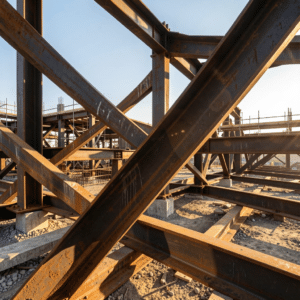
Type I-B construction represents minimum standard for hospital licensure requiring noncombustible materials with primary structural frame maintaining 2-hour fire-resistance rating. Type I-A construction provides 3-hour ratings for large teaching hospitals and trauma centers. Steel structural members require individual fire protection achieving specified hourly ratings per fire-resistance testing standards through spray-applied materials or intumescent coatings.
NFPA 101 Life Safety Code Compliance Requirements
National Fire Protection Association 101 Life Safety Code establishes comprehensive fire protection requirements per CMS Life Safety Code requirements. Centers for Medicare and Medicaid Services mandates NFPA 101 compliance as condition for reimbursement representing approximately 40 percent of hospital revenue according to CMS data. Facilities failing Life Safety Code surveys risk loss of federal funding.
Joint Commission accreditation requires demonstrated NFPA 101 compliance verified through triennial surveys. Loss of accreditation triggers immediate reimbursement suspension. This dual enforcement through CMS and Joint Commission creates compliance environment more stringent than traditional building code enforcement.
Fire Compartmentation and Defend-in-Place Strategy
Healthcare facilities employ defend-in-place fire safety strategy due to patient mobility limitations. Fire barriers with 2-hour ratings subdivide floor areas while smoke barriers with 1-hour ratings subdivide each story into minimum two compartments enabling horizontal patient evacuation to adjacent protected zones.
Smoke barriers must limit compartments to maximum 22,500 square feet with travel distance not exceeding 200 feet. Doors require minimum 20-minute fire-protection rating. Staff follow RACE protocol: Remove occupants, Alarm transmission, Close doors isolating fire, and Evacuate patients to adjacent compartment.
Structural elements supporting fire barriers must maintain minimum 1-hour fire-resistance ratings. Steel beams supporting 2-hour fire barrier walls require minimum 1-hour fire protection preventing barrier failure per fire protection requirements. This requirement frequently overlooked during design creates compliance issues.
Structural Steel Fireproofing Methods
Spray-applied fire-resistive materials provide cost-effective solution achieving 2-hour and 3-hour fire-resistance ratings through cementitious coatings applied at 1 to 3 inches thickness. SFRM installed costs range from $2 to $4 per square foot for 2-hour ratings and $4 to $6 per square foot for 3-hour ratings. Concealed steel in mechanical spaces and structural cores typically utilizes SFRM maximizing fire protection while minimizing costs on large hospital projects.
Intumescent coatings maintain architectural appearance through thin applications expanding when heated creating insulating char layer. Material costs $8 to $15 per square foot for 2-hour ratings with 3-hour ratings challenging to achieve. Healthcare facilities specify intumescent coatings for public-facing areas including lobbies and atrium spaces where exposed steel contributes to design.
Both methods require verification against UL fire-resistance directory listings matching specific steel configurations. Substituting products or extrapolating beyond tested assemblies voids fire-resistance ratings. Licensed applicators must document material thickness and coverage through quality control testing submitted to authority having jurisdiction.
Critical Infrastructure Fire Protection
Hospital electrical rooms house essential electrical systems required by NFPA 99 including Type 1 Essential Electrical System mandated for facilities with operating rooms and intensive care units. Three branches provide Life Safety power restoring emergency lighting within 10 seconds, Critical power supporting life support equipment within 10 seconds, and Equipment power with delayed restoration. Electrical failures cause 22 percent of healthcare facility fires making structural protection of electrical rooms critical during fire events.
Mechanical rooms containing medical air compressors and HVAC equipment serving operating rooms require 1-hour fire-rated separation. Loss of mechanical systems during fire events compromises patient care where ventilation maintains sterile environments and medical gas systems support life functions. Structural steel supporting mechanical and electrical rooms must maintain fire-resistance ratings protecting critical infrastructure enabling continued hospital operations during emergencies.
Compliance Inspection and Testing Requirements
Centers for Medicare and Medicaid Services conducts Life Safety Code surveys evaluating physical environment compliance and fire protection system functionality. Survey deficiencies require immediate correction plans with follow-up verification before continued federal reimbursement participation. Facilities must maintain ongoing compliance through annual inspections and staff training updates.
Spray-applied fireproofing requires bond strength testing verifying adhesion meets minimum performance requirements. Thickness measurements confirm coverage achieves specified depth across protected steel surfaces. Intumescent coating installations require dry film thickness measurement confirming coverage meets UL listing requirements. Third-party inspection agencies document compliance through written reports submitted to building official establishing permanent record of fire protection system installation quality.
Key Takeaways
- Hospital facilities classified as Group I-2 occupancy require Type I-B construction minimum with 2-hour fire-resistance ratings or Type I-A with 3-hour ratings
- NFPA 101 Life Safety Code compliance is mandatory for Medicare and Medicaid reimbursement enforced through CMS surveys and Joint Commission accreditation
- Fire compartmentation using 2-hour fire barriers and 1-hour smoke barriers enables defend-in-place strategy allowing horizontal patient evacuation to adjacent compartments
- Structural elements supporting fire barriers require minimum 1-hour fire-resistance ratings even when supporting construction would not otherwise mandate protection
- Spray-applied fire-resistive materials cost $2 to $6 per square foot while intumescent coatings cost $8 to $15 per square foot
- Essential electrical systems and mechanical infrastructure require fire-rated structural protection ensuring continued operation during fire events
- Licensed professionals must verify fireproofing systems match UL directory listings with jurisdiction-specific requirements varying by state and local amendments
If your healthcare facility project requires structural steel fireproofing meeting Group I-2 occupancy requirements, our team specifies and applies fire protection systems throughout Texas, Kansas, and Oklahoma. Contact Bahl Fireproofing to discuss hospital fireproofing requirements before construction schedules create compliance complications.
Disclaimer: This article provides general educational information about fireproofing requirements for healthcare facilities and does not constitute professional engineering advice or code compliance certification. Code requirements vary significantly by jurisdiction, occupancy classification, construction type, and applicable code editions. Healthcare fire-resistance ratings are extremely stringent with requirements exceeding other building types due to patient vulnerability and defend-in-place life safety strategies. System selection must be based on project-specific fire ratings, structural configurations, occupancy classifications, NFPA 101 Life Safety Code requirements, CMS survey compliance, Joint Commission accreditation standards, and authority having jurisdiction approval. Always consult with licensed structural engineer and fire protection engineer to verify code applicability and assembly compliance.
Hospital fireproofing systems require verification against UL fire-resistance directory listings matching exact steel configurations with no extrapolation permitted beyond tested assemblies. Supporting structural elements for fire barriers and smoke barriers must maintain specified fire-resistance ratings. Installation must be performed by licensed applicators with third-party inspection verifying material thickness and coverage. Medicare and Medicaid reimbursement depends on demonstrated NFPA 101 compliance verified through CMS surveys and Joint Commission accreditation. Cost estimates are representative and vary depending on project size, construction type requirements, fire rating specifications, and material selection.