High-Bay Warehouse Fireproofing Installation: Avoiding the Mistakes That Blow Budgets
Warehouse fireproofing installation should be straightforward. Spray the steel, pass inspection, move on. Instead, projects face rework, failed inspections, and tens of thousands in unplanned costs because fireproofing gets treated as an afterthought rather than a critical path item.
High-bay warehouses create unique warehouse fireproofing installation challenges. Working at 30 to 50 feet, coordinating around active trades, protecting against overspray damage, and maintaining environmental controls in massive open spaces all conspire to turn simple fireproofing work into schedule killers.
TLDR: High-bay warehouse fireproofing installation requires early coordination, proper material selection for exposure conditions, strict sequencing to avoid rework, and environmental controls in open spaces. SFRM density selection impacts long-term durability in abuse-prone areas. Projects under 75 feet tall require minimum 150 psf bond strength testing per building codes. Successful warehouse fireproofing installation depends on bringing contractors into schedule planning before other trades start.
What Makes High-Bay Warehouse Fireproofing Installation Different
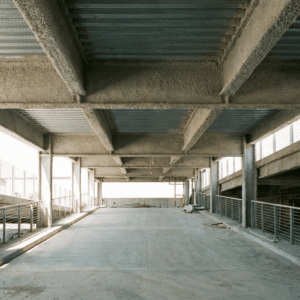
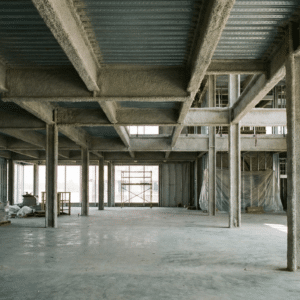
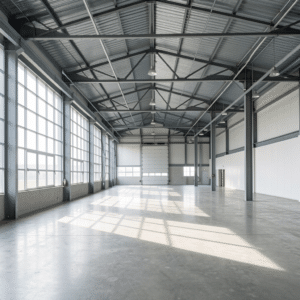
Standard commercial fireproofing practices fail in high-bay warehouse environments. These facilities routinely operate with 30 to 40 foot clear heights and long-span steel framing. Access to roof beams, joists, and brace frames at 40 to 50 feet requires scissor lifts, boom lifts, or scaffold towers with proper fall protection.
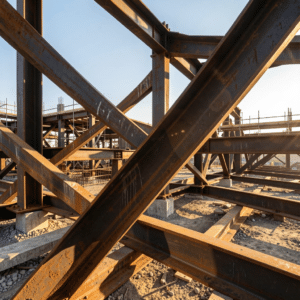
Long open bays amplify environmental variables. Wind blows spray patterns off target. Temperature swings push application outside manufacturer specifications. The exposure that makes warehouses economical makes warehouse fireproofing installation exponentially more complex. Steel loses structural capacity rapidly once temperatures reach 500 to 600 degrees Celsius (932 to 1,112 degrees Fahrenheit) during fire exposure. Applied fireproofing maintains steel temperatures below critical failure points for required fire-resistance rating durations.
Selecting SFRM Density for Warehouse Conditions
Spray-applied fire-resistive materials dominate warehouse fireproofing installation due to cost efficiency. Density selection determines whether warehouse fireproofing installation survives operations or requires constant repair.
Low-density SFRM at 15 to 21 pounds per cubic foot works in concealed locations like above suspended ceilings or within enclosed columns. Exposed conditions demand different specifications. Medium-density SFRM at 22 to 39 pounds per cubic foot handles loading docks, equipment mezzanines, and maintenance access areas where incidental contact and air movement occur.
High-density SFRM at 40-plus pounds per cubic foot serves impact-prone locations including dock walls, forklift aisles, and maintenance zones with constant foot traffic. Proper warehouse fireproofing installation with appropriate materials for exposure conditions eliminates recurring repair budgets.
When Intumescent Coatings Enhance Warehouse Fireproofing Installation
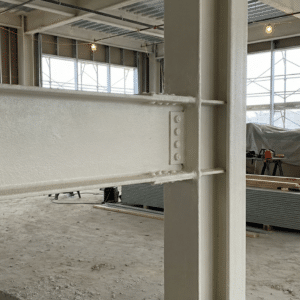
Intumescent coatings serve specific needs where SFRM aesthetics or environmental limitations create problems. These reactive coatings expand during fire exposure, forming insulating char layers protecting steel for 30 to 120 minutes.
Warehouse applications concentrate in corporate visitor areas, main entries, and mezzanines visible from office spaces where smooth, paintable finishes matter. Harsh environments favor epoxy-based systems for cold storage, chemical distribution, and washdown zones requiring moisture and chemical resistance.
Cost limits widespread use as intumescent materials run substantially higher per square foot than SFRM. Strategic use in visible or abused zones combined with SFRM for concealed areas balances aesthetics and budget while meeting UL fire-resistance assembly requirements.
Installation Sequencing That Prevents Rework
Poor sequencing causes more warehouse fireproofing installation failures than any other factor. Optimal warehouse fireproofing installation sequence starts with completed steel erection for designated zones, followed by concrete placement on metal decks before fireproofing those surfaces. Applying SFRM to steel roof deck before concrete placement guarantees failure through vibration-induced delamination.
Temporary weather enclosures establish controlled work zones where temperature, humidity, and wind stay within specifications. Fireproofing proceeds systematically through columns, beams, girders, joists, and deck undersides before releasing areas to following trades.
The critical mistake involves letting mechanical, electrical, and plumbing trades start before fireproofing completion. Installing conduit and equipment around steel blocks spray access, forcing hand-patching that never achieves proper bond strength or thickness. Including fireproofing contractors in schedule planning identifies conflicts before mobilization and prevents expensive rework.
Managing Access Challenges in Warehouse Fireproofing Installation
High-bay warehouse fireproofing installation requires working heights of 30 to 50 feet using scissor lifts, boom lifts, or scaffold towers with fall protection. Long bays with incomplete building envelopes expose work areas to wind that blows SFRM off spray patterns, temperature swings outside manufacturer-specified minimums, typically 40 degrees Fahrenheit or higher, and high humidity that ruins uncured material.
Temporary interior weather walls or exterior fabric enclosure systems create protected work zones within larger shells. SFRM curing requires four air changes per hour to remove moisture and promote strength. Zone-based application in smaller, controllable areas produces consistent results and prevents environmental control failures.
Passing Thickness and Bond Strength Inspections
Building codes mandate special inspections for warehouse fireproofing installation on structural steel. Bond strength testing follows fireproofing adhesion testing standards to verify adhesion between materials and steel substrates. Buildings under 75 feet tall require minimum 150 psf cohesive and adhesive bond strength. Inspectors pull cores or conduct direct tension tests at specified frequencies.
Thickness measurements verify applied material matches UL assembly requirements and structural fire ratings. Inspectors take multiple depth readings per member using calibrated gauges. Density testing per fireproofing material density standards confirms material meets specified pounds per cubic foot ratings through field sampling.
Ambient condition documentation during application provides critical inspection records. Temperature, humidity, and wind measurements during each shift demonstrate compliance with manufacturer requirements. Surface preparation records prove steel received proper cleaning before material application. Failed inspections trigger expensive remediation requiring removal and reapplication.
Protecting Fireproofing from Warehouse Operations
Normal warehouse operations destroy protective materials through physical contact and environmental exposure. Forklift traffic creates primary damage as columns along aisles absorb repeated impacts. Low-density SFRM chips and falls away within months. Medium or high-density materials withstand abuse better but still require periodic inspection.
Steel bollards, rack guards, and concrete-filled pipe barriers absorb contact energy before reaching fireproofed surfaces. Loading dock areas face continuous environmental assault from open doors, weather, and vehicle exhaust. Specifying materials rated for semi-exterior exposure prevents premature failure. Building management must establish protocols requiring restoration after maintenance work or tenant improvements that penetrate fireproofing.
Key Takeaways for Warehouse Fireproofing Installation
- High-bay environments require specialized access equipment, environmental controls, and coordination that standard commercial practices cannot address
- SFRM density selection impacts durability: low-density (15-21 pcf) for concealed areas, medium-density (22-39 pcf) for semi-exposed zones, high-density (40+ pcf) for impact locations
- Proper sequencing prevents rework: fireproof after concrete placement on composite decks, before MEP trades block steel access
- Buildings under 75 feet tall require minimum 150 psf bond strength per ASTM E736, with thickness and density testing documented through special inspections
- Forklift traffic, loading dock exposure, and maintenance operations destroy improperly specified materials within months of operation
- Early contractor involvement in schedule planning identifies conflicts before mobilization and prevents months of closeout rework
- Zone-based application in controlled microclimates produces consistent results when building envelope remains incomplete
If your warehouse project demands proper fireproofing installation from contractors who understand high-bay coordination and sequencing challenges, our team serves distribution centers throughout Texas, Kansas, and Oklahoma. Contact Bahl Fireproofing to discuss your project before scheduling conflicts create budget problems.
This article provides general educational information about fireproofing and insulation systems and does not constitute professional engineering advice or product specification. Code requirements vary by jurisdiction and may be based on different editions of applicable standards. System selection must be based on project-specific fire ratings, thermal requirements, acoustic performance needs, environmental conditions, substrate requirements, and budget constraints. Always consult with a licensed professional and verify UL or FM assembly listings before finalizing specifications.