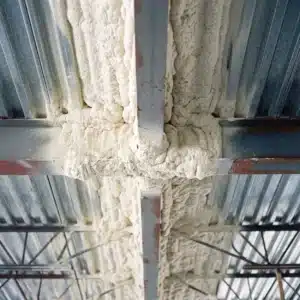
Intumescent fireproofing cold storage steel structures requires specialized coating formulations tolerating extreme temperature cycling from ambient conditions during construction to operational temperatures ranging from negative 30 to negative 90 degrees Fahrenheit in freezer facilities. Not all intumescent coatings rated for standard building applications perform adequately under freeze-thaw cycling and sustained subfreezing exposure characteristic of refrigerated warehouse environments. Epoxy-based intumescent systems deliver superior performance in cold storage applications providing enhanced moisture resistance, temperature cycling tolerance, and durability in harsh environments compared to water-based formulations prone to freeze-thaw degradation. These advanced coatings protect structural steel from reaching critical temperature during fire events while maintaining integrity through daily temperature fluctuations and humidity variations inherent to cold storage operations.
TLDR: Intumescent fireproofing for cold storage protects structural steel from fire damage but requires epoxy-based formulations tolerating extreme cold rather than water-based systems prone to freeze-thaw failure. Coatings must achieve ASTM E119 fire-resistance ratings ranging from one to four hours while withstanding operational temperatures between negative 30 and negative 90 degrees Fahrenheit. Application requires substrate temperatures between 50 and 95 degrees Fahrenheit preventing installation during freezer operations and necessitating construction phase application or planned shutdown periods with temporary heating. Intumescent coatings provide fire protection for load-bearing steel and do not replace thermal insulation systems required for refrigeration efficiency. UL design listings specify exact coating thickness requirements for each steel member size and fire rating with licensed fire protection engineers determining appropriate assemblies. Service life ranges from 15 to 25 years in climate-controlled environments with annual inspections required to identify cracking, delamination, or physical damage. Epoxy-based systems recommended for cold storage applications deliver superior humidity resistance, salt spray tolerance, and temperature cycling durability compared to water-based alternatives.
Epoxy-Based Systems for Cold Environments
Water-based intumescent coatings dominate standard building applications offering low volatile organic compound emissions, environmental compliance, and cost-effective protection for interior climate-controlled structures. These formulations perform adequately in office buildings, hotels, and commercial facilities maintaining consistent temperatures between 60 and 80 degrees Fahrenheit year-round. Cold storage facilities present substantially different environmental challenges including sustained subfreezing temperatures, freeze-thaw cycling during seasonal transitions, elevated humidity from refrigeration equipment, and potential exposure to salt spray in food processing environments. Water-based intumescent systems demonstrate poor freeze-thaw resistance with coating failure occurring through cracking, delamination, and loss of adhesion after repeated temperature cycling.
Manufacturer technical data specifies minimum service temperature limitations for water-based intumescent products. Standard formulations rated for minimum service temperatures of 41 degrees Fahrenheit or 50 degrees Fahrenheit prove inadequate for freezer applications operating at negative 20 degrees Fahrenheit or colder. Freeze-thaw cycling causes water-based binders to expand and contract repeatedly stressing coating integrity. Ice crystal formation within coating microstructure creates internal pressure compromising adhesion to steel substrates. Temperature cycling through freezing point multiple times per day during defrost cycles accelerates degradation requiring premature recoating or complete coating removal and replacement.
Solvent-based intumescent coatings provide improved temperature tolerance and humidity resistance compared to water-based alternatives. These formulations utilize organic solvents as carriers enabling better penetration and adhesion to steel surfaces. Solvent-based systems demonstrate superior weather resistance, faster drying times, and tolerance to temperature variations during application and service. However, higher volatile organic compound emissions, strong odors during application, and flammability concerns until fully cured limit solvent-based coating use in occupied facilities. Cold storage applications potentially benefit from solvent-based systems if specific products rated for subfreezing service temperatures and licensed for facility occupancy classification.
Epoxy-based intumescent coatings deliver optimal performance for cold storage applications combining superior adhesion, chemical resistance, moisture tolerance, and temperature cycling durability. Epoxy formulations create dense, impermeable barrier coatings resisting humidity, salt spray, and corrosive atmospheres common in refrigerated food processing and storage facilities. These advanced systems maintain coating integrity through repeated freeze-thaw cycles demonstrating stable performance from negative 60 degrees Fahrenheit to 175 degrees Fahrenheit. Epoxy-based intumescent products approved for corrosion category C1 through C5 environments per ISO 12944 classification provide long-term protection in aggressive cold storage conditions.
Specialized intumescent formulations developed specifically for extreme temperature cycling incorporate modified epoxy resins, flexible intumescent fillers, and advanced additives preventing coating failure under thermal stress. Patent documentation describes low-temperature intumescent compositions maintaining flexibility and adhesion at temperatures as low as negative 76 degrees Fahrenheit. Testing protocols verify coating performance through 25 cycles combining freeze-thaw exposure, ultraviolet radiation, salt spray, and humidity variations representative of real-world cold storage service conditions. Impact testing at negative 4 degrees Fahrenheit demonstrates coating resistance to mechanical damage from forklift traffic, pallet strikes, and maintenance activities common in freezer warehouses.
Epoxy-based systems require precise mixing ratios, controlled application techniques, and experienced applicators ensuring proper coating performance. Two-component epoxy intumescent products demand accurate proportioning between resin and hardener components with mixing procedures followed precisely per manufacturer specifications. Improper mixing ratios compromise coating fire performance, adhesion characteristics, and durability. Licensed contractors certified in epoxy intumescent application provide quality assurance through proper surface preparation, mixing verification, thickness measurement, and application documentation required for fire protection system approval.
Cold storage operators evaluating intumescent coating options for new construction or existing facility upgrades should specify epoxy-based systems explicitly in project specifications. Performance requirements must include freeze-thaw cycling resistance, minimum service temperature ratings appropriate for facility operating conditions, and humidity tolerance meeting refrigerated warehouse environmental exposure. Licensed fire protection engineers review coating product data, testing certifications, and UL design listings verifying compatibility with project fire protection requirements and cold storage service conditions.
Protecting Steel in Freezer Rooms
Structural steel supporting freezer room construction requires fire protection preventing collapse during fire events threatening building occupants, stored products, and firefighting personnel. Steel retains roughly 60 percent of its yield strength at about 1,022 degrees Fahrenheit (550 degrees Celsius), falling to roughly 50 percent near 1,100 degrees Fahrenheit per AISC with total structural failure occurring between 1100 and 1300 degrees Fahrenheit depending on steel grade and loading conditions. Unprotected steel beams and columns in building fires reach critical temperature within 10 to 15 minutes of fire exposure necessitating passive fire protection systems maintaining structural integrity during evacuation and firefighting operations.
Critical temperature represents the temperature at which loaded structural steel can no longer support its design load. International Building Code and ASTM E119 fire testing standards historically specified 1000 degrees Fahrenheit as universal critical temperature for steel protection calculations. Recent updates acknowledge variable critical temperature ranging from 900 to 1000 degrees Fahrenheit typical, with higher critical temperatures up to 1200 degrees Fahrenheit or more possible through engineering analysis demonstrating available structural capacity, loading ratios, and steel member design. Conservative fire protection design utilizes 1000 degrees Fahrenheit critical temperature ensuring adequate safety margin while engineered approaches may justify higher critical temperatures through structural analysis demonstrating available capacity under fire conditions.
ASTM E119 fire testing standards establish fire-resistance rating procedures measuring time structural assemblies withstand standard fire exposure maintaining load-bearing capacity. Testing exposes full-scale structural assemblies to controlled furnace temperatures following prescribed time-temperature curve reaching 1000 degrees Fahrenheit within five minutes, 1300 degrees Fahrenheit at 10 minutes, 1700 degrees Fahrenheit at one hour, and 2000 degrees Fahrenheit at four hours. Intumescent coatings protecting steel members must maintain steel temperatures below critical temperature throughout rating period demonstrating one-hour, two-hour, three-hour, or four-hour fire-resistance ratings depending on building code requirements.
Intumescent coatings function through endothermic expansion when exposed to fire temperatures above 250 to 400 degrees Fahrenheit. Heat triggers chemical reactions within coating causing material to expand 20 to 50 times original thickness forming insulating char layer protecting steel substrate. Char formation consumes thermal energy slowing heat transfer to protected steel. Expanded char provides thermal barrier preventing steel from reaching critical temperature during fire exposure. Coating thickness, steel member size, fire exposure intensity, and desired fire-resistance rating determine required intumescent film thickness ranging from 0.5 millimeters for one-hour protection on small members to 5 millimeters or more for four-hour ratings on large columns.
UL design listings specify exact intumescent coating thickness requirements for each steel member configuration and fire-resistance rating. UL design listings specify exact intumescent coating thickness requirements for each steel member configuration and fire-resistance rating. UL Fire Resistance Directory publishes hundreds of individual designs under CDWZ category documenting tested assemblies including steel section sizes, coating products, film thicknesses, and achieved fire ratings. Contractors cannot interpolate between UL designs or apply weight-to-heated-perimeter ratio methods used for spray-applied fire-resistive materials. Each intumescent application must match published UL design exactly including steel shape, size range, coating product, primer requirements, topcoat specifications, and film thickness measurements verified through destructive testing.
Maximum certified thickness limitations prevent coating delamination under fire exposure. Excessively thick intumescent applications risk self-weight failure as expanding char cannot support excessive mass. UL testing determines maximum allowable dry film thickness for each product and steel configuration beyond which coating performance degrades. Specifiers requesting fire-resistance ratings exceeding standard intumescent capabilities may require spray-applied fire-resistive materials, concrete encasement, or hybrid protection systems combining intumescent base coats with spray-applied materials achieving required ratings.
Critical distinction exists between fire protection and thermal insulation in cold storage facilities. Intumescent fireproofing protects structural steel from reaching critical temperature during fire events preventing building collapse. These coatings do not provide thermal insulation for refrigeration efficiency or temperature control. Cold storage facilities require separate thermal insulation systems including spray foam insulation achieving R-30 to R-45 thermal resistance for energy efficiency as covered in companion technical content. Building designers must specify both fire protection systems for structural steel and thermal insulation systems for building envelope recognizing these serve distinctly different functions with separate performance requirements and installation contractors.
Durability in Moisture and Temperature Cycling
Freeze-thaw cycling presents primary durability challenge for intumescent coatings in cold storage applications. Refrigerated warehouses experience daily temperature fluctuations during defrost cycles, seasonal ambient temperature variations, and potential emergency shutdowns requiring facility warming. Coating systems must withstand repeated expansion and contraction through freezing point without cracking, delaminating, or losing adhesion to steel substrates. Standard intumescent products designed for climate-controlled environments lack testing verification and performance data for extreme temperature cycling characteristic of freezer operations.
Specialized testing protocols verify intumescent coating performance under freeze-thaw exposure representative of cold storage service conditions. Research documentation describes extreme duty intumescent systems subjected to 25 environmental cycles each spanning 168 hours combining wet exposure, dry periods, ultraviolet radiation, salt spray testing per ASTM B117, and freeze-thaw cycling. Freeze-thaw test segments expose coated specimens to negative 40 degrees Fahrenheit for 24 hours followed by warming to ambient temperature documenting coating condition through visual inspection, adhesion testing, and impact resistance measurement. Coatings passing comprehensive environmental cycling demonstrate stable performance through years of cold storage operation.
Impact testing at subfreezing temperatures verifies coating resistance to mechanical damage common in freezer warehouses. Forklift traffic, pallet handling equipment, and maintenance activities create impact loading on protected steel columns and beams. Testing at negative 4 degrees Fahrenheit measures coating response to impact energies ranging from 20 to 105 joules documenting film integrity, adhesion retention, and substrate protection. High-performance epoxy intumescent systems withstand substantial impact loading without coating detachment maintaining fire protection integrity despite surface damage. Surface cracks up to 3 millimeters width demonstrated self-healing during char expansion process with fire testing confirming maintained protection despite pre-existing surface defects.
Humidity resistance proves critical for cold storage intumescent applications. Refrigeration equipment generates high humidity environments with moisture condensing on cold surfaces. Intumescent coatings must resist moisture penetration preventing adhesion loss, corrosion initiation, and premature coating failure. Epoxy-based systems provide superior moisture barrier properties compared to water-based alternatives maintaining coating integrity in 95 percent relative humidity conditions. Salt spray resistance per ASTM B117 testing verifies coating performance in food processing environments where cleaning chemicals and de-icing salt exposure occur regularly.
Service life expectations for intumescent coatings in cold storage applications range from 15 to 25 years with proper installation, environmental control, and maintenance programs. Interior climate-controlled environments maximize coating longevity with documented installations exceeding 30 years maintaining fire protection integrity. Cold storage facilities present harsher conditions accelerating coating aging through freeze-thaw cycling, humidity exposure, and mechanical wear. Conservative service life estimates of 15 to 20 years prove appropriate for freezer applications with inspection programs identifying coating degradation before fire protection compromise occurs.
Annual inspection programs monitor intumescent coating condition documenting surface appearance, adhesion integrity, physical damage, and environmental exposure effects. Inspections identify cracking patterns, delamination areas, impact damage, and corrosion at coating defects requiring remediation. Minor damage affecting less than 10 percent of coated area typically repairs through surface preparation and recoating damaged sections. Extensive degradation affecting greater than 25 percent of installed coating area may necessitate complete coating removal and reapplication ensuring continued fire protection performance. Licensed coating inspectors certified in intumescent systems provide objective condition assessment and repair recommendations maintaining fire protection system integrity throughout facility service life.
Maintenance requirements include protecting coatings from mechanical damage, controlling humidity exposure, preventing chemical contamination, and documenting system condition. Facility operators should install protective barriers on frequently struck columns, maintain refrigeration equipment preventing excessive moisture generation, and train personnel avoiding coating damage during maintenance activities. Documentation programs photograph coating condition during installation providing baseline for future condition assessment. Systematic inspection records track coating performance over time identifying degradation trends and optimizing maintenance intervals.
Application Considerations for Cold Storage Facilities
Substrate temperature requirements create significant practical challenges for intumescent coating application in cold storage facilities. Manufacturer specifications require steel surface temperatures between 50 and 95 degrees Fahrenheit during coating application ensuring proper film formation, adhesion development, and curing reactions. Freezer facilities operating at negative 30 to negative 90 degrees Fahrenheit cannot receive intumescent coating application during normal operations necessitating careful project planning.
New construction projects must coordinate intumescent fireproofing application before refrigeration system startup. Steel erection, surface preparation, and coating application occur while building remains at ambient temperature. Project schedules must allocate sufficient time for coating application, required drying periods between coats, final inspection, and touch-up work before refrigeration equipment activation.
Existing facility retrofits or repairs require planned shutdowns with temporary heating maintaining substrate temperatures within application specifications. Facility operators coordinate production scheduling, inventory management, and equipment shutdown procedures enabling coating work during controlled temperature conditions. Temperature monitoring throughout application period verifies compliance with manufacturer specifications. Shutdown duration depends on coating system complexity, area requiring treatment, and drying time requirements ranging from several days for simple repairs to multiple weeks for comprehensive recoating programs.
Surface preparation proves critical for intumescent coating adhesion and long-term performance. Steel substrates require cleaning to remove mill scale, rust, oil, grease, dirt, and previous coating residues before intumescent application. Abrasive blasting to SSPC-SP6 commercial blast or SSPC-SP10 near-white blast cleaning provides optimal surface profile for coating adhesion. Surface preparation standards specify cleanliness requirements, profile depth, and inspection procedures verifying acceptable substrate condition.
Primer application precedes intumescent coating installation on most steel substrates. Primers enhance adhesion, provide corrosion protection, and ensure uniform coating appearance. Manufacturer specifications identify compatible primer products, application rates, and drying times required before intumescent topcoat application. Epoxy primers provide superior corrosion protection and adhesion in cold storage applications.
Film thickness control ensures achieving required fire-resistance ratings while avoiding excessive coating buildup risking delamination. Wet film thickness gauges measure coating thickness during application enabling real-time adjustment maintaining target coverage rates. Dry film thickness testing using magnetic gauges documents final coating thickness after curing verifying compliance with UL design specifications. Contractors establish thickness measurement grids documenting readings at specified intervals across coated surfaces.
Multiple coat application builds required intumescent film thickness through successive thin layers rather than single heavy application. Typical systems require two to four coats depending on total dry film thickness requirements. Manufacturers specify minimum and maximum recoat windows controlling time intervals between successive coats. Exceeding maximum recoat window necessitates surface preparation before additional coating application.
Topcoat application provides aesthetic finish, ultraviolet protection, and enhanced durability for intumescent systems. Manufacturers certify compatible topcoat products maintaining fire performance while improving coating appearance and cleanability. Topcoats enable color customization beyond standard intumescent coating colors. Enhanced cleanability proves valuable in food processing environments requiring regular sanitization.
Storage and handling requirements vary significantly between coating types. Water-based intumescent products must not freeze during storage or transportation with minimum storage temperatures typically specified at 35 to 40 degrees Fahrenheit. Frozen water-based coatings suffer irreversible damage requiring disposal and replacement. Facilities storing water-based materials in cold climates require heated storage areas maintaining temperatures above freezing.
Key Takeaways
Intumescent fireproofing protects cold storage structural steel from fire damage requiring epoxy-based formulations tolerating freeze-thaw cycling and sustained subfreezing exposure with water-based systems demonstrating poor performance in extreme cold environments.
Coatings must achieve ASTM E119 fire-resistance ratings protecting steel from reaching its critical temperature, generally about 1,000 to 1,100 degrees Fahrenheit depending on member type and load, during fire exposure with rating periods ranging from one to four hours per building code requirements.
UL design listings specify exact coating thickness requirements for each steel member size and fire rating with contractors unable to interpolate between designs or apply spray-applied fire-resistive material calculation methods to intumescent applications.
Application requires substrate temperatures between 50 and 95 degrees Fahrenheit preventing installation during freezer operations and necessitating construction phase application or planned shutdowns with temporary heating for existing facility work.
Intumescent coatings provide fire protection for load-bearing steel and do not replace thermal insulation systems achieving R-30 to R-45 thermal resistance required for cold storage refrigeration efficiency covered in spray foam insulation technical guidance.
Service life ranges from 15 to 25 years in climate-controlled environments with annual inspections required to identify cracking, delamination, or physical damage necessitating repair before fire protection compromise occurs.
Freeze-thaw testing documents specialized intumescent systems maintaining integrity through 25 environmental cycles including negative 40 degrees Fahrenheit exposure with impact testing at negative 4 degrees Fahrenheit verifying coating resistance to mechanical damage common in freezer warehouses per manufacturer testing protocols.
Cold storage intumescent fireproofing across Texas, Oklahoma, Kansas, Nebraska, Minnesota, and Wisconsin requires coordination between structural steel contractors, intumescent coating applicators, thermal insulation installers, and refrigeration system designers ensuring comprehensive facility protection meeting fire codes and energy efficiency requirements.
If your cold storage facility requires intumescent fireproofing protecting structural steel while maintaining integrity through extreme temperature cycling and freeze-thaw exposure characteristic of freezer operations, our team coordinates specialized epoxy-based coating systems meeting ASTM E119 fire-resistance ratings and UL design specifications. Contact Bahl Fireproofing for cold storage intumescent coating solutions providing fire protection engineered for refrigerated warehouse environments.
Disclaimer: This article provides general educational information and does not constitute professional fire protection engineering advice or building code compliance certification. Intumescent fireproofing provides fire protection for structural steel and does not replace thermal insulation systems required for refrigeration efficiency or building envelope energy performance. Not all intumescent coating products rated for extreme cold exposure with water-based systems demonstrating poor freeze-thaw resistance inappropriate for cold storage applications. Epoxy-based intumescent systems recommended for cold storage facilities providing superior humidity resistance, temperature cycling tolerance, and harsh environment durability. Licensed fire protection engineer evaluation determines appropriate coating systems, UL design listings, fire-resistance ratings, and application specifications for cold storage structural steel protection. Coating application requires substrate temperatures between 50 and 95 degrees Fahrenheit preventing installation during freezer operations and necessitating construction phase application or planned facility shutdowns with temporary heating. UL design listings specify exact coating thickness requirements for each steel member size and fire rating with contractors unable to interpolate between published designs. Critical temperature for structural steel is generally about 1,000 to 1,100 degrees Fahrenheit depending on member type, load ratio, and structural analysis. AISC notes that yield strength is essentially unchanged until about 600 degrees Fahrenheit and that steel retains roughly 50 percent of its strength at 1,100 degrees Fahrenheit with ASTM E119 fire-resistance testing establishing fire protection system performance. Service life varies from 15 to 25 years depending on environmental exposure, coating type, installation quality, and maintenance programs with annual inspections required monitoring coating condition. Performance depends on coating formulation, surface preparation quality, application technique, environmental exposure, and maintenance programs. Cost varies by coating type, project size, steel configuration complexity, surface preparation requirements, and application timing. Water-based intumescent products must not freeze during storage or transportation requiring heated storage facilities. Always consult licensed fire protection engineer, structural engineer, coating manufacturer, and authority having jurisdiction to verify building code requirements, fire-resistance rating specifications, UL design listings, coating system selection, and complete fire protection system design for cold storage applications.