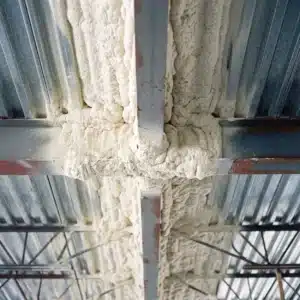
Cold storage fireproofing protects structural steel in refrigerated warehouses and freezer facilities operating at temperatures ranging from negative 30 degrees Fahrenheit to 70 degrees Fahrenheit where extreme cold, moisture accumulation, and freeze-thaw cycling create challenging environmental conditions. Traditional spray-applied fire-resistive materials and intumescent coatings developed for ambient temperature applications face performance limitations in sub-freezing environments requiring specialized products and application procedures maintaining fire-resistance ratings despite temperature extremes. Commodity classification systems determine fire protection requirements based on product type, packaging materials, and storage configuration with frozen foods designated Class I and processed dairy products including butter and cheese classified Class III driving sprinkler system design and structural fireproofing specifications. Ultra-low temperature pharmaceutical storage facilities operating at negative 90 degrees Fahrenheit or lower present additional challenges requiring comprehensive evaluation of fireproofing material performance, insulated metal panel fire ratings, and fire suppression system compatibility.
TLDR: Cold storage facilities require structural steel fireproofing maintaining performance in extreme temperatures from negative 30 to negative 90 degrees Fahrenheit while resisting moisture accumulation and freeze-thaw cycling that causes traditional materials to crack and delaminate. Commodity classification determines fire protection requirements with frozen foods Class I and processed dairy Class III establishing sprinkler demand and fire-resistance rating specifications. Spray-applied fire-resistive materials require minimum 40 degrees Fahrenheit application temperature maintained 24 hours before, during, and after installation with specialty low-temperature products available for freezer environments. Insulated metal panels with polyisocyanurate cores achieve FM Approval Class 1 fire performance while rock wool cores provide 60 to 240 minute fire-resistance ratings supporting comprehensive building envelope protection. Wet pipe sprinkler systems operate only above 40 degrees Fahrenheit requiring dry pipe or pre-action systems in freezer areas with ammonia refrigeration creating flammable atmosphere between 15 to 28 percent by volume requiring specialized suppression approaches.
Protecting Steel in Freezer Environments
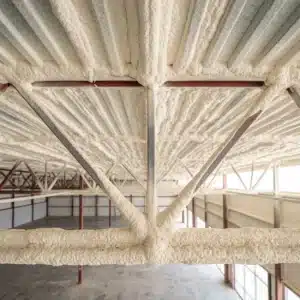
Structural steel supporting cold storage operations experiences thermal contraction at sub-freezing temperatures while maintaining design load capacity for heavy racking systems and refrigeration equipment. Fire protection materials must maintain adhesion and structural integrity despite temperature cycling between ambient installation conditions and operational freezer temperatures. Spray-applied fire-resistive materials containing Portland cement binders develop internal stresses during freeze-thaw cycles causing cracking, delamination, and disbonding from steel substrates compromising fire-resistance performance.
Moisture infiltration into porous spray-applied materials creates expansion forces during freezing exceeding material tensile strength. Water vapor migrating from warmer warehouse areas condenses within spray-applied fireproofing. When temperatures drop below freezing, ice crystal formation generates expansion forces fragmenting material microstructure. Temperature differentials between warehouse ambient areas and freezer zones drive continuous moisture migration toward cold surfaces.
Specialty spray-applied products formulated for low-temperature applications incorporate modified binder systems and reduced water content improving freeze-thaw resistance. Application procedures specify minimum substrate temperature of 40 degrees Fahrenheit maintained 24 hours before application, during installation, and 24 hours after completion ensuring proper cure. Cold weather additives enable installation during cooler periods but cannot eliminate fundamental temperature requirements.
Intumescent coatings face different challenges in freezing environments. Water-based intumescent formulations experience performance degradation when subjected to freeze-thaw cycling as ice crystal formation disrupts coating film integrity. Solvent-based and epoxy intumescent products demonstrate improved cold temperature performance. All intumescent coatings require validation testing confirming fire-resistance rating maintenance after exposure to operational temperature ranges.
Fire Ratings for Refrigerated Warehouses
Fire-resistance ratings for cold storage structural steel depend on commodity classification, building height, fire area, and sprinkler system capabilities. Commodity classification evaluates three factors including stored product characteristics, packaging materials, and pallet construction determining fire severity and growth rate. Class I commodities including frozen foods in metal containers represent lower fire hazard. Class III commodities including processed dairy products such as butter and cheese plus food coloring in plastic containers increase fire protection requirements.
Plastic packaging materials drive commodity classification with containers, shrink wrap, and protective barriers creating fire load contributing to rapid fire growth rates. A product in metal containers without plastic packaging may qualify as Class I while identical product in plastic containers advances to Class III requiring enhanced sprinkler density and potentially increased fire-resistance ratings. Warehouse operators must maintain accurate commodity classification documentation as changes in packaging materials alter fire protection requirements.
International Building Code establishes minimum fire-resistance ratings based on building type classification. Type II-B construction permits unprotected structural steel with automatic sprinkler systems throughout while Type II-A requires one-hour fire-resistance rating for structural frame. Cold storage facilities frequently employ Type II construction balancing fire protection with construction economy. Fire walls separating refrigeration machinery rooms from warehouse storage require two-hour to four-hour fire-resistance ratings depending on occupancy classifications and separation distances.
Sprinkler system design follows NFPA 13 standards establishing minimum density based on commodity classification, storage height, and aisle configuration. In-rack sprinklers supplement ceiling-level protection in high-piled storage exceeding 25 feet height. Five-foot ceiling height increase approximately doubles required water supply volume illustrating sensitivity of sprinkler design to storage configuration per NFPA 13 sprinkler installation standards.
Insulation Compatibility with Fire Protection
Insulated metal panels forming building envelope in cold storage facilities require fire performance evaluation addressing both panel core material and complete assembly. Panel cores utilize various insulation materials with different fire characteristics. Combustible cores including expanded polystyrene, extruded polystyrene, and polyurethane foam have been banned in developed countries following catastrophic fires demonstrating rapid flame spread.
Polyisocyanurate cores achieve FM Approval Class 1 fire performance when properly formulated and tested. Four-inch thick polyisocyanurate panels provide R-31 thermal resistance supporting cold storage temperature maintenance. FM Approval applies to complete panel assembly including facing materials, joint details, and fastening systems requiring verification through full-scale fire testing. Substituting components or modifying installation details invalidates FM Approval.
Rock wool cores deliver superior fire performance achieving 60 to 240 minute fire-resistance ratings depending on panel thickness and assembly configuration. Non-combustible mineral wool maintains structural integrity during fire exposure preventing flame spread. Rock wool density typically ranges from 4 to 8 pounds per cubic foot providing adequate compressive strength for wall and roof applications.
Cold storage facilities using insulated metal panels must coordinate panel fire ratings with structural steel fireproofing. Exterior walls connecting to interior fire-rated partitions require compatible fire-resistance ratings preventing fire bypass. Panel joints at floor, roof, and partition connections demand proper firestopping materials maintaining fire-resistance rating continuity. Licensed fire protection engineer evaluates complete building envelope system per FM Approved insulated panel standards.
NFPA 285 for Insulated Panel Exterior Walls
Insulated metal panels with foam plastic cores are foam plastic insulation under IBC Chapter 26, and that puts the exterior wall in front of one more test. IBC (2021) Section 2603.5.5 requires the exterior wall assembly to be tested in accordance with and comply with the acceptance criteria of NFPA 285. IBC (2021) Section 2603.5 applies to exterior walls containing foam plastic insulation in buildings of Type I, II, III or IV construction of any height, and specifically to multi-story cold storage buildings required to be of noncombustible construction. A two-level refrigerated distribution building is squarely in scope.
Code note: unless otherwise stated, code references on this page are to the 2021 International Building Code. Code adoption is state and local. Across the states we serve, adopted IBC editions currently range from the 2012 edition to the 2024 edition, some states have no statewide commercial building code, and several enforce NFPA 1 or NFPA 101 rather than the International Fire Code. Minnesota and Wisconsin publish state-amended code books whose numbering and requirements differ from the model code. This is general technical information, not a code determination for your project. Confirm the adopted edition and any local amendments with your authority having jurisdiction.
An FM Approval is not the same finding. FM 4880 and the other large-scale tests appear in IBC (2021) Section 2603.9 as a special approval path, and that path reaches Sections 2603.4 and 2603.6. It does not substitute for the exterior wall propagation requirement in 2603.5.5. The insurer and the building official are answering different questions, and a panel approved for one does not automatically satisfy the other.
NFPA 285 is the Standard Fire Test Method for Evaluation of Fire Propagation Characteristics of Exterior Wall Assemblies Containing Combustible Components. It qualifies the panel together with its joints, fasteners, supporting framing and any exterior finish as one assembly. This is an assembly test, not a product test, so no panel and no foam core carries NFPA 285 compliance on its own. Change the joint detail or the attachment and the listing may not follow.
Two exceptions exist:
- One-story buildings complying with IBC (2021) Section 2603.4.1.4.
- Foam plastic covered on each face by not less than 1 inch of masonry or concrete, with either no airspace or with a flame spread index of 25 or less and an airspace not more than 1 inch.
Exterior walls of Type V construction are outside 2603.5. Confirm the adopted edition with the authority having jurisdiction.
Moisture Resistance Requirements
Moisture management represents critical concern where temperature differentials between refrigerated spaces and ambient conditions create continuous condensation potential. Vapor barriers on warm side of insulated assemblies prevent moisture migration toward cold surfaces. When vapor barriers fail or installation details allow moisture infiltration, condensation accumulates within building envelope components including structural fireproofing materials. Frozen moisture within porous fireproofing creates expansion damage during temperature cycling.
Spray-applied fire-resistive materials containing cementitious binders naturally absorb moisture from air. Low-density formulations ranging from 15 to 21 pounds per cubic foot exhibit higher porosity increasing moisture absorption. Medium-density products from 22 to 39 pounds per cubic foot provide improved moisture resistance. High-density spray-applied materials exceeding 39 pounds per cubic foot offer best moisture resistance but require increased material quantity and application cost.
Surface sealers applied over spray-applied fireproofing reduce moisture infiltration. Acrylic-based sealers provide water resistance while maintaining vapor permeability allowing moisture within fireproofing to escape during drying periods. Proper surface preparation before sealer application ensures adhesion and complete coverage.
Intumescent coatings inherently provide better moisture resistance compared to porous spray-applied materials. Solvent-based and epoxy intumescent formulations create impermeable film barriers preventing moisture infiltration. Water-based intumescent products require topcoat protection in moisture-exposure environments. All intumescent coatings applied in cold storage facilities need validation testing confirming maintained adhesion and expansion performance after moisture exposure and freeze-thaw cycling.
Fire Suppression System Coordination
Fire suppression systems in cold storage facilities require specialized design accommodating sub-freezing temperatures. Wet pipe sprinkler systems containing water-filled piping operate only in spaces maintained above 40 degrees Fahrenheit. Below this threshold, water freezes causing pipe damage and system failure. Cold storage areas operating below 40 degrees Fahrenheit require dry pipe or pre-action sprinkler systems containing compressed air or nitrogen with water held behind control valve until fire detection activates system.
Dry pipe systems introduce delivery delay as compressed gas must vent from piping before water reaches sprinkler heads. This delay ranges from 30 seconds to several minutes depending on pipe length and system configuration. Pre-action systems provide faster water delivery through earlier fire detection while maintaining freeze protection.
Walk-in freezers require automatic sprinkler protection when exceeding 400 square feet floor area and seven feet ceiling height. Antifreeze solutions previously used in small sprinkler systems have been prohibited in new residential applications since 2013 following flammability testing. Commercial cold storage facilities must use dry pipe or pre-action systems.
Ammonia refrigeration systems common in large cold storage facilities create additional fire and life safety considerations. Ammonia becomes flammable at concentrations between 15 to 28 percent by volume requiring careful ventilation and leak detection. National Institute for Occupational Safety and Health establishes the immediately dangerous to life or health concentration at 300 parts per million, while the OSHA permissible exposure limit is 50 ppm as an 8-hour time-weighted average under 29 CFR 1910.1000 Table Z-1. Compressed ammonia exposed to heat source can explode requiring proper fire protection for refrigeration machinery rooms. Civil penalties for ammonia safety violations range from $100,000 to $300,000. Fire suppression and detection in refrigeration machinery rooms follow IIAR 2 and the adopted mechanical code, while OSHA reaches the same rooms through process safety management at 29 CFR 1910.119.
Structural Load Considerations
Cold storage structural steel supports concentrated loads from heavy-duty pallet racking systems. Selective rack systems require structural steel designed for point loads and forklift impact forces. Drive-in and drive-through racking creates continuous load requiring distributed load capacity. Automated storage systems generate dynamic loads from high-speed equipment movement.
Refrigeration equipment including evaporator units and air handlers mounts to structural steel creating additional point loads. Fire protection material weight adds to structural dead load requiring consideration during design phase. Spray-applied fire-resistive materials weigh approximately 1.0 to 4.0 pounds per square foot depending on thickness and density. One-hour rating requires three-quarter to one and one-quarter inch thickness while two-hour rating requires one and one-half to two and one-half inches.
Thermal expansion and contraction of structural steel during temperature cycling generates stress within building frame. Steel thermal expansion coefficient approximately 6.5 millionths per degree Fahrenheit means temperature change from 70 degrees to negative 30 degrees creates contraction of approximately 0.08 inches per 100 feet of member length. Fire protection materials bonded to steel surfaces must tolerate thermal movement without cracking or delaminating.
Installation Procedures and Quality Control
Cold storage fireproofing installation requires careful planning coordinating with refrigeration system startup and warehouse operations. New construction projects enable fireproofing application before refrigeration activation allowing ambient temperature installation conditions. Renovation projects in operating facilities require temporary heating maintaining minimum 40 degrees Fahrenheit substrate temperature during spray-applied material application. Temporary enclosures isolate work areas from refrigerated sections.
Surface preparation removes all contaminants including oils, grease, loose mill scale, and previous coatings ensuring proper adhesion. Abrasive blast cleaning to SSPC-SP 10 near-white metal finish provides optimal surface. Primer application follows surface preparation creating corrosion protection and improving fireproofing bond strength.
Thickness verification during application confirms compliance with UL-listed assembly specifications. Wet film thickness measurements using depth gauges ensure adequate material application. Dry film thickness measurements using electromagnetic or ultrasonic gauges validate final installed thickness meeting fire-resistance rating requirements. Systematic measurement grid covering all protected steel surfaces documents complete coverage.
Visual inspection identifies application defects including sagging, cracking, delamination, or inadequate coverage. Quality control documentation includes substrate surface preparation certification, material batch certifications, thickness measurements, and visual inspection reports creating permanent record demonstrating code compliance. Third-party inspections provide independent verification supporting building official approval and insurance underwriter requirements.
Regulatory Compliance and Code Requirements
Cold storage facilities must comply with International Building Code, International Fire Code, NFPA standards, and local jurisdiction amendments establishing minimum fire protection requirements. Building officials review construction documents verifying structural fireproofing specifications match required fire-resistance ratings. Plan review identifies fire-rated assemblies, fire barriers, and fire walls requiring specific fireproofing systems.
NFPA 13 governs automatic sprinkler system installation establishing design criteria for cold storage applications. NFPA 25 requires inspection, testing, and maintenance of water-based fire protection systems. Cold storage facilities using ammonia refrigeration must comply with OSHA process safety management under 29 CFR 1910.119, which applies at or above the 10,000 pound ammonia threshold quantity, ANSI/ASHRAE Standard 15, Safety Standard for Refrigeration Systems, and IIAR 2 for ammonia system design and installation. Facility operators maintain compliance documentation including sprinkler system hydraulic calculations, commodity classification records, and fireproofing product approvals.
OSHA regulates worker safety in these facilities through general industry standards rather than a cold-storage-specific rule: personal protective equipment under 29 CFR 1910.132, emergency action plans under 29 CFR 1910.38, and hazard communication under 29 CFR 1910.1200. Ammonia refrigeration safety programs include employee training, leak detection systems, emergency response procedures, and periodic safety audits. Environmental Protection Agency regulates ammonia releases under Risk Management Program.
Insurance underwriters including Factory Mutual evaluate cold storage fire protection systems establishing premium rates based on fire protection quality. FM Approval of insulated metal panels, proper commodity classification, adequate sprinkler protection, and maintained structural fireproofing support favorable insurance ratings. Cold storage fireproofing across Texas, Oklahoma, Kansas, Nebraska, Minnesota, and Wisconsin requires regulatory compliance through comprehensive fire protection documentation and periodic inspection programs.
Key Takeaways
- Cold storage facilities operate at temperatures from negative 30 to negative 90 degrees Fahrenheit requiring fireproofing materials maintaining performance despite extreme cold and freeze-thaw cycling
- Spray-applied fire-resistive materials require minimum 40 degrees Fahrenheit application temperature maintained 24 hours before, during, and after installation with specialty low-temperature products available for freezer environments
- Commodity classification determines fire protection requirements with frozen foods Class I and processed dairy products Class III driving sprinkler system design and structural fire-resistance ratings
- Moisture infiltration and freeze-thaw cycling cause cracking and delamination in porous spray-applied materials requiring high-density formulations, surface sealers, or intumescent coatings with validated cold temperature performance
- Insulated metal panels require FM Approval with polyisocyanurate cores achieving Class 1 fire performance and rock wool cores providing 60 to 240 minute fire-resistance ratings
- Wet pipe sprinkler systems operate only above 40 degrees Fahrenheit requiring dry pipe or pre-action systems in freezer areas with walk-in freezers exceeding 400 square feet and seven feet ceiling height requiring automatic sprinklers
- Ammonia refrigeration creates flammable atmosphere between 15 to 28 percent by volume, with the NIOSH immediately dangerous to life and health concentration at 300 parts per million, requiring specialized fire suppression and safety programs
If your cold storage facility requires structural steel fireproofing maintaining performance in extreme temperatures while meeting commodity classification and fire suppression system requirements, our team provides installation supporting regulatory compliance and insurance underwriter standards. Contact Bahl Fireproofing for cold storage fireproofing solutions protecting refrigerated warehouse operations and frozen food storage infrastructure.
Disclaimer: This article provides general educational information about cold storage fireproofing and does not constitute professional fire protection engineering advice, structural design certification, or regulatory compliance consultation. Fire protection requirements vary by jurisdiction with local building officials establishing specific code requirements. Cold storage facilities require licensed fire protection engineer, structural engineer, mechanical engineer, building envelope consultant, and insurance underwriter evaluation determining appropriate fireproofing systems, sprinkler protection, commodity classification, and insulated metal panel specifications. Extreme temperatures affect fireproofing material performance with spray-applied fire-resistive materials requiring minimum 40 degrees Fahrenheit application temperature and specialty products for freezer environments. Moisture infiltration and freeze-thaw cycling cause cracking and delamination in porous materials requiring high-density formulations, surface sealers, or validated cold temperature products. Commodity classification based on product type, packaging materials, and pallet construction determines fire protection requirements with frozen foods Class I and processed dairy Class III establishing different sprinkler densities and fire-resistance ratings. Insulated metal panel FM Approval applies to complete assembly including core material, facings, fasteners, and installation details. Fire suppression systems require wet pipe above 40 degrees Fahrenheit and dry pipe or pre-action below 40 degrees with walk-in freezers exceeding 400 square feet and seven feet ceiling height requiring automatic sprinklers. Antifreeze solutions prohibited in new residential systems since 2013. Ammonia refrigeration creates flammable atmosphere between 15 to 28 percent by volume with the NIOSH immediately dangerous to life and health value at 300 parts per million, requiring specialized suppression approaches, OSHA process safety management under 29 CFR 1910.119 where the ammonia charge meets the threshold quantity, ANSI/ASHRAE Standard 15 for refrigeration system safety, and IIAR 2 for ammonia systems. Structural fireproofing provides passive fire protection but does not replace active fire suppression systems required by NFPA 13. Performance varies by environmental conditions including temperature, moisture exposure, freeze-thaw cycling, and thermal movement. Cost varies by fire rating, material type, application area, surface preparation requirements, and project accessibility. Material storage temperature limitations apply. Always consult licensed fire protection engineer, structural engineer, mechanical engineer, building envelope consultant, and insurance underwriter to verify code requirements, commodity classification, system specifications, and regulatory compliance.