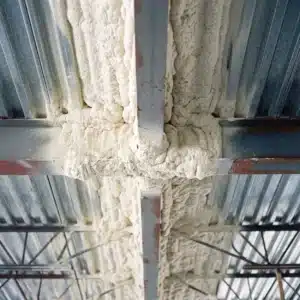
Warehouse facilities with exposed structural steel require fire protection like Intumescent Fireproofing to meet building code requirements while avoiding operational problems created by traditional fireproofing methods. Spray-applied cementitious fireproofing generates airborne particulate contamination, deteriorates over time releasing dust onto inventory and equipment, and requires extensive cleanup during application. Intumescent coatings eliminate dust generation, maintain stable surface finish without flaking, and apply with minimal disruption to warehouse operations through thin paint-like applications.
TLDR: Intumescent fireproofing delivers 30-minute to 4-hour fire-resistance ratings for structural steel through thin coatings measuring 0.3 to 10 millimeters dry film thickness. Material expands 10 to 50 times original thickness when exposed to heat forming insulating char layer protecting steel from critical temperature failure. Thin-film formulations maintain architectural appearance of exposed warehouse trusses and beams while meeting International Building Code requirements. Licensed professionals must verify UL fire-resistance directory listings match specific steel configurations before specifying structural steel fireproofing systems.
How Intumescent Coatings Protect Structural Steel
Intumescent fireproofing applies as liquid coating similar to paint adhering directly to prepared steel surfaces. Material remains inert at normal temperatures maintaining thin profile and architectural appearance. When exposed to heat approaching 500 degrees Fahrenheit during fire events, chemical reaction causes coating to expand forming thick insulating char layer. This expanded barrier delays heat transfer to structural steel preventing critical temperature failure where loaded steel members lose structural capacity, with ASTM E119 specifying 1,000 degrees Fahrenheit as the standard critical temperature for fire-resistance testing.
Expansion ratio determines protective capability with formulations expanding 10 to 50 times original dry film thickness. Two-millimeter coating expands to 40 to 100 millimeters creating substantial thermal barrier between fire and steel substrate. Char layer maintains integrity throughout fire exposure providing continuous insulation until temperatures subside. Steel remains below critical failure temperature preserving structural capacity and allowing building evacuation per fire-resistance testing standards.
Thin-Film vs Thick-Film Intumescent Systems
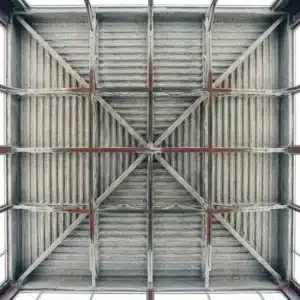
Thin-film intumescent coatings measure 0.3 to 2 millimeters dry film thickness providing fire-resistance ratings from 30 to 120 minutes. These architectural-grade formulations maintain paint-like appearance making them ideal for exposed warehouse steel where aesthetics matter. Applications include open-web steel joists, exposed beams, architectural trusses, and visible columns in distribution centers, logistics facilities, and modern industrial spaces per structural fire protection requirements. Multiple thin coats build required dry film thickness with 40 to 65 mils wet film per coat typical for water-based products requiring 3 to 6 application passes depending on total DFT requirements.
Thick-film systems measure 2 to 10 millimeters providing extended protection up to 240 minutes for demanding applications. These industrial-grade coatings create visible textured finish suitable for concealed steel or utility spaces where appearance is secondary to performance. Warehouse applications typically specify thin-film products for exposed ceiling steel and thick-film only for hidden structural members requiring extended fire ratings.
Understanding Dry Film Thickness Requirements
Fire-resistance rating depends directly on dry film thickness with thicker coatings providing longer protection periods measured in 30-minute increments. Steel member size and configuration determine required DFT through section factor calculations comparing heated surface area to steel mass. Small members with high surface-to-mass ratios require greater coating thickness than large members for equivalent fire ratings. Wide-flange beams, hollow structural sections, and open-web joists each have specific DFT requirements listed in UL fire-resistance directory based on testing.
Under-application by even 10 to 20 percent compromises fire rating potentially failing to meet code requirements during inspections or actual fire events. Over-application causes delamination, cracking, and premature coating failure from excessive weight and stress. Certified applicators measure wet and dry film thickness during application using calibrated gauges ensuring compliance with UL listings. Multiple coat applications allow thickness buildup while maintaining adhesion and coating integrity across all steel surfaces.
UL Fire-Resistance Directory Compliance
Every intumescent fireproofing system carries specific UL listing defining approved applications, steel configurations, substrate preparation, primer requirements, topcoat specifications, and minimum dry film thickness per UL intumescent coating certification requirements. Licensed professionals must verify selected product listing matches warehouse steel type, size, and fire rating requirement before specification. Substituting unlisted configurations, modifying DFT, or changing application procedures voids fire-resistance rating creating code compliance and liability issues.
Warehouse steel includes diverse member types from W-shapes to bar joists each requiring specific intumescent formulation and DFT. Steel fabrication method, primer compatibility, and environmental exposure category affect product selection. Loading dock areas with moisture exposure need products certified for interior general purpose conditions beyond standard conditioned space ratings. High-ceiling applications may require extended open time formulations allowing proper application before material begins setting.
Expansion Clearance and High-Ceiling Applications
Intumescent coatings require minimum 50 millimeters clearance around protected steel members allowing material to expand freely during fire exposure without restriction. Constrained expansion prevents char layer formation defeating protective mechanism and causing system failure. Warehouse facilities with 30 to 50 foot clear heights provide abundant clearance for coating expansion making intumescent systems well-suited for distribution centers and logistics facilities with exposed steel roof structures.
High ceilings create application challenges requiring scissor lifts, boom lifts, or scaffold systems for access to structural members. Environmental conditions at ceiling level must maintain 50 to 85 degrees Fahrenheit with relative humidity below 85 percent during application and initial curing. Surface preparation demands particular attention as dust, oil, moisture, or mill scale contamination prevents proper adhesion. Multiple coats spaced 24 to 48 hours apart extend project schedules compared to single-application fireproofing methods.
Cost Considerations and Installation Efficiency
Intumescent fireproofing material costs range from $350 to $550 per 5-gallon pail with coverage varying by required DFT and steel configuration. Installed costs span $0.75 to $5.00 per square foot of steel surface depending on member complexity, accessibility, and project scale. Labor represents majority of total cost with crew efficiency improving significantly on larger projects. Single isolated column might cost $3,400 including mobilization while four similar columns drop to $1,150 each through better scheduling and setup amortization.
Off-site application during steel fabrication reduces total project cost through controlled environment, better quality control, and elimination of field access challenges. Fabricators coat steel members in shop applying multiple coats with optimal curing between passes then deliver protected steel to job site for erection. Field application offers flexibility for existing buildings and retrofit projects but increases labor hours managing environmental conditions and high-reach access equipment. Project schedules must accommodate 24 to 48 hour curing between coats with 300 mil specifications requiring 6 or more application days minimum.
Warehouse Advantages Over Cementitious Fireproofing
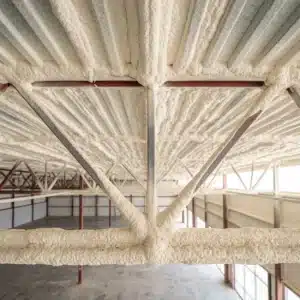
Exposed architectural steel in modern warehouses benefits from intumescent coating’s paint-like finish maintaining clean industrial aesthetic that spray-applied cementitious materials cannot achieve. Open-web steel joists and architectural trusses remain visually prominent rather than disappearing under thick cement-based coatings. Facility owners seeking LEED certification or showcasing sustainable design elements preserve structural visibility while meeting fire protection requirements.
Intumescent systems eliminate particulate contamination issues associated with cementitious fireproofing. No dust generation during or after application protects warehouse inventory, equipment, and air quality. Coatings resist moisture better than cementitious materials reducing maintenance concerns in humid loading dock environments. Color customization through topcoat selection allows coordination with facility branding and design schemes impossible with cement-grey SFRM finishes.
Key Takeaways
- Intumescent fireproofing provides 30-minute to 4-hour fire-resistance ratings through thin coatings maintaining architectural appearance of exposed warehouse steel members
- Dry film thickness determines fire rating with thin-film systems at 0.3 to 2 millimeters suitable for most warehouse applications requiring 30 to 120 minute protection
- UL fire-resistance directory listings specify exact steel configurations, DFT requirements, and application procedures that must be followed precisely to maintain code compliance
- Material requires 50 millimeter expansion clearance easily achieved in high-ceiling warehouses but surface preparation and environmental control during application are critical
- Installed costs range from $0.75 to $5.00 per square foot with labor efficiency improving on larger projects and off-site shop application reducing total expense
- Licensed professionals must verify selected intumescent system matches warehouse steel type, fire rating requirement, and environmental exposure category before specification
- Coating maintains clean aesthetic appearance, eliminates dust contamination, and allows color customization advantages over traditional cementitious fireproofing
If your warehouse project requires fire protection for exposed structural steel while maintaining architectural design intent, our team specifies and applies intumescent coating systems throughout Texas, Kansas, and Oklahoma. Contact Bahl Fireproofing to discuss your structural steel fireproofing requirements before design decisions limit fire protection options.
Disclaimer: This article provides general educational information about fireproofing and insulation systems and does not constitute professional engineering advice or product specification. Code requirements vary by jurisdiction and may be based on different editions of applicable standards. System selection must be based on project-specific fire ratings, thermal requirements, acoustic performance needs, environmental conditions, substrate requirements, and budget constraints. Always consult with a licensed professional and verify UL or FM assembly listings before finalizing specifications.
Intumescent fireproofing provides structural fire protection for steel members but performance depends on exact compliance with UL fire-resistance directory listings including steel configuration, dry film thickness, surface preparation, primer compatibility, and environmental exposure category. Over-application or under-application voids fire-resistance ratings. Expansion clearance requirements must be verified for specific warehouse configurations. Cost estimates are representative and vary depending on project size, steel member complexity, accessibility, application method, and installation schedule. Installation must be performed by trained, certified applicators following manufacturer specifications and UL listing requirements. Fire-resistance ratings apply only to specific tested assemblies and cannot be extrapolated to similar but unlisted configurations.