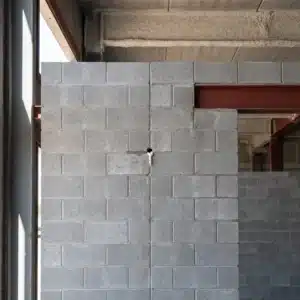
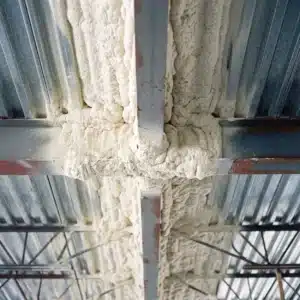
Fire-resistance ratings protect more than steel. They protect occupants, investments, and legal standing. Fireproofing code compliance encompasses IBC Chapter 7 requirements, ASTM E119 testing standards, UL-listed assemblies, and special inspection protocols that determine whether your building receives a certificate of occupancy. Missing any component creates liability exposure that extends well beyond construction delays.
This guide breaks down the code compliance framework that governs commercial fireproofing, explains how fire-resistance ratings are determined and verified, and identifies the violations that catch building owners off guard during final inspections.
TLDR: Achieving fireproofing code compliance requires fire-resistance ratings determined per ASTM E119 or UL 263 testing, assemblies documented in the UL Fire Resistance Directory, and special inspections under IBC (2021) Section 1705. Supporting structural members must match the rating of any fire barrier or horizontal assembly they support. Building officials require complete documentation before issuing certificates of occupancy.
Code note: unless otherwise stated, code references on this page are to the 2021 International Building Code. Code adoption is state and local. Across the states we serve, adopted IBC editions currently range from the 2012 edition to the 2024 edition, some states have no statewide commercial building code, and several enforce NFPA 1 or NFPA 101 rather than the International Fire Code. Minnesota and Wisconsin publish state-amended code books whose numbering and requirements differ from the model code. This is general technical information, not a code determination for your project. Confirm the adopted edition and any local amendments with your authority having jurisdiction.
IBC Chapter 7: The Foundation of Fireproofing Code Compliance
IBC Chapter 7 establishes requirements for fire-resistance-rated construction throughout commercial buildings. The code governs materials, systems, and assemblies used for structural fire resistance and fire-rated separation between adjacent spaces.
Three primary objectives drive these requirements. Structural fire resistance ensures beams, columns, and assemblies maintain load-bearing capacity during fire events. Effective compartmentation through fire barriers and horizontal assemblies contains fire spread. Smoke control limits migration through assemblies.
Fire-resistance ratings must be determined per ASTM E119 or UL 263 testing standards. The IBC recognizes five acceptable methods for establishing these ratings: designs documented from approved sources like the UL Fire Resistance Directory, prescriptive requirements from IBC (2021) Section 721, engineering calculations per IBC (2021) Section 722, fire protection engineer analysis based on standard test methods, and third-party certified fire-resistance designs.
The code sections that matter most for fireproofing code compliance include IBC (2021) Section 706 (fire walls requiring 2 to 4 hour ratings), IBC (2021) Section 707 (fire barriers requiring 1 to 4 hour ratings), IBC (2021) Section 711 (horizontal assemblies restricting vertical fire spread), and critically, Sections 707.5.1 and 711.2.3 requiring supporting construction to match the rating of fire-rated assemblies. Understanding these sections is essential for fireproofing code compliance on any commercial project.
How ASTM E119 Testing Determines Fire-Resistance Ratings
ASTM E119 provides the standardized test methods for evaluating how long building elements contain fire, retain structural integrity, or exhibit both properties during controlled furnace exposure. Understanding this testing standard helps building owners evaluate fireproofing specifications and verify contractor claims for fireproofing code compliance.
The test subjects assemblies to a standardized time-temperature curve. Furnace temperatures reach 1,000°F at 5 minutes, 1,300°F at 10 minutes, 1,550°F at 30 minutes, 1,700°F at 1 hour, and 1,850°F at 2 hours.
Four end-point criteria determine when an assembly fails. Heat transmission limits require average temperature rise on the unexposed surface to stay below 250°F, with no individual thermocouple exceeding 325°F. Flame penetration criteria evaluate whether the assembly prevents ignition from flames and gases. Structural integrity requirements confirm load-bearing capacity throughout the test duration. For structural steel members spaced more than 4 feet on centers, individual steel temperatures cannot exceed 1,300°F, and the average of four thermocouples cannot exceed 1,100°F during the first hour.
Fire-resistance ratings correspond directly to test duration. An assembly maintaining integrity for 1 hour receives a 1-hour rating. Standard ratings include half-hour, 1 hour, 1.5 hours, 2 hours, 3 hours, and 4 hours.
Navigating the UL Fire Resistance Directory for Code Compliance
The UL Product iQ database contains tested and certified fire-rated assemblies for roof-ceilings, walls, partitions, floor-ceilings, beams, and columns. All assemblies are tested to UL 263, which uses nearly identical methods to ASTM E119, making results interchangeable for fireproofing code compliance purposes.
UL design numbers follow a logical system. The first letter indicates assembly type: U for floor-ceiling assemblies, V for walls and partitions, D for beams, X for columns, and P for roof-ceiling assemblies. Following numbers represent the sequential design number. Design U419, for example, refers to floor-ceiling assembly number 419.
Critical components within UL designs carry asterisk markings. Items with asterisks must be UL Certified products bearing the UL Mark. Items without asterisks only need to meet listed specifications. Code enforcement officials verify UL Marks for compliance, and substituting non-certified products where certification is required invalidates the entire assembly rating.
To deliver the fire-resistance rating of any UL Certification, all details specified within must be followed exactly as published.
Special Inspection Requirements Under IBC Section 1705
Special inspections for fireproofing are mandatory, not optional. IBC (2021) Section 1705.15 (Section 1705.14 in the 2018 and earlier editions) requires periodic special inspections during construction, after rough installation of building systems, and before concealment of sprayed fire-resistant materials. These inspections form the backbone of fireproofing code compliance verification.
For spray-applied fire-resistive materials, inspections verify thickness and density per ASTM E605 and bond strength per ASTM E736. Surface preparation must be inspected before application begins, with the special inspector confirming surfaces meet manufacturer requirements and approved construction documents.
When fireproofing is applied over primed, painted, or encapsulated surfaces, IBC (2021) Section 1705.15.6.3 requires bond testing to verify acceptable performance between existing coatings and the fire-resistant material. Failed bond tests require bonding agents or surface remediation before proceeding.
Intumescent fireproofing coatings fall under IBC (2021) Section 1705.16 (Section 1705.15 in the 2018 and earlier editions), requiring special inspections per AWCI 12-B standards. The same rigorous protocols apply, with manufacturer instructions serving as the compliance baseline.
Fireproofing Code Compliance in Practice: Office Building Fire Barrier
A recent 8-story office building project illustrates how fireproofing code compliance requirements intersect during plan review. The design included a 2-hour fire barrier separating exit stairways from the rest of each floor. During review, the building official identified that structural steel columns supporting this fire barrier were specified as unprotected Type IIB construction with 0-hour rating.
Per IBC 707.5.1, the supporting columns required 2-hour fire protection to match the barrier they support. The contractor applied 2-hour rated intumescent coating to exposed columns in the lobby area and cementitious SFRM to concealed columns above ceilings. This coordination between the architect, structural engineer, and fireproofing contractor resolved the issue before construction began.
Had this been caught during final inspection instead of plan review, the project would have faced significant delays and remediation costs. Early coordination on fireproofing code compliance prevents expensive corrections later.
Common Fireproofing Code Compliance Violations
Unsupported fire-rated assemblies represent one of the most consequential violations. IBC Sections 707.5.1 and 711.2.3 require supporting construction for fire barriers and horizontal assemblies to have the same rating as the assembly itself. A 2-hour fire barrier supported by unprotected steel columns fails to provide 2-hour protection because the supporting members will fail first. Architects, structural engineers, and fire protection engineers must coordinate to identify all fire-rated separations and ensure supporting members receive equal or greater protection.
Improper firestopping at joints catches many projects during final inspection. Head-of-wall joints, bottom-of-wall joints, and joints between exterior walls and rated floor assemblies require tested and listed firestop systems installed exactly per manufacturer instructions.
Penetrations through fire-rated assemblies require protection extending through the full thickness of walls and floors. Using UL-listed penetration firestop systems matched to specific penetration types and assemblies prevents violations that require costly remediation.
Missing documentation creates fireproofing code compliance problems even when installations are correct. Building officials require UL design numbers for all fire-rated assemblies, documentation of any approved alternates or engineering judgments, and complete special inspection reports before issuing certificates of occupancy.
Key Takeaways for Fireproofing Code Compliance
- Fire-resistance ratings must be determined per ASTM E119 or UL 263 and documented with UL design numbers
- Supporting structural members must match the fire rating of any fire barrier or horizontal assembly they support
- Special inspections under IBC (2021) Section 1705 are mandatory for a certificate of occupancy
- UL-certified components (marked with asterisks in designs) cannot be substituted with non-certified products
- Surface preparation inspection must occur before the fireproofing application begins
- Complete documentation is required before building officials approve final inspections
If your next project demands fireproofing code compliance installed by professionals who understand IBC requirements, our team serves commercial clients throughout Texas, Kansas, and Oklahoma. Contact Bahl Fireproofing today to schedule a consultation or request a bid.
This article provides general educational information about fireproofing code compliance and does not constitute professional engineering advice, code interpretation, or legal counsel. Code requirements vary by jurisdiction and project type. Building officials have final authority on code interpretation. Always consult with a licensed professional and local building official for project-specific requirements.