Choosing between cementitious vs intumescent fireproofing comes down to visibility, budget, and performance requirements. Both systems meet the same fire rating standards when properly applied. Cementitious spray-applied fire-resistive materials (SFRM) cost less and work well for concealed steel. Intumescent coatings cost more but deliver a smooth, paint-like finish suitable for architecturally exposed structural elements. Understanding how each system works and where it performs best helps building owners make informed decisions that balance code compliance with project budgets.
This guide covers the fundamental differences between cementitious and intumescent fireproofing, provides a side-by-side comparison of key attributes, explains when each system makes sense, and introduces hybrid approaches that optimize costs on mixed-visibility projects.
TLDR: Cementitious fireproofing typically costs $5 to $14 per square foot installed and works best for concealed steel where aesthetics don’t matter. Intumescent coatings run $10 to $30 per square foot and suit architecturally exposed steel requiring finished appearance. Both systems achieve equivalent fire ratings when properly applied. Hybrid approaches using cementitious on concealed steel and intumescent on exposed steel can reduce overall project costs compared to specifying premium finishes throughout.
How Cementitious Fireproofing Works
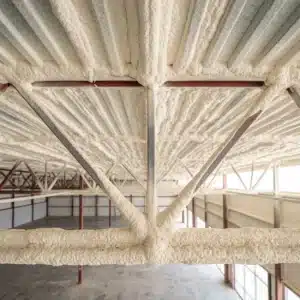
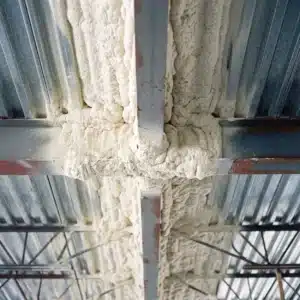
Cementitious fireproofing uses portland cement or gypsum binders mixed with lightweight mineral aggregates like vermiculite or perlite. Contractors mix the material with water on-site to form a sprayable slurry. The mixture applies wet and cures through hydration over the following days.
The system forms a thick physical barrier ranging from one-half inch to over two inches depending on required fire ratings. This barrier insulates steel through low thermal conductivity of the cured material. During fire conditions, moisture within the coating undergoes phase change, absorbing heat energy and releasing it as steam. This process delays temperature rise of the protected steel substrate. The coating does not change state during fire events. It serves as a passive barrier throughout the exposure.
Typical densities range from 13 to 18 pounds per cubic foot for standard applications to 40 to 55 pounds per cubic foot for high-density formulations used in petrochemical and hydrocarbon fire exposure scenarios. The rough, textured appearance works well in concealed spaces but requires enclosure when aesthetics matter.
How Intumescent Fireproofing Works
Intumescent fireproofing uses specialized chemical formulations in epoxy, acrylic, or polyurethane bases. The coating applies thin, similar to paint application, using spray, brush, or roller methods. Water-based and solvent-based formulations are available depending on environmental and performance requirements.
The coating remains inert at normal temperatures. When exposed to heat, typically above 200 degrees Celsius, the material undergoes intumescence. This chemical reaction causes the coating to expand 10 to 50 times its original thickness, forming a protective char layer of carbonaceous foam. The char increases in volume while decreasing in density, creating an insulating barrier that slows heat transfer to the steel substrate. This active reaction during fire events distinguishes intumescent systems from passive cementitious barriers.
Application thickness is measured in mils (one mil equals 0.001 inch). One-hour fire ratings typically require 20 to 80 mils of dry film thickness. Two-hour ratings need 80 to 150 mils. Three-hour ratings demand 150 to 200 mils or more. These thin applications compare favorably to the inch-plus thicknesses required for cementitious systems achieving equivalent fire ratings.
Side-by-Side Comparison: Cementitious vs Intumescent Fireproofing
Understanding the key differences between cementitious and intumescent fireproofing helps project teams match systems to requirements.
Cost represents the most significant difference. Cementitious systems typically run $5 to $14 per square foot installed according to industry pricing data. Intumescent coatings range from $10 to $30 per square foot for standard commercial applications.
Appearance differs dramatically. Cementitious fireproofing produces a rough, textured, bulky finish unsuitable for exposed applications. Intumescent coatings deliver smooth, paint-like surfaces that can be topcoated to match architectural color schemes.
Application methods vary by system. Cementitious materials apply via wet spray using pump and nozzle equipment. Crews can cover large areas quickly, achieving high productivity on open structures. Intumescent coatings apply by spray, brush, or roll but require multiple coats with drying time between applications. This extends project duration compared to single-application cementitious systems.
Weight impact favors intumescent systems. Cementitious fireproofing adds significant structural load due to thick, dense material layers. Intumescent coatings add minimal weight, making them suitable for retrofit projects with limited load capacity or lightweight steel framing.
Fire rating capability spans similar ranges. Cementitious systems reliably achieve one-hour to four-hour ratings. Intumescent coatings typically achieve one-hour to three-hour ratings, though four-hour assemblies exist with thick applications.
Durability depends on environment and exposure. Cementitious fireproofing excels in dry environments with minimal maintenance required over decades. However, moisture exposure creates corrosion under fireproofing (CUF) risk due to the porous material nature. Intumescent coatings resist moisture better, especially solvent-based formulations, but may need periodic touch-up in high-traffic areas and require topcoats for UV protection on exterior applications.
When to Choose Cementitious Fireproofing
Cementitious fireproofing makes sense for specific project conditions where its advantages align with requirements.
Concealed structural steel represents the primary application. Steel hidden above suspended ceilings, inside mechanical rooms, behind architectural finishes, or in industrial warehouses benefits from cementitious systems. Nobody sees the rough finish, so paying premium for aesthetics provides no value.
Budget-conscious projects benefit from lower cementitious costs. Large square footage requiring fireproofing, projects with tight cost constraints, new construction with standard fire ratings, and industrial facilities prioritizing function over form all favor cementitious selection.
High fire rating requirements favor cementitious systems. Three-hour and four-hour ratings come more easily with cementitious applications. Buildings requiring maximum fire resistance or structures with hydrocarbon fire exposure risk benefit from proven cementitious performance.
Dry, stable environments eliminate moisture concerns that affect cementitious durability. Climate-controlled buildings, interior applications protected from weather, and facilities without high humidity exposure suit cementitious selection.
Fast-track construction benefits from rapid cementitious application. Large areas need quick coverage on tight schedules. Spray application maximizes productivity when curing time constraints allow.
Avoid cementitious fireproofing in high moisture environments, on exposed architectural steel, in weight-sensitive structures, in vibration-prone areas, or when aesthetic requirements demand finished appearance.
When to Choose Intumescent Fireproofing
Intumescent fireproofing excels where appearance, weight, or environmental exposure matter.
Architecturally exposed steel requires intumescent systems. Open-ceiling offices and lobbies, atriums and public spaces, retail environments with exposed structure, and modern architectural designs celebrating steel all demand the smooth, finished appearance intumescent coatings provide.
Aesthetic-sensitive projects justify intumescent premium costs. High-end commercial buildings, corporate headquarters, hotels and restaurants, museums and theaters, and any project where appearance matters to clients or architects suit intumescent selection.
Weight-constrained applications favor lightweight intumescent coatings. Retrofit projects with limited load capacity, lightweight steel framing, cantilevered or long-span structures, and buildings approaching structural load limits benefit from minimal weight addition.
Moisture or harsh environments favor intumescent durability. Exterior steel applications, parking structures, coastal or high-humidity locations, areas subject to weather exposure, and chemical processing facilities with proper topcoats suit intumescent selection.
Tight or complex geometries benefit from thin intumescent application. Small steel sections, complex connections and penetrations, and areas where thick cementitious application proves impractical favor intumescent coating.
Off-site fabrication opportunities allow intumescent application in controlled shop environments. Steel arrives on-site pre-fireproofed and ready for erection, enabling faster installation and weather-independent application.
Avoid intumescent fireproofing on extremely tight budgets, when very high fire ratings prove difficult or expensive, for small project scopes where labor costs hit disproportionately, in large concealed areas where nobody sees the premium finish, or when no aesthetic requirement exists.
The Hybrid Approach: Best of Both Systems
Many projects contain both exposed and concealed steel. Strategic mixed-system approaches optimize costs by matching fireproofing type to visibility requirements.
The concept applies intumescent coatings on exposed steel in lobbies, atriums, and open offices while using cementitious systems on concealed steel above ceilings, in mechanical rooms, and within shafts. This allocates premium finishes only where they provide value while maintaining code compliance throughout.
Transitions between systems require special attention. According to manufacturer engineering guidance, UL does not have standard assemblies for intumescent-to-cementitious transitions. Projects may require custom engineering judgments from fireproofing manufacturers for case-by-case approval of transition details.
Typical transition scenarios include columns where intumescent coats the exposed top portion while cementitious covers hidden portions enclosed by other finishes. Floor-by-floor transitions place intumescent on ground floors with public areas while upper floors with concealed structures receive cementitious. Zone-based approaches put intumescent in premium areas while back-of-house spaces receive cementitious.
Best practices for hybrid systems include specifying transition details in construction documents, obtaining manufacturer approval for transition methods, ensuring inspectors understand the mixed-system approach, documenting transition points in as-built drawings, and coordinating with architects to align material selections with design intent.
Real-World Applications: How Projects Choose Between Systems
Understanding how actual projects apply these principles helps clarify the decision process. The following representative examples illustrate typical selection rationale.
An 8-story urban office building specified intumescent coatings throughout because exposed steel was a key architectural feature in tenant spaces. The open-plan design with high ceilings celebrated the structural elements as part of the industrial aesthetic. The smooth, paintable finish maintained design intent while meeting 2-hour fire ratings on primary structural members. Installation costs ran approximately $8 to $10 per square foot but aligned with the premium building budget and eliminated the need for architectural enclosures that would otherwise hide the structure.
A 150,000 square foot distribution warehouse in the same metro area used cementitious SFRM because all structural steel was concealed by roof decking and ceiling systems. The pre-engineered metal building had no aesthetic requirements for fireproofing. The facility achieved 1-hour fire protection at $3 to $4 per square foot installed. Crews covered large open areas quickly, completing the project ahead of schedule. Specifying intumescent coatings would have added over $200,000 to the project budget with no aesthetic benefit since nobody sees the hidden steel.
A 12-story mixed-use development demonstrated the hybrid approach. Ground floor retail spaces featured exposed steel with high ceilings, requiring intumescent coatings to maintain the architectural vision. Upper residential floors concealed all structure behind ceiling systems, making cementitious the logical choice. The project obtained engineering judgment approval for transitions at the second floor deck. This mixed approach saved approximately 25 to 30 percent compared to specifying intumescent throughout while achieving architectural intent where it mattered.
Making the Right Choice for Your Project
The decision between cementitious and intumescent fireproofing reduces to answering several key questions about your specific project conditions.
Will the steel be visible? Exposed structural steel in occupied spaces demands intumescent coatings. Concealed steel hidden by ceilings, walls, or enclosures suits cementitious systems.
What fire ratings are required? Standard one-hour and two-hour ratings work well with either system. Very high ratings of three or four hours favor cementitious systems unless budget allows premium intumescent applications.
What environmental conditions exist? Dry, climate-controlled interiors suit cementitious. Moisture exposure, exterior applications, or harsh environments favor intumescent with proper topcoats.
What budget constraints apply? Tight budgets on large projects favor cementitious. Premium budgets prioritizing appearance support intumescent selection.
Can hybrid approaches work? Mixed-visibility projects often benefit from using both systems in appropriate zones. The coordination complexity proves worthwhile when savings justify engineering judgment requirements.
Both cementitious and intumescent fireproofing meet the same ASTM E119 fire testing standards when properly applied. Neither system provides inherently better fire protection. The selection depends entirely on matching system characteristics to project requirements for visibility, budget, environment, and performance.
Key Takeaways
- Cementitious fireproofing costs $5 to $14 per square foot and works best for concealed steel where aesthetics don’t matter
- Intumescent coatings cost $10 to $30 per square foot and suit architecturally exposed steel requiring finished appearance
- Both systems achieve equivalent fire ratings when properly applied to ASTM E119 and UL standards
- Cementitious systems excel in dry environments with high fire rating requirements and budget constraints
- Intumescent systems excel for exposed steel, weight-sensitive structures, and moisture-prone environments
- Hybrid approaches using both systems can optimize costs on mixed-visibility projects
- Transitions between systems require manufacturer engineering judgment approval
If your next project involves structural steel fireproofing decisions, our team helps building owners and contractors select the right system for their specific visibility, budget, and performance requirements. We serve commercial clients throughout Texas, Kansas, and Oklahoma with both cementitious and intumescent fireproofing solutions backed by decades of code-compliant installations. Contact Bahl Fireproofing today to discuss your project and receive system recommendations tailored to your needs.
This article provides general educational information about fireproofing system selection and does not constitute professional engineering advice. Fireproofing system selection must be based on project-specific fire ratings, structural requirements, budget constraints, and code compliance needs. Always consult with a licensed professional and verify UL or FM assembly listings for your specific application before finalizing fireproofing specifications.